Add Row
Add Element
Business Broker News
update
BUSINESS BROKER NEWS
cropper
update
Add Element
SUBSCRIBE TO NEWSLETTER
  • update
  • update
  • update
  • update
  • update
  • update
  • update
July 14.2025
1 Minute Read

Real Estate Agent Fees: What You Really Need to Know

Did you know that in the U.S., home sellers pay over $100 billion in real estate agent fees and realtor commissions every year? Real estate agent fees are more than just a percentage—they directly impact your bottom line when buying or selling property. Whether you’re a first-time buyer, home seller, or an investor aiming to maximize profit, understanding these costs can make or break your real estate transactions. If you’ve ever questioned what those agent commissions really pay for—or wondered if you’re spending more than you should—this comprehensive guide reveals the eye-opening facts, industry rates, and insider negotiation strategies that every savvy buyer or seller must know.

Shocking Facts About Real Estate Agent Fees and the True Cost of Buying or Selling Property

For most Americans, buying or selling a home is the largest financial transaction of their lives—yet few realize just how much real estate agent fees absorb from the sale price. Real estate agent fees are typically based on a commission rate, usually between 5% and 6% of the final sale price of the home. When you consider that the average U.S. home now sells for more than $375,000, that means sellers could pay $22,500—or more—in commission alone. What’s even more surprising is that these commission costs are just one piece of the puzzle; when combined with closing costs, moving expenses, and necessary repairs, the final bill can be much higher than anticipated.

Sellers aren’t the only ones affected by these fees. Buyers also face considerable expenses, from agent commissions to closing costs, not to mention other potential charges that can quickly add up. But where does all that money go, exactly? And are agent commissions and realtor fees really negotiable? Below, you’ll find practical examples, expert tips, and a statistical breakdown of what you can expect—and how to make smarter decisions to keep more money in your pocket.

Surprised couple and agent reviewing real estate agent fees commission rate on contract, front porch home sale, vibrant, authentic daylight

How Real Estate Agent Fees Impact Home Sale Profits

Real estate agent fees play a pivotal role in determining the net profit a seller walks away with after a home sale. The commission cost—usually structured as a percentage of the sale price—can mean thousands lost or gained, depending on your negotiation and local market standards. Sellers often overlook additional closing costs that can erode profits even further, such as attorney fees, transfer taxes, and inspection charges. By understanding exactly how agent commissions affect the sale, home sellers can strategize to minimize expenses.

  • Key reasons real estate agent fees shape sellers' net profits
  • Average real estate commission rates in the U.S.
  • Surprising statistical breakdown of closing costs
  • Common realtor fee structures explained

The traditional commission rate for a listing agent in the United States hovers between 5% and 6%, but it is possible to find full-service agents willing to negotiate lower commission structures, such as flat fees or reduced percentages for high-value homes. Buyers and sellers should always clarify the fee structure upfront to avoid hidden surprises and better calculate net proceeds or costs. This awareness is critical for anyone looking to maximize profit when selling a home or to minimize out-of-pocket expenses as a buyer.

What You'll Learn About Real Estate Agent Fees

  • The breakdown of typical real estate agent fees and real estate commissions
  • How agent commission rates are determined
  • Insider knowledge on negotiating real estate agent commissions
  • A clear understanding of closing costs and other related realtor fee details

Breaking Down Real Estate Agent Fees: Components, Commission Rates, and How They Work

What Makes Up a Typical Real Estate Agent Commission?

Real estate agent commission is often the largest line item in a transaction’s closing costs, representing the main “realtor fee” paid at the completion of the sale. Unlike closing costs that cover things like loan origination or title insurance, agent commissions are the payment for professional representation and marketing. This fee usually covers listing the property on the multiple listing service (MLS), marketing and showing the home, negotiating offers, facilitating contract details, and guiding the transaction to a successful close.

Real estate agent explaining components of agent commission to clients, detailed real estate contract on table, elegant office setting
  • Definition of real estate agent fees vs. closing costs
  • What the agent commission typically covers
  • Who pays the real estate commission (usually the seller, though costs may be factored into the sale price)

Commission is traditionally a percentage of the home’s final sale price. For example, on a property selling for $500,000 with a 6% commission, the total agent commission would be $30,000, generally divided evenly between the buyer’s agent and the seller’s agent. This split incentivizes both parties to work diligently toward a completed transaction. It's possible for some sellers to negotiate lower fees or for agents to offer reduced rates in certain circumstances, reinforcing the importance of open discussion before committing to an agent.

Commission Rates Explained: Understanding Industry Standards

Commission rates vary regionally and according to local market conditions, competition among agents, and service offerings. While the national average is around 5.5%–6%, rates can be as low as 4% in highly competitive markets or with discount brokerages. It’s essential to understand the prevailing rate in your area, as a fraction of a percent can amount to thousands of dollars when calculated against the sale price. Some full-service agents offer bundled services that justify higher rates, while others may provide à la carte pricing for those seeking a lower commission rate.

Region Average Real Estate Agent Commission (%) Notes
West Coast (CA, WA, OR) 5.0% – 5.5% Highly competitive markets; some agents offer lower rates
East Coast (NY, MA, DC) 5.0% – 6.0% Many listings require premium marketing and service
Midwest (IL, OH, MI) 6.0% Traditional rates still common
South (TX, FL, GA) 5.5% – 6.0% Agent competition increasing; discount brokers emerging

Sellers should compare agent commission rates alongside offered services, reputation, and local expertise before making a decision. The negotiation of agent commission remains one of the most effective ways to maximize your return as a home seller.

Estate Agent Commission vs. Realtor Fee: Are They the Same?

Many people use realtor fee and estate agent commission interchangeably, but there are subtle distinctions. In general, a “realtor fee” refers specifically to fees charged by a licensed Realtor®—a member of the National Association of Realtors—while an “estate agent commission” can be used more broadly for both licensed agents and brokers who may or may not hold the Realtor designation. Structurally, both typically involve a percentage of the home’s selling price paid out at closing but may differ in the level of service, resources, or legal duties provided.

Professional estate agent and realtor comparing commission structures side by side, abstract modern office skyline background
  • Explaining the difference between a realtor fee and estate commission
  • How real estate agents and estate agents structure fees

Estate agents may offer a range of commission options, such as tiered service levels or flat fee models, particularly in markets outside the U.S., like the U.K. or Australia. Realtors , by contrast, tend to follow the local MLS’s customary commission rates and operate within a set code of ethics established by the National Association of Realtors. As a buyer or seller, it’s important to clarify your agent’s qualifications and their fee structure before signing any contract.

"The majority of U.S. buyers and sellers overlook several hidden components in real estate agent commission rates."

How Real Estate Agent Fees Affect Buyers and Sellers

Buyer Costs: Closing Costs, Real Estate Commission, and More

While sellers typically pay the majority of real estate agent commissions, buyers also encounter significant expenses when purchasing property. Closing costs for buyers often include loan origination fees, title insurance, appraisal fees, and transfer taxes, which can total 2–5% of the purchase price. Though buyer agents’ services are often “free” to the buyer on the surface—their commission is covered by the seller—it’s important to remember that the commission is factored into the overall sale price. On a $400,000 home, buyers may still be paying, indirectly, a portion of the $24,000 real estate commission through a higher transaction cost.

  • Closing cost breakdown for buyers
  • How agent commission integrates with closing costs
  • Other real estate fees to anticipate when buying a home

First-time homebuyer couple reviewing closing costs, agent showing breakdown on tablet, packing boxes in cozy living room

Buyers should also budget for inspections, escrow fees, and incidentals not always covered by traditional closing cost estimates. Comparing estimates from multiple agents and lenders is one of the best ways for homebuyers to minimize total real estate transaction costs.

Seller Concerns: Real Estate Agent Commission and Net Proceeds

For home sellers , the total real estate agent commission can be the single largest deduction from the home sale price. A 6% commission on a $300,000 sale deducts $18,000, significantly impacting net proceeds. Sellers seeking to optimize their return should understand how agent commissions are split and what services are included in their realtor’s marketing package. Many agents offer tiered commission plans, which may allow sellers to save by opting for fewer services or negotiating a lower commission for higher-value homes.

  • How real estate agent fees reduce seller net proceeds
  • Strategies to minimize realtor fee exposure during a home sale

Hidden transaction costs can also shrink the seller’s final payout. Beyond agent and broker fees, sellers may need to pay for staging, pre-inspections, repairs discovered during the selling process, or seller-side escrow and legal fees. Proactive sellers who account for all these expenses upfront are better positioned to price their homes competitively while retaining more of their equity at closing.

  • List of hidden real estate transaction costs to factor in

Real Estate Commission Rates: What You Need to Know

Standard Agent Commission Rates Across Different Markets

The standard agent commission rates in the United States fluctuate by location, property type, and market demand. Urban areas like San Francisco or New York may see slightly lower commission rates due to high competition and elevated property values, while smaller markets often stick closely to the 6% norm. It’s rare for U.S. agents to work for less than 4.5%, especially in markets with less inventory.

Metro Area Average Commission Rate (%) Typical Range
Los Angeles, CA 5.0% 4.5–5.5%
Chicago, IL 6.0% 5.5–6.0%
Houston, TX 5.5% 5.0–6.0%
Miami, FL 5.5% 5.0–6.0%
National Average 5.7% 5.0–6.0%

Local custom and agent experience also play major parts in commission negotiations. Buyers and sellers are encouraged to interview multiple agents, compare fees and service levels, and consult recent data for their metro area to ensure they are getting fair value.

How Negotiable Are Commission Rates and Realtor Fees?

Real estate commission rates are not set in stone. Sellers can—and should—negotiate with their agents, especially if their property is in a high-demand market, is priced above regional averages, or requires minimal marketing. Some agents offer sliding commission rates for multi-million-dollar listings or “à la carte” services for sellers comfortable handling marketing or showings themselves. Be direct when discussing expectations, and don’t hesitate to ask for a lower commission if you’re interviewing multiple agents or leveraging referrals.

Optimistic home seller and agent shaking hands after successfully negotiating real estate commission in modern house
  • Actions sellers can take to lower their real estate agent fees
  • Tips for negotiating the agent commission with estate agents

Transparency is your ally: know what services are included in each commission proposal, and obtain agreements in writing. While some agents may be unwilling to negotiate due to brokerage policy or market saturation, even modest reductions in commission rate can mean thousands saved at closing.

"Transparent commission negotiation gives you control over your home sale’s bottom line."

View a quick video breakdown of how agent commissions are structured, who pays, and what services are included with each fee model. (Video content not included in this article.)

Estate Agents Versus Real Estate Agents: Who Gets Paid, and How?

Estate Agent Commission Distribution: Buyer’s Agent vs Seller’s Agent

In a typical U.S. home sale, the real estate agent commission is split between the listing agent (representing the seller) and the buyer’s agent. For example, on a $400,000 home with a 6% total commission, $12,000 goes to the listing agent and $12,000 to the buyer’s agent. These amounts are then further divided with each agent’s brokerage according to their internal commission split agreement. This symmetrical arrangement ensures both buyer and seller agents are incentivized toward a successful and timely closing.

  • The split of agent commission between the buying and selling side
  • Estate commissions versus real estate agent commissions: differences and similarities

Visual pie chart graph dividing real estate commission between buyer

In markets like the U.K. or Australia, estate agents often represent only the seller and may offer bespoke marketing options or “no sale, no fee” arrangements. In the U.S., however, dual agency—where one agent represents both parties—is more rare and strictly regulated due to conflicts of interest.

How Real Estate Agents Add Value for the Fees They Command

Real estate agents provide more than just marketing a home. Their expertise includes pricing strategy, access to the multiple listing service (MLS), conducting showings, negotiating offers, managing paperwork, and expertly troubleshooting any issues during escrow. An experienced agent can help buyers find off-market opportunities or highlight costly red flags in property disclosures. For sellers, a top agent will deploy high-impact photography, staging advice, targeted digital advertising, and keen analytics to maximize sale price and minimize time-on-market.

  • Services provided by real estate agents
  • Why buyers and sellers pay for agent expertise and support

Agents who understand their market and possess strong negotiation skills frequently net their clients more than the cost of their commission—a value proposition backed by data from the National Association of Realtors and other industry organizations. Buyers and sellers who forgo agent support risk costly mistakes, overlooked legal issues, or weaker final outcomes.

"A qualified real estate agent can net clients more than the cost of their commission."

Watch a video explaining why the services of professional estate agents matter at every stage of a real estate transaction. (Video content not included in this article.)

Closing Costs Versus Real Estate Agent Fees: Key Differences Explained

A Detailed Breakdown of Closing Costs for Home Sales

Closing costs refer to all the fees and charges buyers and sellers pay to finalize a real estate transaction, excluding agent commission. For sellers, closing costs may include transfer taxes, escrow fees, attorney fees, and title insurance, while buyers typically pay loan origination fees, appraisal costs, prepaid taxes, and insurance premiums. On average, closing costs range from 2% to 5% of the sale price and can be negotiated or shared between parties in many cases.

  • Line-item examples of closing costs beyond the commission
  • How closing costs and agent commission interact during escrow
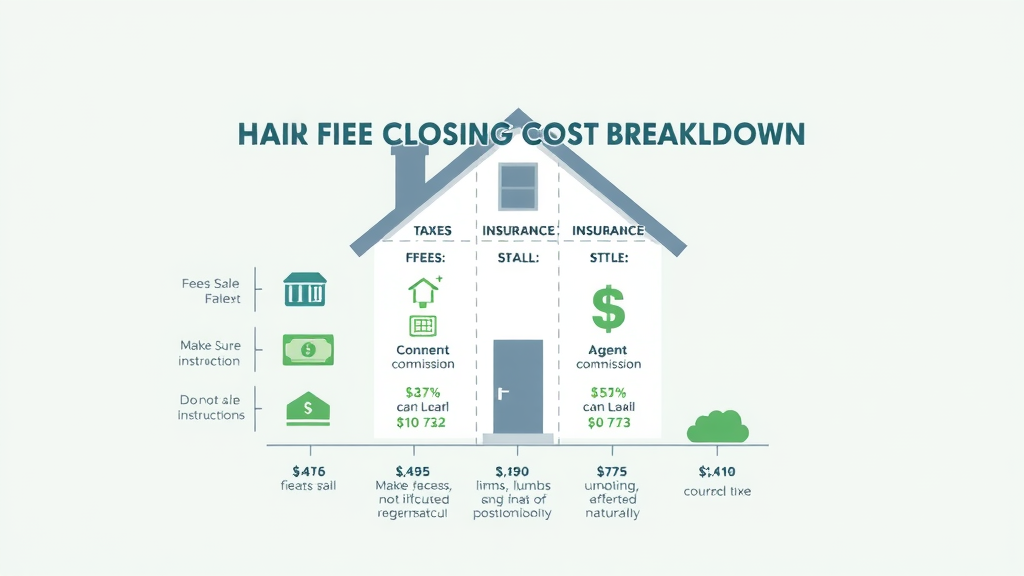
2D cartoon diagram showing line-item examples of home sale closing costs including agent commission, taxes, insurance, and title fees

Both agent commission and closing costs are reconciled during escrow, often deducted from the proceeds before the seller receives their final check. Sellers need to distinguish between these items for accurate calculation of net proceeds.

Table: Closing Costs vs. Real Estate Agent Commission

Fee Type Who Pays? Typical Percentage or Amount
Real Estate Agent Commission Seller (unless negotiated otherwise) 5%–6% of sale price
Transfer Taxes Buyer/Seller (varies by state) 0.1%–2% of sale price
Title Insurance Buyer/Seller (typically split) $500–$3,000 flat fee
Attorney Fees Buyer/Seller $500–$2,500 average
Appraisal Fee Buyer $400–$850
Loan Origination Fee Buyer 0.5%–1% of loan amount

People Also Ask: Essential Questions About Real Estate Agent Fees

What percentage do most realtors charge?

  • The average percentage for real estate agent fees in the current real estate market

Realtor holding a pie chart with real estate commission percentage, futuristic office skyline background

Most Realtors in the U.S. charge a commission of 5% to 6% of the home’s final selling price. The exact rate depends on location, market conditions, and level of service provided, but 6% remains the traditional benchmark in many areas. Buyers and sellers should know these rates are negotiable and should confirm all terms in their agent contract.

What is the commission on a $300,000 house?

  • Example breakdown of agent commission for a $300,000 sale, including buyer’s agent and seller’s agent shares

Agent calculating commission on $300,000 house at tidy desk with mortgage documents and calculator

A typical 6% commission on a $300,000 home sale equals $18,000. Usually, this is split equally between the listing agent ($9,000) and the buyer’s agent ($9,000), though brokerage fees and other agreements may adjust these amounts. Some agents may negotiate a reduced rate for higher-value or quick sales.

What fees do most estate agents charge?

  • Common estate agent commission structures and additional realtor fee items

Most estate agents charge a commission fee based on a percentage of the property’s sale price—typically between 4% and 6%. Additional fees may include administrative charges, marketing expenses, photography, or enhanced listing service upgrades. Details should always be clarified before signing any listing agreement.

What are the expenses of a real estate agent?

  • Ongoing costs real estate agents incur, from marketing to licensing and association fees

Busy real estate agent surrounded by desk of paperwork, marketing flyers, and bills showing agent

Real estate agents face a range of operating costs including ongoing marketing, professional licensing, MLS dues, continuing education, association membership fees (e.g., the National Association of Realtors), website maintenance, and even staging expenses. Many agents are also responsible for their own health insurance and tax withholdings, affecting how much commission ultimately becomes take-home pay.

FAQs on Real Estate Agent Fees, Agent Commission, and Closing Costs

  • Do real estate agents ever waive their commission? It is rare, but some agents may waive all or part of their commission for personal transactions, close family, or as part of a negotiated sale. However, most agents rely on commissions for income and will only reduce or waive them under unique circumstances.
  • Are real estate agent commissions tax-deductible? For home sellers, commissions and closing costs on a primary residence are typically not tax-deductible, but they may reduce the reportable gain for capital gains tax calculations. Investment or rental property commissions may be deductible as selling expenses.
  • How are agent commissions split between brokerage and agent? Commissions are typically split between the brokerage and the agent according to the agent's agreement. A common split is 60/40 or 70/30 in favor of the agent, but newer agents may start at a lower split. Brokerages may also charge desk fees or transaction fees in addition to commission sharing.
  • Can you negotiate closing costs along with real estate commission? Yes! Both closing costs and agent commissions are subject to negotiation. Buyers or sellers can request that the other party cover part of their closing costs, and agents may also agree to reduced commissions under the right conditions. Everything is negotiable until the contract is signed.

Expert Quotes on Negotiating Real Estate Agent Fees

"The smartest buyers and sellers view real estate agent commission as both an expense and an investment." – Real Estate Analyst
"A proactive discussion about closing costs and agent commission can save thousands." – Veteran Estate Agent

Learn strategies and case studies for negotiating lower agent commission while maximizing support and results. (Video content not included in this article.)

How to Choose a Real Estate Agent Based on Fees and Value

  • Checklist for evaluating real estate agents’ commission rates, service offerings, and professional expertise

Homebuyer reviewing real estate agent profiles and checklist to compare commission rates and expertise on laptop

Choosing the right real estate agent goes far beyond picking the lowest commission rate. Use this checklist before signing with an agent:

  • Compare commission rates and ask for a detailed service breakdown
  • Review marketing strategy, listing quality, and communication skills
  • Check for local market expertise and high client satisfaction ratings
  • Request references and examples of recent sales similar to your property
  • Ensure the agent is licensed and in good standing with the state and relevant professional associations
  • Clarify all additional fees or costs up front

Takeaways: Real Estate Agent Fees and Successful Transactions

  • Understand every component of real estate agent fees
  • Always ask questions about agent commission and real estate commissions
  • Remember: fees are negotiable, transparency matters, and value counts

Action step: Interview multiple agents, compare detailed proposals, and negotiate both commission and closing costs before making your next real estate move!


Business Broker News Blog

47 Views

0 Comments

Write A Comment

*
*
Related Posts All Posts
01.28.2026

Steps to Buy a Business Without Costly Mistakes

Did you know that 90% of the world’s millionaires built their wealth by owning businesses? Yet, for every small business owner who achieves success, another faces costly mistakes that could have been avoided with the right knowledge of the steps to buy a business Startling Insights: Why Mastering the Steps to Buy a Business Matters The dream of owning a thriving business is powerful, but the pathway is fraught with traps for the unwary. Every year, countless buyers enter agreements without a solid grasp of due diligence or fail to analyze cash flow and hidden liabilities. This leads not only to financial setbacks but sometimes to legal troubles or business closure. Understanding the steps to buy a business is more than just a checklist—it's your competitive edge in the market. With careful planning and smart execution, you can avoid the missteps that sink acquisitions and instead join the ranks of successful business owners who made informed choices from the outset. Mastering the acquisition process helps you see red flags, seize real opportunities, and ensure every dollar invested delivers sustainable value. By following a proven roadmap—covering everything from identifying businesses for sale to negotiating the final purchase price—you reduce risk, maximize returns, and step confidently into ownership. In the sections below, we’ll break down each step, highlight why due diligence is your shield, and offer expert tips to avoid the pitfalls that so commonly trap first-time buyers and even seasoned investors. An Unconventional Fact About Buying an Existing Business Unlike starting from scratch, buying an existing business often means inheriting not just assets but also a customer base, brand reputation, and operational history. Surprisingly, studies show that nearly half of all business acquisitions fail due to overlooked operational risks or unresolved outstanding legal issues—issues that could have been identified with thorough due diligence. This unconventional fact underscores the importance of scrutinizing every aspect of a targeted company. When you buy an existing business, you’re adopting both its successes and its challenges. The rewards can be immense, but only if each step is approached with care, verification, and the right professional support. What You'll Learn About the Steps to Buy a Business Key phases in the steps to buy a business Critical components of due diligence How to evaluate an existing business Avoiding common business acquisition pitfalls Practical tips for successful business buying Understanding the Steps to Buy a Business Overview of Buying an Existing Business The process of buying an existing business is fundamentally different from launching a startup. Not only do you acquire tangible assets, but you also inherit the business entity with all its complexities—employees, real estate, customer contracts, intellectual property, and sometimes, outstanding liabilities. This purchase can provide instant access to market share and recurring revenue, but it demands methodical assessment from the outset. The journey starts long before money changes hands and stretches beyond the closing day. Key steps include setting acquisition goals, identifying targets, analyzing financial statements, and negotiating terms. A strong focus on understanding business valuation metrics and cash flow can protect buyers from paying too much or missing hidden value. For those looking to buy a business, having a clear, structured approach is imperative. It ensures a smoother transition, minimizes disruption, and safeguards your financial and professional interests throughout the arduous process. As you refine your acquisition strategy, it's equally important to recognize the subtle indicators of a business's long-term stability and trustworthiness. Exploring the key habits that signal loyalty and commitment—whether in people or organizations—can offer valuable insights when evaluating potential business partners or teams during the buying process. Why Due Diligence is Essential in the Steps to Buy a Business "Ninety percent of the world's millionaires became so through owning businesses." – Expert in business acquisitions Due diligence is the cornerstone of any successful business acquisition. This intensive review process allows a buyer to dig deep into all elements of a business—the good, the bad, and the potentially risky. It involves scrutinizing the balance sheet, cash flow statements, legal agreements, tax returns, and customer relationships. The aim: uncover risks, validate financial performance, and ensure the purchase price truly reflects the company’s value and future prospects. Without thorough due diligence, buyers may inherit hidden lawsuits, outstanding legal disputes, or inflated revenue projections. Business owners who skip this step often regret it, facing unforeseen liabilities that decimate their investment. A well-executed diligence process empowers you to negotiate better terms, walk away from troubled deals, or confidently move forward knowing your new venture is built on rock-solid ground. Step 1: Define Your Acquisition Criteria for Buying an Existing Business Setting Goals and Identifying the Right Industry Is it steady cash flow, a particular industry, or the chance to scale quickly? Start by cataloging your preferences—do you prefer service-based businesses, retail, real estate, or another sector? Consider location requirements: would you operate locally, regionally, or remotely? Think about the size of the business, both in terms of staff and annual revenue, and set cash flow targets that align with your financial goals Understanding Your Own Business Strengths Are you equipped to handle a turnaround, manage a big team, or navigate a new market? Analyze your funding options, identifying how much you can invest up front and what your limitations are Industry preferences Location requirements Size and cash flow targets Step 2: Sourcing Opportunities to Buy an Existing Business Where to Find Businesses for Sale With your acquisition criteria in hand, the next step is to identify potential businesses for sale. Online marketplaces like BizBuySell, BusinessBroker.net, and even local classified listings are treasure troves of opportunities. Some buyers leverage their personal and professional networks; others go through industry trade shows or associations to discover off-market deals. Corporate websites and franchise directories often showcase businesses seeking new owners. Remember, relying solely on public listings may limit your choices, so be proactive in your search to uncover the best-fit opportunity for your business acquisition goals. Working with Business Brokers Partnering with experienced business brokers can accelerate your journey and unlock hidden deal flow. A good broker provides access to pre-screened businesses, helps with business valuation, and assists in negotiation. They act as intermediaries, streamlining communications between buyer and seller while helping both parties manage expectations. Brokers understand industry-specific considerations, which is invaluable for first-timers or those expanding into a new sector. Be sure to vet any broker’s credentials and experience in your target industry, seeking references from past clients or industry peers. With the right broker, buyers tap into a broader network and receive expert guidance at every step. Step 3: Conducting Initial Analysis and Valuation in the Steps to Buy a Business Evaluating Existing Business Financial Statements This phase centers on reviewing detailed financial statements—profit and loss reports, balance sheets, and cash flow statements. By examining historic revenues, profitability, and expense patterns, buyers can gauge business viability. Look closely for red flags: sudden revenue drops, poorly documented sales, or inconsistent expense categories may indicate deeper issues. A healthy and transparent set of financials is a sign that the business owner managed the operation responsibly. For businesses with complex cash flow needs or inventory cycles, enlist a financial advisor or CPA to verify the data and provide expert insights into its financial health. Initial Cash Flow Assessment Cash flow analysis is pivotal. Even if a target business reports strong revenue, positive cash flow ensures the company’s ability to pay bills, service debt, and fund growth. Compare net income, owner’s discretionary earnings, and available working capital. This step is especially vital for small businesses, where there’s less margin for error. If the business relies on large, one-time contracts, ask for future pipeline details. Evaluating cash flow stability and forecasting future trends helps buyers avoid running into liquidity problems after the transfer of ownership. Understanding Business Valuation Metrics Before making an offer, it’s critical to understand various business valuation metrics. Methods include EBITDA multiples (Earnings Before Interest, Taxes, Depreciation, and Amortization), asset-based valuation, and discounted cash flow analysis. The choice depends on the business type and size. Valuation is not just about the bottom line; it considers industry standards, growth potential, and even how dependent the company is on current management or a few key clients. Accurate valuation ensures you're not overpaying and can negotiate confidently, protected by solid data and realistic expectations. Sample Business Valuation Metrics Overview Valuation Method Key Focus When to Use EBITDA Multiple Profitability (earnings) Profitable, stable businesses Asset-Based Valuation Balance sheet assets/liabilities Asset-heavy or distressed companies Discounted Cash Flow Future cash flow projections Firms with predictable, scalable revenue Comparable Sales Recent transactions in same market Common in real estate and franchises Step 4: Making the First Offer – Letter of Intent in the Steps to Buy a Business Drafting and Reviewing the Letter of Intent The letter of intent (LOI) is the formal first step to signal your genuine interest in acquiring a business. It’s a non-binding letter outlining proposed terms—purchase price, timing, items included in sale, and next steps for due diligence. Creating a detailed LOI protects both buyer and seller by clarifying expectations and serving as a roadmap for negotiations. Review every clause carefully with a business attorney to avoid misunderstandings that can derail a deal later on. If you’re new to this, consider model templates or past transaction examples to avoid missing crucial details. Negotiating the Purchase Price and Terms With the LOI in place, it’s time for negotiation. Don’t focus solely on the purchase price—scrutinize terms such as financing structure, contingencies, training or transition support from the prior owner, and closing timelines. In successful deals, buyers often secure favorable terms like phased payouts, holdbacks, or non-compete agreements. Transparent, fact-based negotiation—driven by insights from your due diligence and business valuation—results in a balanced agreement where both parties feel confident moving forward. Key elements of the letter of intent What to include in the purchase price negotiation Step 5: Conducting In-Depth Due Diligence in Business Acquisition The Due Diligence Process Explained The due diligence process is where you verify every claim made by the seller. This marathon fact-check spans sales records, supplier contracts, employee lists, lease agreements, insurance, outstanding legal cases, customer feedback, intellectual property, and more. Due diligence is where most hidden risks surface—undisclosed lawsuits, tax issues, inflated inventory values, or misleading revenue streams. Experienced buyers often use a standardized checklist and enlist legal and accounting experts to avoid missing costly details that could affect the deal's outcome. Reviewing Contracts, Licenses, and Obligations Before closing, thoroughly review all contracts, permits, and licenses associated with the business. Some agreements may not transfer automatically or could include clauses that affect your ability to operate post-sale. Evaluate employment agreements, supplier contracts, customer subscriptions, equipment leases, and any intellectual property registrations. It's common for buyers to consult attorneys with experience in business transactions to flag unusual terms or outstanding obligations. Ignorance of these details can lead to operational headaches or even legal disputes after the sale is complete. Assessing Operational Risks and Liabilities "The due diligence process is non-negotiable—it's where most hidden issues are uncovered." – M&A lawyer Operational risks often go beyond what’s visible on financial statements. Assess the stability of key employees, relationships with critical vendors, the effectiveness of internal controls, and any potential environmental or safety liabilities. Review records for any unresolved customer complaints or product returns. When possible, interview managers and staff under confidentiality agreements. Blindsides in these areas can undermine even well-structured deals. Ultimately, robust due diligence is your protection—it empowers you to renegotiate, request seller indemnities, or walk away if deal-breaking issues are found. Step 6: Securing Financing Options During the Steps to Buy a Business Bank Loans, Seller Financing, and SBA Loans Few buyers pay the purchase price in full from their own funds. Financing options range from traditional bank loans and SBA loans (U.S. Small Business Administration) to seller financing or private investors. Bank loans require a strong personal credit score and substantial collateral but generally offer lower interest rates for well-qualified buyers. SBA loans typically provide lower down payments and longer repayment terms, making them attractive to small business acquirers. In some deals, the seller agrees to finance a portion of the sale, incentivizing them to support the business’s post-sale success. Comparison of SBA Loans and Conventional Financing Options Feature SBA Loan Conventional Bank Loan Seller Financing Down Payment 10%–20% 20%–35% Negotiable, often 10–20% Term Length Up to 10 years 5–7 years Flexible, often <10 years Collateral Business/personal assets Strong collateral required Business assets, as agreed Approval Time 1–3 months 1–2 months Fast—often within weeks Understanding Down Payments and Loan Requirements Most financing options, particularly SBA loans, require a down payment—often 10–25% of the purchase price. Lenders scrutinize your personal credit, business plan, and the financial performance of the target company. Prepare to provide detailed financial statements for both yourself and the business. Factors like the business’s cash flow, value of collateral, and industry risk affect loan approval and terms. Ensuring you have the right documentation and a strong application increases your chance of securing favorable financing, enabling your business acquisition to move forward without unnecessary delays. Step 7: Completing the Business Acquisition – Final Purchase Agreement Navigating Purchase Agreements in Buying a Business The purchase agreement is the binding contract that seals the transaction. It incorporates all terms agreed upon during negotiation—purchase price, assets included, liabilities assumed, training/transition supports, and the exact timing of ownership transfer. Engage an experienced attorney to draft and review the agreement, ensuring it covers all contingencies and minimizes your exposure to lawsuit or buyer’s remorse. Pay particular attention to representations, warranties, and indemnification clauses, which protect you if undisclosed liabilities surface after the deal closes. Managing the Closing Process Closing is the last hurdle in the steps to buy a business. This milestone includes transferring funds, legal paperwork signing, filing necessary documents with government agencies, and ensuring business licenses and permits are current and transferable. Work closely with your accountant and lawyer for a smooth transition. Proper preparation and coordination here guarantee a seamless transfer, positioning you for day-one success as the new business owner. Checklist for closing a business purchase Essential documentation for ownership transfer Common Mistakes to Avoid in the Steps to Buy a Business Neglecting proper due diligence Overlooking hidden liabilities Overestimating post-purchase cash flow Signing incomplete purchase agreements Expert Tips for Successful Business Acquisition Engage experienced advisors Build strong relationships with sellers Prepare a robust transition plan Pros and Cons of Buying an Existing Business Pros and Cons Comparison Table Pros Cons Immediate cash flow Potential hidden liabilities Established customer base Legacy operational issues Experienced employees Resistance to new management Market reputation Brand limitations Reduced startup risk Higher upfront costs Animated explainer video visually summarizing the seven steps to buy a business, using clean icons, real-world scenarios, and a professional narration over a 2-minute runtime. Includes transitions between each step and showcases due diligence, negotiation, and ownership transfer processes without text overlays. A short visual explain of what to look for and how to conduct due diligence when buying an existing business. People Also Ask About the Steps to Buy a Business What are the 7 steps in buying an existing business? Detailed Answer: A Step-by-Step Guide The seven essential steps to buy a business are: 1) Define your acquisition criteria; 2) Source potential businesses; 3) Conduct initial analysis and business valuation; 4) Draft and review the letter of intent (LOI); 5) Complete in-depth due diligence; 6) Arrange and secure financing; and 7) Finalize the purchase agreement and close the transaction. Each of these steps is critical to ensuring you don’t miss important details or expose yourself to unnecessary risks. How much down payment for a $500,000 business loan? Explaining Down Payment Requirements and Examples For a $500,000 business loan, especially through an SBA loan, the standard down payment is typically 10–20%, or $50,000 to $100,000. Conventional loans may require even more. Some deals offer flexibility with seller financing, but banks will still look for a significant upfront investment to show buyer commitment and cover perceived risks. Always confirm requirements with your lender as specifics can vary by lender and deal structure. What are the 7 steps of the buying process? Clarifying Each Step as Applied to Business Buying The standard seven steps when buying a business are: 1) Set acquisition goals; 2) Identify businesses for sale; 3) Review business financials; 4) Submit a letter of intent; 5) Conduct thorough due diligence; 6) Secure needed financing; and 7) Complete the transaction with a purchase agreement and closing. Each step aligns with industry best practices and is designed to safeguard your investment and your future as a business owner. What are the requirements to buy a business? Summarizing Key Buyer Qualifications and Financial Criteria To buy a business, you need sufficient capital or approved financing, a solid credit history, relevant experience or operational knowledge in the industry, and sometimes, personal or business collateral for loans. Lenders and sellers may also request a business plan, proof of funds, and references. Meeting these criteria helps assure stakeholders you’re a reliable buyer and positions you for success in your new business venture. Frequently Asked Questions About the Steps to Buy a Business How long does it typically take to complete all the steps to buy a business? Most deals close in 3–6 months, though complex transactions can take longer depending on due diligence, financing, and negotiations. What professionals should I consult during the buying process? Engage a business broker, CPA/accountant, and business attorney, as well as industry consultants for specific issues like real estate or IT. Can I buy an existing business with no money down? While difficult, some deals (with motivated sellers and excellent negotiation) may permit little or no money down, but these often come with higher financing costs or performance contingencies. Key Takeaways for Following the Steps to Buy a Business Careful planning is vital for successful business acquisition. Due diligence and professional advice minimize costly mistakes. Understanding financing options can improve deal outcomes. Wrap-Up: Confidently Navigating the Steps to Buy a Business "The right preparation turns buying a business into an opportunity, not a risk." If you’re ready to take your business buying journey to the next level, remember that success is built on both strategic planning and a deep understanding of the people and processes behind every opportunity. By continuing to expand your knowledge—whether it’s about evaluating business culture, leadership, or the subtle signs of long-term loyalty—you’ll be better equipped to make decisions that stand the test of time. For a fresh perspective on recognizing the foundational habits that drive lasting commitment, explore our guide on the seven key habits that indicate lifelong loyalty. This insight can help you spot trustworthy partners and build a resilient business from day one. Ready to Take the Next Step? Call us at 203-271-7991 or visit https://businessbrokernews.us for expert guidance on the steps to buy a business. When considering the acquisition of an existing business, it’s essential to follow a structured approach to ensure a successful transition. The U.S. Small Business Administration’s guide, Buy an existing business or franchise, offers comprehensive insights into the differences between franchising and purchasing an existing business, helping you determine which path aligns best with your goals. Additionally, the article 8 Steps in Buying a Business (Plus Reasons To Buy One) from Indeed.com outlines a clear, step-by-step process, from identifying your business preferences to closing the deal, ensuring you navigate each phase with confidence. By leveraging these resources, you can make informed decisions and avoid common pitfalls in the business acquisition journey.

01.27.2026

Mergers and Acquisitions: Are You Ready for the Big Leap?

But why is that? This comprehensive guide will bring you the insights, steps, and strategies you need so that your big leap into mergers and acquisitions is not just bold, but brilliantly informed A Startling Look at Mergers and Acquisitions Today Mergers and acquisitions (M&A) shape the business world, driving innovation, market share, and competitive advantage across industries. In today’s rapidly evolving global market—where digital disruption and cross-border growth are the norm—M&A deals have become more complex and frequent than ever before. From giant tech mergers in the United States to mid-sized industrial takeovers in emerging economies, the volume and sheer impact of these transactions are undeniable. Yet, despite their potential, the majority of mergers and acquisitions don’t reach their goals. According to the Harvard Business Review, more than 75% of M&A transactions fail to achieve anticipated results—a sobering figure that should make every executive or entrepreneur pause before making the big leap. Why do so many promising deals falter? The answer is a mix of underestimated risks, overlooked due diligence, and insufficient integration planning “Over 75% of mergers and acquisitions fail to achieve their anticipated strategic objectives.” – Harvard Business Review What You'll Learn About Mergers and Acquisitions The key stages of successful mergers and acquisitions The difference between horizontal, vertical, and conglomerate mergers Critical due diligence strategies Common pitfalls and how to avoid them Understanding Mergers and Acquisitions: Core Concepts What is Meant by Merger and Acquisition? At its core, mergers and acquisitions refer to the consolidation of companies or assets, where two organizations combine (merger) or one organization purchases another (acquisition). A merger occurs when two companies of similar size agree to go forward as a new single legal entity rather than remain separately owned and operated. In contrast, an acquisition occurs when one company—often called the “acquiring company”—purchases a majority stake or all of the assets and liabilities of the target company. Acquisitions can involve a cash offer, asset purchase, or tender offer and may result in the target company being absorbed or continuing to operate as a subsidiary. The difference isn’t just in semantics: the strategy, negotiation, and impacts vary greatly. Mergers and acquisitions drive change by enabling companies to expand product lines, grow the customer base, and gain an edge in key markets. This surge in deal-making is shaping industries, especially as businesses grapple with the pressures of technological change, globalization, and the pursuit of economies of scale. Mergers and Acquisitions in the Business Landscape The business landscape of M&A is broad and dynamic, with deals ranging from multi-billion-dollar conglomerate mergers to strategic vertical integrations in niche markets. In the United States, the technology, healthcare, and consumer products sectors frequently lead the pack, driven by the desire for new intellectual property, market share, and customer access. Internationally, cross-border deals are more common—requiring additional focus on legal entity structures, regulatory compliance, and cultural fit. Whether you’re pursuing growth through acquisition or planning a defensive merger, understanding your balance sheet, target company landscape, and integration process is essential to thrive in today’s competitive market. Most organizations pursue mergers and acquisitions for strategic reasons: increasing market share, accessing new supply chains, acquiring innovative technology, or overcoming competitive pressure. However, the risks can be significant if due diligence is neglected, valuation is over-optimistic, or post-merger integration issues are underestimated. The more global the deal, the more complex the web of legal, financial, and operational hurdles—making a well-informed M&A strategy your greatest asset. For those looking to refine their approach and avoid common pitfalls, exploring proven business acquisition strategies can provide actionable insights that complement your M&A planning and execution. Types of Mergers and Acquisitions: Which Path Fits Your Strategy? Horizontal Merger: Companies on the Same Level A horizontal merger takes place when two companies operating in the same industry, offering similar products or services, and often of similar size, combine to form a new legal entity. The primary goals of a horizontal merger are to consolidate market share, eliminate competition, and achieve cost synergies through economies of scale. Think of two consumer products companies with overlapping customer bases joining forces—or rival tech firms merging to enhance product reach and operational efficiency. Horizontal mergers can accelerate revenue synergies by combining sales forces, streamlining operations, and pooling research and development efforts. However, regulatory bodies, especially in the United States, closely scrutinize such deals to prevent the creation of monopolies or anti-competitive practices. Successful horizontal mergers require clear integration plans and a solid understanding of combined assets and liabilities to deliver long-term value to stakeholders. Vertical Merger: Integrating the Supply Chain The goal? To gain more control over the production process, reduce costs, and mitigate supply chain risks Vertical mergers can boost cost synergies by reducing transaction costs and markups associated with dealing with independent suppliers or distributors. A producer of consumer products buying a series of retail outlets or a software firm acquiring a data hosting provider are classic examples. However, the integration needs careful planning to prevent operational disruptions—and regulatory authorities may review deals for potential anti-competitive effects. Conglomerate Merger: Unrelated Businesses, Single Entity A conglomerate merger is when companies that operate in entirely different industries or sectors combine under a common corporate umbrella. These mergers are typically not aimed at creating direct operational synergies but rather at broadening the parent company's portfolio and diversifying risk. For example, a consumer electronics giant may merge with a financial services provider, or a food company might acquire a logistics firm. The primary advantage is stability: if one business segment faces a downturn, others may continue to generate revenue. While conglomerate mergers provide diversification, they also bring unique risks—such as management’s lack of industry expertise and difficulties in integrating dissimilar organizational cultures. These mergers are commonly pursued as a strategy for spreading risks, defending against market fluctuations, and leveraging financial resources across vastly different business lines. Effective conglomerate mergers require strong leadership and robust internal controls to manage a complex, multi-industry business. Reverse Takeover: When a Private Company Goes Public A reverse takeover (or reverse merger) is a strategic maneuver where a private company acquires a controlling interest in a publicly listed company. This allows the private company to “go public” without undergoing the lengthy and costly process of an initial public offering (IPO). In this arrangement, the shareholders of the private company typically receive a majority of shares in the public entity, effectively controlling the legal entity going forward. Reverse takeovers are especially popular among startups, tech firms, or businesses seeking quick access to public capital markets. Although they offer significant advantages—immediate public status and access to new funding—the process demands rigorous due diligence, as the private company assumes both the benefits and the liabilities of the public shell. Stages of a Successful Merger or Acquisition Strategy development Target identification Due diligence Valuation and negotiation Post-merger integration Each stage in the merger or acquisition process requires focused attention and expertise. It all begins with strategy development—defining your business goals, desired market segments, and acquiring company targets. After pinpointing a target company, the next step is rigorous due diligence to examine all legal, financial, and operational data. Valuation and negotiation follow, where deal terms are hammered out, and a fair purchase agreement is established—often involving cash offers, stock swaps, or asset purchases. Finally, the critical stage is post-merger integration—blending processes, cultures, and systems from both organizations to unlock true value and achieve the merger’s or acquisition’s strategic objectives. Companies that excel at integration typically deliver better results, enjoying increased market share, stronger customer bases, and optimized supply chain efficiency. However, if overlooked, this phase can breed internal chaos, talent loss, and customer attrition, derailing the intended benefits of the deal. Due Diligence: The Heart of Successful Mergers and Acquisitions Legal and Regulatory Due Diligence No merger or acquisition is complete without exhaustive legal and regulatory due diligence. This stage involves reviewing all pertinent agreements, understanding the target company’s legal entity structure, and ensuring that the deal complies with local and international laws. Key documents reviewed at this stage include incorporation papers, intellectual property registrations, outstanding litigation, and regulatory filings. Particular attention is given to anti-trust and competition laws, especially in the case of horizontal and vertical mergers in the United States and the European Union. Failure to conduct thorough legal due diligence can result in unexpected liabilities, regulatory fines, or even the unwinding of the merger. It’s essential to also assess contracts with customers, suppliers, and employees—issues such as pending lawsuits, environmental compliance, or restrictive covenants can have a profound impact on deal viability. Engaging experienced legal experts is critical for flagging hidden risks and clearing any regulatory hurdles before closing. Financial and Operational Due Diligence The backbone of a smooth merger or acquisition lies in financial and operational due diligence. Here, the acquiring company examines the target’s balance sheet, income statements, outstanding debts, assets and liabilities, and overall financial health. This analysis ensures you don’t overpay for a company with hidden liabilities or unrealistic future projections. Operational due diligence looks at internal systems, supply chain management, IT infrastructure, human resources policies, and customer contracts. The process seeks to uncover potential cost savings (cost synergies), operational overlaps, and any problems that could hinder integration. This phase may include site visits, technology audits, and employee interviews to paint a full picture of risks and opportunities. Accurate due diligence here allows the acquiring company to adjust the deal structure—whether that means renegotiating terms, requesting a cash offer, or even walking away. Cultural Due Diligence: The Human Factor While legal and financial reviews are non-negotiable, cultural due diligence is often what makes or breaks the post-merger outcome. Every organization has its own corporate DNA: from approaches to decision-making to risk tolerance and reward systems. A misaligned culture between merging organizations can lead to employee turnover, reduced productivity, or loss of key talent. Cultural due diligence examines company values, leadership styles, communication patterns, and even day-to-day behaviors—a crucial but frequently overlooked part of merger preparation. Companies that recognize and proactively address cultural gaps can foster buy-in at all levels and ensure a smooth post-merger integration process. Key Documents in Mergers and Acquisitions Letter of Intent: Clarifying the Intentions A letter of intent (LOI) is the first formal document exchanged in most M&A transactions. It outlines the basic terms and intentions of the acquiring and target companies. While the LOI is typically non-binding, it sets the stage for negotiations and due diligence by clarifying major issues like purchase price, deal structure (such as asset purchase), and exclusivity period. The LOI protects both parties by confirming genuine interest and acting as a roadmap for finalizing the acquisition agreement. A well-crafted letter of intent minimizes misunderstandings, establishes expectations, and provides legal safeguards while full due diligence and negotiations take place. Both sides must ensure that the wording is clear, accurate, and does not unintentionally create binding obligations. Acquisition Agreement: Sealing the Deal The acquisition agreement (sometimes called the purchase agreement) is the definitive contract that legally binds the two parties and finalizes the transaction. This agreement specifies the purchase method (cash, stock, asset purchase), representations and warranties, closing conditions, and post-closing covenants. It details exactly what the acquiring company will take over—assets, liabilities, intellectual property, contracts, and sometimes key employees. Reviewing and negotiating an acquisition agreement requires legal expertise to ensure all obligations, contingencies, and protections are unambiguous. Both sides’ interests must be reflected, and potential post-merger disputes anticipated and addressed. With the acquisition agreement signed, the merger or acquisition officially concludes, and integration begins. M&A Document Purpose Key Considerations Letter of Intent Outlines preliminary terms Non-binding, sets negotiation framework Due Diligence Report Risk and value assessment Legal, financial, operational details Acquisition Agreement Finalizes transaction Binding commitments and deliverables Common Challenges in Mergers and Acquisitions—and How to Overcome Them Cultural misalignment: When corporate cultures clash, integration suffers. Establish a cultural due diligence process and communicate change clearly at all levels. Regulatory hurdles: Compliance with local, state, and international regulations—especially in the United States—can delay or derail deals. Engage regulatory experts early to assess risks. Overvaluation: Overly optimistic forecasts can lead to overpaying. Conduct independent valuations and rigorous financial due diligence to validate deal terms. Post-merger integration issues: Integration is often underestimated. Invest sufficient time and resources in planning, communication, and monitoring progress to drive long-term success. Every merger or acquisition faces its share of obstacles, and even seasoned professionals can be caught off guard. The most common pitfall is underestimating the complexity of integrating systems, processes, and cultures—a misstep that can erode anticipated cost synergies and reduce the value realized from the deal. Other dangers include failing to anticipate regulatory blocks, overestimating the target company’s potential, or neglecting the human element of large-scale organizational change. Does M&A Pay Well? The mergers and acquisitions field is lucrative, with compensation packages often well above industry averages for successful professionals. Factors like company size, deal value, and specific role heavily influence salary ranges. Investment bankers, legal counsel, business brokers, and corporate strategists involved in M&A deals may enjoy high base salaries and significant performance bonuses tied to deal completion. Especially in major economic hubs like the United States, senior M&A professionals routinely command six-figure incomes, making the field a top target for ambitious job seekers. What Are the 4 Types of M&A? The four main types of mergers and acquisitions are horizontal, vertical, conglomerate, and reverse takeovers. Each serves different strategic objectives, from increasing market share and integrating supply chains to diversifying risk and accessing public capital markets. Understanding which type best aligns with your business goals is key to a successful M&A strategy. Who Gets Laid Off First in a Merger? Layoffs during mergers and acquisitions most often affect redundant roles—typically in administrative, support, or overlapping departments. The goal is to streamline operations and eliminate duplication, which can sometimes result in cost savings but carries challenges for employee morale and retention. Seniority and contractual protections may influence which employees remain, but transparent communication, fair severance packages, and retention incentives for crucial staff can help manage the transition. FAQs on Mergers and Acquisitions What is due diligence in mergers and acquisitions? Due diligence is the comprehensive review process before a merger or acquisition deal closes. It involves legal, financial, operational, and sometimes cultural analysis of the target company to verify its value, uncover risks, and ensure deal terms are fair. Proper due diligence helps prevent surprises after the acquisition. How does a letter of intent protect both parties? A letter of intent (LOI) clarifies the basic terms and intentions of both buyer and seller. While generally non-binding, it provides a negotiation framework, protects confidentiality, and signals serious intent. Both parties use it to identify any deal-breakers before investing heavily in due diligence and negotiation. What risks are unique to conglomerate mergers? Conglomerate mergers bring risks such as lack of management expertise in new industries, challenges in integrating diverse cultures, and potential dilution of focus. Unlike horizontal and vertical mergers, conglomerate deals typically don’t offer clear operational synergies, so careful oversight and planning are critical to avoid value erosion. Key Takeaways from Mergers and Acquisitions Thorough planning and due diligence are essential for success M&A strategies should align with long-term business goals Cultural and operational integration determines post-merger value Connect with M&A Experts to Prepare for Your Next Big Leap Ready to take your business to new heights through mergers and acquisitions? Call us at 203-271-7991 or visit https://businessbrokernews Mergers and Acquisitions Explained: Watch Our Video Guide Watch this animated explainer video to see real-world examples of the mergers and acquisitions process, featuring clear infographics and industry best practices. Conclusion Mastering mergers and acquisitions requires diligence, clear strategy, and a focus on integration. Let this guide be your blueprint to approach every deal with confidence, foresight, and smart planning. If you’re eager to deepen your understanding of the broader business landscape and the pivotal role expert guidance plays in successful transactions, take a look at why partnering with a business broker can be a game-changer for your next move. Discover how seasoned professionals help you navigate complex negotiations, uncover hidden opportunities, and safeguard your interests throughout the M&A process. By leveraging expert insights, you can transform uncertainty into strategic advantage and set your business up for sustainable growth. Explore the next level of M&A success and see how the right expertise can make all the difference. To deepen your understanding of mergers and acquisitions, consider exploring the following resources: The U.S. Small Business Administration’s guide on Merge and acquire businesses offers practical steps and considerations for businesses looking to expand through mergers or acquisitions. Britannica Money’s article on Mergers & Acquisitions (M&A) Definition, Process, and Examples provides a comprehensive overview of M&A strategies, processes, and notable examples. These resources will equip you with essential knowledge and strategies to navigate the complexities of mergers and acquisitions effectively.

01.26.2026

Unlock Profits with These Business Valuation Methods

Did you know nearly 70% of small business owners undervalue or overvalue their business—leaving significant profits on the table? Mastering the right business valuation methods is the game-changer separating confident decisions from costly mistakes Revealing the Power of Business Valuation Methods: A Surprising Perspective Unlocking the financial potential hidden within your business starts with a clear understanding of business valuation methods. Whether you’re preparing to pivot, sell, or simply strategize for future growth, knowing your business's true value empowers informed decisions. Business valuation methods are more than just numbers—they provide a roadmap for maximizing profits, attracting investors, and navigating ever-changing market dynamics. The reality is that many business owners—especially those at the helm of small businesses—struggle to pinpoint their company’s fair market value. This challenge not only affects exit planning and merger negotiations, but can also undermine funding opportunities and succession plans. With a strategic grasp of the various valuation methods available, any business owner can shift from reactive to proactive, charting a course toward long-term growth and profitability. Why Every Business Owner Needs to Master Business Valuation Methods For any business owner, the knowledge of business valuation methods goes far beyond just selling the company. It’s about controlling your narrative—and your expectations—when dealing with partners, lenders, or potential buyers. By mastering these methods, you gain the ability to negotiate from a position of strength, justify your asking price, and accurately assess areas for business improvement. This know-how also supports effective planning for succession, tax strategies, and attracting the right kind of talent or investors. In essence, understanding the nuances of valuation methods opens the doors for sustainable profits and business continuity. Choosing the right valuation method also allows business owners to set precise growth targets. For example, knowledge of how discounted cash flow or net asset value is computed makes it easier to benchmark performance, identify weak spots, and justify investments. In a competitive marketplace, this depth of insight can be the difference between stagnation and remarkable growth. As you explore these foundational concepts, it’s helpful to dive deeper into practical strategies that can directly impact your business’s sale price. For actionable advice on maximizing your valuation, consider reviewing these business valuation tips designed to boost your sale price and help you avoid common pitfalls during the process. The High Stakes of Accurate Business Valuation Methods for Small Business Owners Small business owners face especially high stakes when it comes to accurate business valuation. A miscalculation—whether too high or too low—can result in missed opportunities, disadvantageous deal terms, or conflicts with partners and stakeholders. With so much riding on a single number, it’s crucial to select the right valuation method and apply it meticulously. Even subtle differences in interpreting cash flow, net assets, or comparable sales can dramatically skew a business’s perceived value. For small businesses, the outcome of a valuation can influence access to capital, eligibility for grants, and even day-to-day cash management strategies. Accurate business valuations also serve as powerful tools in supporting fair negotiations. They instill confidence in investors and lenders by providing credible, defensible documentation of your business’s worth. When small business owners align their decisions with well-chosen valuation methods, they often experience a ripple effect—better terms, higher valuation multiples, and greater flexibility for future cash flow management. In this way, the right valuation fuels not just one decision, but the entire trajectory of your business. What You'll Learn About Business Valuation Methods The purpose and importance of business valuation methods An in-depth guide to leading business valuation methods and their applications How business owners can leverage valuation methods for strategic decision making The pros, cons, and best-use scenarios of each valuation method Frequently asked questions on business valuation methods Understanding Business Valuation: Core Concepts and Definitions Defining Business Valuation and Its Relevance for Business Owners Business valuation is the systematic process of determining the economic value of a company. At its core, this process assesses both tangible and intangible assets, weighing factors like cash flow, net asset value, and market position. For business owners, valuation is more than just a financial exercise—it’s a strategic imperative. Whether contemplating a sale, merger, or raising capital, business valuation helps you understand your strengths and address weaknesses so you can maximize profits. The relevance of business valuation cannot be overstated. It informs funding negotiations, provides clarity for succession planning, and establishes a benchmark for improvement initiatives. Ultimately, a robust valuation aligns your business goals with market realities, making it an indispensable part of modern business strategy. Common Triggers for Conducting Business Valuation Methods When is a business valuation truly necessary? Common triggers include preparing to sell, merging, estate planning, securing investment, or succession planning “Business valuation methods unlock hidden value and future potential for business owners—no matter the size of the enterprise.” The Valuation Process: How Business Valuation Methods Work Overview of the Business Valuation Process The valuation process involves more than plugging numbers into a formula. It’s a disciplined analysis of both hard data and market dynamics. This process begins with collecting robust financial statements—balance sheets, income statements, and cash flows—then moves into a deep dive into company assets, competitive landscape, and future earning potential. A successful business valuation tackles historical performance, current liabilities, growth prospects, and unique industry risks. Professional appraisers often complement this with site visits, management interviews, and peer benchmarking. Accuracy in the business valuation process depends on understanding which data points matter most for your scenario. For instance, capital-intensive businesses may prioritize net asset methods, while high-growth ventures may lean on projected cash flows or valuation multiples. By taking a holistic, methodical approach, business owners stand to gain not just a fair market value, but actionable insights for strategic business moves. Key Steps in Selecting the Right Business Valuation Method The first step is to clarify your business goals: Are you selling, merging, or inviting investment? Then, consider your company’s size, industry, and available financial data Equally important is transparency in the data and assumptions used for valuation. A sound process involves stress-testing financial forecasts, examining historical trends, and considering external benchmarks. Whenever possible, business owners should consult accredited valuation experts to ensure accuracy and compliance—especially when the stakes are high. In short, the more tailored the approach, the more useful and defensible the valuation outcome will be. Animated walkthrough: Step-by-step business valuation process for small business owners Top Business Valuation Methods and When to Use Them Asset-Based Valuation Method: Net Asset and Adjusted Net Asset Approaches Asset-based valuation methods focus on determining a company’s worth by analyzing its net asset value. The net asset method calculates this by subtracting total liabilities from total tangible assets as listed on the balance sheet. It’s a straightforward approach and often used when businesses have significant tangible assets, such as equipment or property. However, it may underplay the value of intangible assets like brand reputation or loyal customer base. The adjusted net asset method refines this by considering the fair market value of both tangible and intangible assets, then subtracting liabilities. This approach is useful in scenarios where book values don’t represent true market value—for example, during restructuring or liquidation. Business owners should assess both the nature of their business and the state of their financial records when considering these asset-based valuation methods. How asset-based business valuation methods calculate net asset value Adjusted net asset method: Application and key considerations Comparison of Asset-Based Valuation Methods Method What it Measures Best Used For Key Considerations Net Asset Method Book value of tangible assets minus liabilities Asset-rich businesses, liquidation scenarios May undervalue intangible assets Adjusted Net Asset Method Market value of all assets minus total liabilities Reorganizations, complex ownership splits Requires up-to-date fair market assessments Market-Based Valuation Method: Understanding Valuation Multiples The market-based valuation method relies on comparing your business to similar businesses that have recently sold. This is typically accomplished using valuation multiples such as price-to-earnings, price-to-sales, or EBITDA (Earnings Before Interest, Taxes, Depreciation, and Amortization) multiples. By studying how the market values comparable businesses, owners gain a real-world perspective on fair market value. However, finding suitable peers and reliable transaction data can be a hurdle, especially in niche markets. For small businesses, it’s vital to carefully select industry-relevant multiples and adjust for unique business features (e.g., customer base, cash flow stability, and growth potential). Over-reliance on averages without context can skew conclusions, resulting in higher valuation or undervaluation. Engaging with a professional appraiser and using up-to-date market data are critical for maximizing the reliability of market-based valuations. Using business valuation multiples and comparable sales Challenges and practical tips for small businesses Common Valuation Multiples by Industry Industry P/E Multiple EBITDA Multiple P/Sales Multiple Manufacturing 10–15x 6–8x 1.0–1.5x Retail 8–12x 5–7x 0.8–1.3x Tech Startups 20–30x 12–18x 4.0–8.0x Service Firms 8–10x 4–6x 1.0–2.0x Income-Based Valuation Method: Discounted Cash Flow (DCF), Capitalization of Earnings, and More The income-based valuation method centers on a company’s ability to generate future cash flow. The discounted cash flow (DCF) approach forecasts future cash flows, discounts them back to present value using a chosen discount rate, and sums the results. DCF is revered for its precision, taking into account expected risks, growth rates, and the time value of money. To succeed with DCF, business owners must supply reliable cash flow projections, accurate discount rates, and well-supported long-term growth assumptions. The capitalization of earnings method estimates business value by dividing normalized earnings (such as earnings before interest and taxes) by a capitalization rate. This approach works well for companies with stable profits. Both methods assess the business’s ability to generate profits and reward those with clear growth trajectories and effective cash flow management. However, inaccurate forecasting or selecting an unrealistic discount rate can distort results, leading to lower or higher valuation than warranted. Discounted cash flow analysis: Key assumptions and calculations Future earnings power: Evaluating future earning potential Capitalization of earnings method: When to apply and why “Discounted cash flow is the gold standard of business valuation methods for projecting future success.” Explainer: Sample discounted cash flow business valuation calculation Alternative Business Valuation Methods for Unique Scenarios Rule of Thumb, Book Value, and Other Industry-Specific Valuation Methods Sometimes, traditional approaches simply don’t fit certain industries or scenarios. The rule of thumb method applies standardized formulas or ratios—often based on gross revenues or a multiple of profits—popularized within specific sectors. While this “quick estimate” has its appeal for fast negotiations or internal planning, it is often too simplistic for formal transactions or regulatory scrutiny. Book value methods, calculated directly from the balance sheet, provide a snapshot of the company’s net worth at a single point in time and may neglect intangible assets or growth opportunities. A careful business owner should only use these alternatives when quick decisions are needed or in conjunction with comprehensive methods for greater accuracy. Always be mindful of common industry pitfalls, such as failing to account for unique assets or using outdated multiples. When should business owners consider unconventional valuation methods? Common pitfalls in industry rules of thumb Choosing the Best Business Valuation Method for Your Business Business Size, Cash Flow, and Industry Considerations There is no “one-size-fits-all” approach to business valuation. Factors such as business size, cash flow patterns, and industry standards play a pivotal role in selecting the right valuation method. For example, a tech startup with future cash flow potential will benefit from discounted cash flow analysis, whereas a family-run retail store may lean toward market or asset-based valuation for a more realistic assessment. Industry trends also inform the choice, as some sectors inherently command higher valuation multiples than others. Small businesses, in particular, must account for nuances such as customer dependence, seasonal fluctuations, and the presence of intangible assets like intellectual property or brand equity. By aligning the business valuation method with these factors, owners ensure a realistic, market-driven assessment that stands up to external scrutiny. Working with Qualified Business Valuation Experts Partnering with a certified business valuation professional is highly recommended for achieving credible and defensible valuations. These experts have experience interpreting complex financial data, adjusting for anomalies, and benchmarking against industry peers. Their insights are invaluable during critical moments—such as a business sale, partner buyout, or attracting investors—where an accurate valuation carries real financial impact. Attempting DIY business valuation methods may provide a preliminary estimate, but often falls short due to lack of access to market data, analytical tools, or industry expertise. An accredited advisor ensures that all assumptions, calculations, and approaches are current and compliant with professional standards, thereby minimizing the risk of disputes or costly errors. “A one-size-fits-all approach never works in business valuation. Tailoring methods to your business’s unique profile is essential for accuracy.” Benefits of Using Professional Business Valuation Methods How Accurate Valuations Drive Profit, Growth, and Strategic Planning Properly executed business valuation methods offer far-reaching benefits: they strengthen your negotiating position, support robust succession and exit planning, and prepare your business for investor due diligence. A higher valuation can lead to better financing terms and larger exit multiples, while an objective assessment builds trust with buyers, partners, and regulators. For both small businesses and mature enterprises, professional valuations are a strategic asset, directly contributing to profitability, sustainable growth, and long-term legacy. More than just a compliance exercise, valuation methods help business owners craft forward-thinking strategies, optimize capital structure, and set realistic benchmarks for future growth. The data and insight gained during the valuation process provide a springboard for continuous improvement and innovative business development. Enhancing credibility in negotiations Supporting succession and exit planning Preparing for investor due diligence People Also Ask About Business Valuation Methods What are the 5 methods of valuation? Answer: Explore asset-based, market-based, income-based, discounted cash flow, and rule of thumb valuation methods for a comprehensive understanding. What are the top 3 valuation methods? Answer: The top three commonly used business valuation methods are the market-based approach, income-based approach, and asset-based approach. What are the 4 methods of valuation? Answer: Asset-based, market-based, income-based, and discounted cash flow methods represent the four standard valuation approaches. Is a business worth 3 times profit? Answer: Learn why 'three times profit' is a common rule of thumb but often oversimplifies the complexities of business valuation methods. Frequently Asked Questions on Business Valuation Methods (FAQ) Are business valuation methods regulated? — While there are professional standards and best practices, most business valuation methods are not tightly regulated except in certain legal or tax situations. Working with a credentialed expert ensures compliance with industry standards and enhances credibility with investors or regulatory bodies. How long does the valuation process take? — The duration depends on the complexity, size, and purpose of the engagement. Most small business valuations take between two and six weeks when sufficient data is available and key stakeholders are engaged. Accelerated timelines may sacrifice accuracy, so plan ahead. Which business valuation method is best for startups? — Startups often rely on discounted cash flow, market comparables, or industry rules of thumb. The best method takes into account growth projections, available financial data, and market dynamics. Consulting with valuation experts ensures your approach reflects both sector realities and investor expectations. Can owners conduct DIY business valuations? — Owners can run preliminary numbers using online calculators or simplified methods, but comprehensive, defensible valuations require professional expertise and market data access. DIY approaches work for internal assessments but should not replace formal valuations for critical business decisions. Key Takeaways on Business Valuation Methods for Small Business Owners There is no universal business valuation method; your approach depends on your goals and situation. Integration and comparison of multiple valuation methods yield stronger results. Engaging professional help ensures credibility and accuracy. Ready to Make the Most of Business Valuation Methods? Call us at 203-271-7991 or visit https://businessbrokernews.us for customized guidance on business valuation methods for your business success. Unlocking the right business valuation method is your first step toward strategic growth, higher profitability, and confident decision-making. If you’re eager to deepen your understanding and uncover even more ways to maximize your business’s value, don’t miss our comprehensive guide on business valuation secrets every owner should know. This resource explores advanced strategies, insider perspectives, and actionable insights that can help you stay ahead in today’s competitive market. By expanding your knowledge beyond the basics, you’ll be better equipped to make informed decisions and capture the full potential of your business. Take the next step and empower your journey toward a more profitable and resilient enterprise. To deepen your understanding of business valuation methods, consider exploring the following resources: “Valuation Methods” by Corporate Finance Institute provides a comprehensive overview of the three primary valuation techniques: discounted cash flow (DCF) analysis, comparable company analysis, and precedent transactions. This resource is particularly useful for professionals in investment banking, equity research, and corporate development. “How to Value a Company | Best Valuation Methods” by Kenji Explains offers an in-depth explanation of the main valuation methods, including multiples, DCF, and the cost approach. The video includes a pros and cons analysis of each method and a practical walkthrough of a football field valuation. If you’re serious about mastering business valuation methods, these resources will provide you with valuable insights and practical guidance.

Terms of Service

Privacy Policy

Core Modal Title

Sorry, no results found

You Might Find These Articles Interesting

T
Please Check Your Email
We Will Be Following Up Shortly
*
*
*