







Business Broker News
BUSINESS BROKER NEWS
cropper
SUBSCRIBE TO NEWSLETTER
July 03.2025
1 Minute Read

Master the Business Sale Process: Step-by-Step Guide

Confident business owner reviewing documents during the business sale process, focused on organizing financial records.

Did you know? Over 70% of business owners underestimate the complexity of the business sale process. Selling a business is not just a transaction—it’s a deeply involved journey that can shape your financial future, legacy, and next chapter. If you’re looking to sell your business successfully, understanding the business sale process is essential. This step-by-step guide delivers practical tips, proven strategies, and actionable steps designed to help you make smart decisions and avoid costly pitfalls.

Did You Know? Over 70% of Business Owners Underestimate the Complexity of the Business Sale Process

  • Understand each critical stage of the business sale process
  • Learn how to prepare your small business for sale
  • Discover proven strategies for maximizing your sale price
  • Gain actionable steps for attracting prospective buyers and closing the deal
  • Avoid common mistakes business owners make when selling a business

Overview of the Business Sale Process for Small Business Owners

  • Why preparation is essential before listing your business for sale
  • Understanding the sales process for small business owners
  • Identifying the right time and reasons for selling your business
  • Importance of professional advice in the business sale process
"A well-informed business owner is far more likely to achieve a successful outcome during the business sale process." – Industry Expert

Professional team of business advisors discusses sales process strategy with a business owner.

Preparing for a business sale starts long before you announce your intentions to the public. For small business owners , the thought of selling a business might feel overwhelming, but breaking it down into manageable steps can clarify the way forward. Knowing when and why to initiate the sale process is crucial; whether it's pursuing new ventures, retirement, or responding to market shifts, timing affects both value and buyer interest. Additionally, surrounding yourself with the right advisors—a business broker , accountant, or legal counsel—can protect you from costly mistakes, especially when navigating the legal and financial maze that comes with transferring ownership. Remember, every moment spent in proper preparation can dramatically increase your odds of achieving a favorable outcome in the business sale process .

Preparing Your Small Business: Foundational Steps in the Business Sale Process

Organizing Financial Records to Enhance Business Valuation

One of the first, and most critical, steps in the business sale process is ensuring your financial records are in impeccable order. Well-organized records not only demonstrate transparency and professionalism but directly impact your business valuation . Buyers—and their advisors—want to see clear documentation of revenue streams, expenses, assets, liabilities, and tax returns. Clean books simplify the due diligence phase, boosting buyer confidence, and ultimately justifying a stronger sale price . Additionally, reconciling discrepancies early, separating personal expenses, and preparing detailed profit-and-loss statements can make or break negotiations. As a business owner , investing time to meticulously organize your records pays dividends when it comes time to negotiate the final purchase price for your small business .

Beyond impressing a potential buyer, organized records help you as the seller recognize your business's actual worth, highlight growth opportunities, and identify any hidden financial liabilities that could derail the sale. Don’t forget to gather all major contracts, supplier agreements, and historical data for at least three years—a complete financial picture is your strongest asset during the sales process.

Assessing Your Readiness to Sell Your Business

Before listing your business for sale , it’s essential to assess both your business’ and your personal readiness for a sale. Are your key employees and management team prepared for transition? Do you have a clear exit strategy for post-sale involvement? Many business owners overlook emotional readiness—selling a business can feel like letting go of a legacy. Evaluating your goals and motivations ensures you’re not just reacting to circumstances, but approaching the sale process strategically.

Consider if the market conditions are favorable. Analyze recent trends in your industry, determine your business's growth outlook, and think through the timing. Some owners rush to sell their business due to burnout or market fears, but a proactive assessment can help you set realistic expectations and avoid seller’s remorse.

Legal and Compliance Checks for a Smooth Business Sale

A successful business sale process requires that all your legal documentation and compliance matters are current and accurate. This includes ensuring business licenses, leases, permits, and employment contracts are valid and transferable. Failing to resolve outstanding legal or regulatory issues can cause a deal to fall apart during the diligence period. Business owners should engage a qualified attorney early to review legal exposures, especially if there are complicated real estate holdings or intellectual property considerations tied to the sale of your business .

Meticulously review all contracts—especially with suppliers, clients, and key employees —to understand any restrictions or obligations that might carry over to a new owner. Doing so minimizes hiccups during the formal due diligence period , signaling to buyers and advisors that your business is low-risk and efficiently run. Legal readiness ensures a seamless transition and protects both your interests and those of the eventual buyer.

"Preparation isn’t half the battle – it’s the whole battle when it comes to an effective business sale process."

Lawyer and business owner reviewing legal compliance documents for selling a business.

Determining the Value: Business Valuation and Setting the Right Sale Price

Methods for Accurate Business Valuation in the Business Sale Process

Correctly valuing your business is pivotal for attracting buyers and gaining a fair sale price . Several business valuation methods are used in the business sale process: the asset-based approach, which calculates the net value of a company’s tangible and intangible assets; the earnings multiplier method, which applies industry-standard multiples to current or projected profits; and the market value method, which compares the business to similar sold businesses. The right method depends on company size, industry, and growth potential.

Asset-heavy businesses may find the asset-based approach most accurate, while profitable service-based companies often benefit from an earnings-based calculation. Consulting with a financial advisor or business broker can help you weigh the pros and cons of each valuation method and adjust for industry nuances. An impartial, well-documented valuation ensures transparency with buyers and strengthens your negotiating position.

Financial analyst analyzing business sale process metrics and valuation charts.

Factors Influencing the Purchase Price for Your Small Business

Numerous variables impact your final purchase price , from financial performance and historical growth, to the quality of your key employees and the health of your customer pipeline. A stable management team, documented processes, and recurring revenues often warrant higher multiples. The competitive landscape and broader economic environment also affect what buyers will pay. Your location, brand reputation, and even real estate assets play important roles.

Recent transactions of similar businesses, the demand for companies in your sector, and any unique intellectual property or contracts you possess may further enhance or detract from your business’s value. Realistic pricing ensures stronger buyer interest, reduces the risk of deals stalling, and helps you avoid protracted negotiations or failed deals that can hurt your company’s momentum.

Comparison Table: Common Business Valuation Methods
Valuation Method How It Works Best For Pros Cons
Asset-Based Total assets minus liabilities to determine net value Asset-intensive businesses (e.g. manufacturing, real estate) Simple calculation; clear asset value Doesn’t account for future earnings or goodwill
Earnings Multiplier Applies a multiple to EBITDA or similar profit measure Profitable businesses with predictable earnings Reflects earning potential and industry standards Multiples can vary; hard to apply during volatile periods
Market Value Benchmarks against recent sales of comparable businesses Widely understood industries with adequate comparable sales data Market-driven; real-time snapshot of value Relies on available data; less useful in niche markets

Finding and Attracting Prospective Buyers During the Business Sale Process

Marketing Your Business for Sale Effectively

Effective marketing is essential to drawing qualified prospective buyers to your business for sale . Begin with a compelling, well-crafted listing that highlights your business's competitive advantages and recent successes. Use diverse channels—business broker networks, online marketplaces, industry associations, and professional contacts—to widen your reach. Confidentiality is paramount: avoid disclosing sensitive information publicly, limiting details to what’s necessary to capture initial interest.

If you partner with a business broker or M&A advisor, they can tap into existing buyer databases and target pre-qualified investors. Professional promotional materials—like confidential information memoranda (CIMs)—showcase your business to serious buyers without exposing trade secrets. A focused marketing strategy ensures a stream of interested prospects, maximizing competitive tension and driving a better sale price during the business sale process.

Marketer actively designing a campaign to attract prospective buyers during the business sale process.

Qualifying Prospective Buyers in the Sales Process

Not all inquiries are equal when selling a business. Qualifying prospective buyers early in the sales process helps avoid wasted time and safeguards confidential information. Key qualification steps include requesting a statement of funds or financing pre-approval, evaluating the buyer’s industry experience, and reviewing their overall capacity to operate your business sustainably. This diligence reduces the likelihood of deal collapse and preserves your company’s operational stability.

Protecting your business’s sensitive data—customer lists, trade secrets, and proprietary processes—can only happen if you enforce strong confidentiality agreements upfront. Ensure your buyers sign nondisclosure agreements (NDAs) before accessing in-depth business information. By setting these expectations early in the business sale process, you screen out “tire-kickers” and focus your energy on only the serious, qualified potential buyers.

Engaging Confidentially With Prospective Buyers

After initial vetting, confidential engagement with prospective buyers involves a controlled disclosure of business information. Sharing details in a phased manner—first basic facts, then financials, and finally operational specifics—maintains leverage and protects your interests. Ongoing communication should feel professional and trustworthy, creating an atmosphere where buyers are encouraged to ask questions but must always respect boundaries set by confidentiality agreements.

The more organized and responsive you are, the more buyers will value your business. Set up structured Q&A sessions, guided tours, and allow limited access to facilities where appropriate, always ensuring that access is monitored and information is tracked. This transparency, balanced with discretion, is a hallmark of an effective business sale process.

Negotiating the Deal: Navigating Terms in the Business Sale Process

Business buyers and seller negotiating the business sale process and deal terms.

Key Negotiation Points: Purchase Price, Sale Terms, and Due Diligence

Negotiation is a critical phase in the business sale process . The primary points of focus include the final purchase price , sale terms, payment schedules, included assets or inventory, and post-sale support or transition agreements. It’s important to document negotiation outcomes through a letter of intent (LOI), which sets expectations for the next phase: due diligence. During negotiations, both parties should be prepared for counter-offers, adjustments following diligence, and clear timelines for closing.

Due diligence is a buyer’s chance to confirm the business’s value and uncover any hidden issues. Expect scrutiny of your financials, operations, legal matters, and customer contracts. Maintaining open communication, honesty, and flexibility can turn tense negotiations into a win-win solution. Working with experienced professionals, like a business broker or advisor, can help you navigate complex terms and steer clear of traps that may undermine your sale price .

Avoiding Common Pitfalls in Negotiating a Business Sale

Common negotiation mistakes can cause even attractive deals to fall apart. These include overvaluing your business, failing to address buyer concerns, ignoring advice from professionals, or letting emotions rule decision-making. Another frequent misstep is making verbal agreements without clear, written documentation—a good-faith handshake is no substitute for a well-drafted contract in the business sale process.

Preparing for negotiation scenarios, knowing your walk-away points, and maintaining discretion on critical details until all terms are finalized helps you retain negotiating power. Transparency, patience, and a willingness to cooperate greatly increase the likelihood of a smooth transition and a successful deal for all stakeholders.

"The sales process doesn’t end with a handshake. Diligence and documentation are crucial for both parties."

Sale Process Completion: Closing the Business Sale with Confidence

Finalizing Legal Documentation and Compliance

In the final stage, meticulous legal documentation ensures the legitimacy and durability of the business sale . Work closely with your legal team to draft and review the purchase agreement , bill of sale, asset transfer forms, and any ongoing service agreements. Confirm that all compliance, licensing, and regulatory obligations have been addressed, especially if your business spans multiple jurisdictions or industries. Completing this paperwork protects both parties should questions arise after closing.

It’s also essential to coordinate with tax professionals to address potential liabilities or tax incentives arising from the sale. Clear, comprehensive legal documentation at this phase is the strongest safeguard against post-sale disputes, enabling a positive transfer of ownership and peace of mind for both the seller and buyer during the business sale process.

Happy business owner completing business sale process by handing over keys to new owner.

Transferring Ownership and Ensuring a Smooth Transition for Business Owners

Once the paperwork is complete, focus on transferring ownership for a seamless business transaction. This involves passing over all access credentials, introducing the new owner to key employees , suppliers, and major clients, and potentially offering training or support for a predetermined period. Candid, well-structured communication plans reassure staff and clients, reducing the risk of operational disruption.

For business owners , it’s helpful to draw up a formal transition plan that covers the first weeks or months post-sale. This detailed plan addresses operational handoffs, roles and responsibilities, and contingency planning for unforeseen issues. By proactively supporting the new owner, you safeguard the business's reputation and legacy, culminating in a satisfying conclusion to the business sale process.

Checklist: Essential Documents and Actions in Every Business Sale Process

Organized folder of essential business sale process documents including contracts and transition plans.
  1. Financial Statements
  2. Business Valuation Report
  3. Confidentiality Agreements
  4. Sales Agreement
  5. Regulatory Documents
  6. Transition Plan

People Also Ask: What are the steps when selling a business?

Answer: The business sale process typically involves preparing your small business for sale, determining a fair business valuation, marketing the business for sale, qualifying prospective buyers, negotiating the purchase price and terms, conducting due diligence, and officially closing the transaction.

People Also Ask: What are the 7 steps of the selling process?

Answer: The 7 steps in the sales process for selling a business are: 1) Prepare the business, 2) Value the business, 3) List and market the business for sale, 4) Find and screen prospective buyers, 5) Negotiate the sale terms and purchase price, 6) Due diligence and agreement finalization, and 7) Close and transfer ownership.
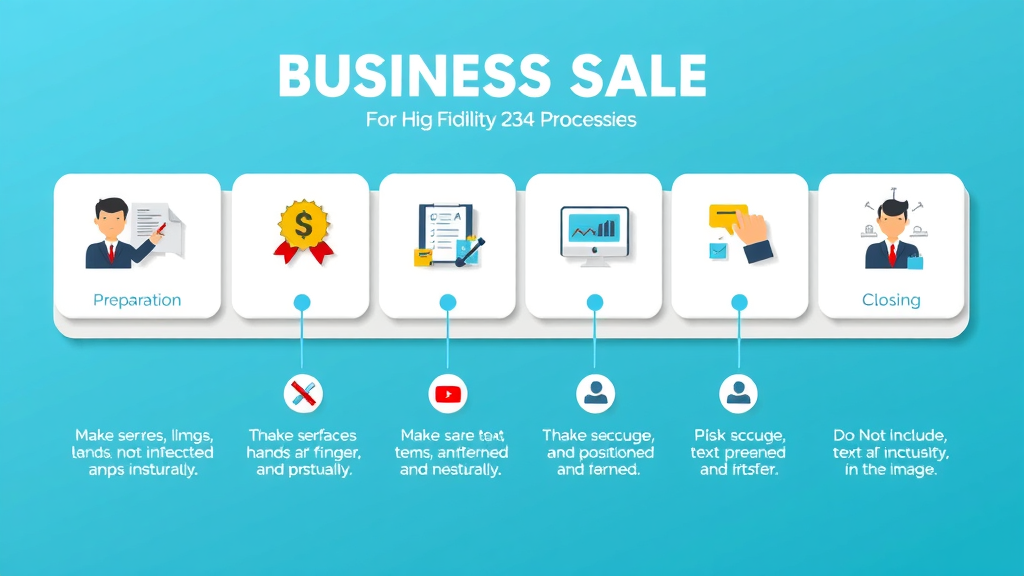
Visual infographic of business sale process steps from preparation to closing; icons and arrows showing sequence.

People Also Ask: How much is a business worth with $500,000 in sales?

Answer: A business for sale with $500,000 in sales can be valued differently based on industry, profit margins, and valuation methods. Typically, the business sale process uses earnings multiples or asset-based valuation to determine a fair purchase price for a small business.

People Also Ask: What is the sales process in a business?

Answer: The sales process in a business includes preparing for sale, setting the sale price, marketing, vetting buyers, handling negotiations, managing due diligence, and completing the legal and financial steps to finalize the business sale.

Expert Tips: Maximizing Value in Your Business Sale Process

  • Start preparations early to maximize sale price
  • Maintain confidentiality to protect value
  • Seek professional guidance throughout the business sale process
  • Transparently present financials to prospective buyers
  • Be ready for post-sale support requirements

Frequently Asked Questions About the Business Sale Process

  • How long does the business sale process typically take?
  • What paperwork is required to sell your business?
  • Can I sell a business without a broker?
  • What is due diligence and why is it important?
  • How do I keep the business sale confidential?

Key Takeaways for Business Owners Navigating the Business Sale Process

  • Strategic planning leads to a smoother sales process
  • Understanding your business valuation is essential
  • Stay proactive throughout negotiations
  • Proper documentation and expert advice are critical at every step
  • A successful business sale process benefits both seller and buyer

Thoughtful small business owner reflecting on the completed business sale process and next steps.

Ready to Begin Your Business Sale Process? Take the First Step Toward a Successful Transaction Today

Now is the time to act: Whether you’re a seasoned entrepreneur or a first-time seller, a proactive approach to the business sale process minimizes risks and maximizes your rewards. Start your journey toward a successful sale—contact a professional advisor or business broker and organize your documentation today for a seamless and profitable transaction.


Business Broker News Blog

123 Views

0 Comments

Write A Comment

*
*
Please complete the captcha to submit your comment.
Related Posts All Posts
08.11.2026

Why a Business Acquisition Advisor Is Your Key to Success

Imagine you’re about to buy or sell a business. The stakes are high, the path is scattered with complex regulations and unexpected roadblocks, and every decision could change your future. This isn’t just a transaction—it’s the next chapter of your life and livelihood. In moments like these, a business acquisition advisor becomes not just helpful, but absolutely essential. In this guide, you’ll learn how the right advisor can transform uncertainty into opportunity, ensuring your business acquisition is a leap toward lasting success.Unlocking Growth: How a Business Acquisition Advisor Empowers Strategic ExpansionImagine navigating the complex journey of business acquisition—uncertain regulations, hidden risks, and fierce competition. A business acquisition advisor provides expert guidance, transforming confusion into opportunity.Strategic business growth rarely happens by accident. If you’re a business owner looking to acquire another company or expand into new markets, the process can quickly feel overwhelming. A business acquisition advisor steps in to streamline the journey—handling intricate legalities, uncovering hidden opportunities, and guiding you through every step. Instead of leaving expansion up to chance, their expertise transforms lofty ambitions into achievable milestones.From small business owners to industry veterans, working with an acquisitions advisor isn’t just about facilitating transactions. It’s about uncovering the right fit for your organization, managing risk with rigorous due diligence, and maximizing the long-term value of your acquisitions. With access to a wide range of industries and a deep understanding of market dynamics, your advisor ensures your next business move paves the road to success.What You’ll Learn from a Business Acquisition AdvisorHow business acquisition advisors enable successful business acquisitionsThe vital role of due diligence in business transactionsInsights into multiple sectors including small business and a wide range of industriesThe advantages over navigating a business acquisition soloGuidance from a business acquisition advisor stretches far beyond basic advice. These experts bring insights from many industries and backgrounds, taking the time to understand your business goals. Through their advisory services, you’ll gain access to sector-specific trends, regulatory updates, and real-world experiences that help you navigate every phase, whether you aim to acquire a competitor or enter a new market.Unlike working alone or with a general business broker, an acquisitions advisor’s role involves personalized support and hands-on mentoring. They walk you through the critical steps of identifying the right business, evaluating growth potential, and avoiding common pitfalls—all tailored to your unique circumstances as a buyer or seller. This approach gives you a valuable edge in a competitive marketplace.What Is a Business Acquisition Advisor?Defining the Role of a Business Acquisition AdvisorExpertise in business acquisition processesServices compared to business brokers and acquisitions advisory teamsKey skills for acquisitions advisor successA business acquisition advisor is a seasoned professional or advisory firm specializing in helping clients buy or sell businesses. Unlike standard business brokers who may focus on transaction volume, acquisition advisors dig deeper, providing strategic analysis and tailored guidance from start to finish. This includes everything from business valuation, market research, and deal structuring, to due diligence and post-acquisition integration.While business brokers often assist with connecting buyers and sellers, advisors position themselves as partners in your journey. They draw on substantial experience across a wide range of industries, offering in-depth sector knowledge and negotiation skills essential for both large corporations and small business owners. A top-tier acquisitions advisor excels at identifying value, managing complex negotiations, and guiding clients away from costly missteps. This expertise proves invaluable for both buying a business and ensuring a successful business sale.Why Rely on a Business Acquisition Advisor for Buying a Business?Benefits for Buyers Navigating the Business Acquisition ProcessMarket analysis and opportunity identificationStructuring deals for a successful business transactionMinimizing risks with thorough due diligenceBuying a business is as much about finding the right investment opportunity as it is about making the process seamless. An experienced business acquisition advisor reduces risk by analyzing market conditions, uncovering growth and synergy potential, and evaluating hidden concerns. Their market analysis helps buyers identify businesses that align with personal goals and long-term strategy, whether you’re looking at a small business or a larger enterprise.Once a target is identified, your advisor becomes a key player in deal structuring. They ensure contracts are fair and the terms safeguard your interests—an area where solo buyers often stumble. By orchestrating thorough due diligence, they protect you from liabilities and post-acquisition surprises, offering peace of mind throughout the entire process.Business Acquisition Advisor vs. Business Broker: Key DifferencesCriteriaBusiness Acquisition AdvisorBusiness BrokerFocusStrategic growth & fitTransaction facilitationRole in Due DiligenceDeep analysis & vettingBasic information relayRange of Industries ServedWide range of industriesOften more nicheAlthough business acquisition advisors and business brokers both play roles in connecting buyers and sellers, their approaches differ significantly. Advisors focus on strategic, long-term value, while brokers typically facilitate smoother transactions but may not dive as deep into strategy, especially across a wide range of industries. The advisor’s strength lies in their dedication to robust due diligence, sector expertise, and commitment to your success. This difference can be the deciding factor in achieving a true competitive edge when you buy or sell your business.Due Diligence: The Advisor’s Secret WeaponHow Business Acquisition Advisors Master Due DiligenceEnsuring legal, financial, and operational clarityIdentifying red flags before the business sale is finalizedProtecting you in a wide range of industriesDue diligence is the backbone of any successful business acquisition. Business acquisition advisors know that missing even a small detail during this stage could risk your entire investment. By thoroughly reviewing financials, legal documents, and operational workflows, they provide a clear and comprehensive picture, protecting you from potential pitfalls and ensuring that you truly get what you’re paying for.This process involves close examination of tax records, contracts, intellectual property, and the reputation of the targeted business—all vital for anyone looking to buy or sell a company, especially in a range of industries with different requirements. Advisors’ expertise ensures that red flags are detected early, and uncertainties are resolved before any agreement is signed. Their diligence can make the difference between a straightforward transaction and a costly mistake.A Wide Range of Expertise for All Types of BusinessesSupporting Small Businesses to Multi-Industry AcquisitionsExperience with small business owners and owned businessesNavigating complex regulations in a range of industriesWider network connections than standard business brokersWhether you’re an entrepreneur eyeing your first acquisition or a business owner looking to grow your portfolio, a seasoned advisor offers support tailored to your goals. They routinely work alongside small business owners, owned businesses, and large corporations, using cross-sector know-how to guide strategies that work in your industry. Their success spans established sectors to emerging markets, making them invaluable resources for clients with diverse needs.A key distinguishing factor is the network an advisor brings. With connections that outpace most traditional brokers, they can introduce you to vetted buyers, sellers, and professionals—expediting the entire process. Their ability to manage regulatory nuances and tap sector-specific insights transforms even the most complex business acquisition into a smooth and predictable experience.Real Insights: Experience from Successful Business Acquisition Advisors"The right business acquisition advisor ensures you don’t just buy a business—you buy a future."Stories of client success in selling a business and buying a businessThe impact of strategic acquisitions advisoryTouching stories abound of business owners who, with the help of experienced acquisitions advisors, not only secured a successful business acquisition but discovered new growth opportunities. For instance, one small business owner ready to sell their business found an ideal buyer through an advisor’s network and received full value by leveraging thorough due diligence processes. Another client looking to expand into a new sector was able to avoid regulatory traps and hidden liabilities thanks to their advisor’s comprehensive knowledge.These real-world successes underscore the impact of working with an expert. The advisor’s ability to navigate challenging negotiations, tap into deep industry ties, and anticipate (and avoid) risk means smoother transitions and enhanced business value for both buyers and sellers.Step-by-Step: The Business Acquisition Process with an AdvisorAssessing buyer goals and business valuationManaging negotiations and deal structuringFinalizing agreements and due diligenceThe business acquisition process starts by clarifying your goals—what you want to achieve, your risk tolerance, and industry preferences. Next, you and your advisor move into detailed business valuation: analyzing financial health and market position. This step ensures you pay or receive the right price whether you buy or sell your business. From there, advisors guide you through negotiation, smoothing out sticking points and making sure the deal structure supports your objectives (for both buyers and sellers).As the final agreements near, your advisor takes over due diligence—verifying every claim, number, and asset. By the time the contracts are signed, you can move forward with confidence, knowing your interests are protected and your business transition is set up for success.Video Guide: Top Reasons to Work with a Business Acquisition AdvisorShort expert video explanation on choosing an acquisitions advisor for your successful business acquisitionIn this quick expert video, a seasoned business acquisition advisor unpacks the most important reasons to partner with a professional—sharing real-life success stories, powerful graphics on acquisition planning, and actionable tips to make your next move a winning one.People Also Ask: Essential Questions about Business Acquisition AdvisorsWhat is a business acquisition advisor responsible for?A business acquisition advisor manages the entire process: research, analysis, due diligence, negotiations, and successful business integration.An advisor’s responsibility starts with in-depth market research, careful analysis of prospective opportunities, and leading the due diligence stage. They keep the process organized, ensuring legal and financial compliance, and serve as your advocate in negotiations up to and after the business sale or purchase, paving the way for smooth integration.How does due diligence work when buying a business?Due diligence checks all aspects—financial, legal, and operational—ensuring you get exactly what you expect from the business acquisition.During due diligence, your advisor carefully reviews the company’s financial statements, contracts, employee records, and legal documentation. This thorough examination is designed to identify strengths, risks, or red flags, so you’re empowered to make an informed decision and avoid unexpected liabilities after closing.Is a business acquisition advisor needed for all industries?Business acquisition advisors serve a wide range of industries, using deep expertise to maximize success and reduce risk regardless of sector.No matter the sector—whether you’re in manufacturing, tech, hospitality, or retail—a business acquisition advisor’s broad expertise means they can tailor support to your unique industry challenges, ensuring optimal outcomes across diverse industries.FAQs about Business Acquisition AdvisorsWhat’s the difference between a business acquisition advisor and business brokers?While both help you buy or sell a business, advisors provide strategic planning, comprehensive due diligence, and customized support, whereas brokers focus primarily on brokering transactions.How does an acquisitions advisory team support a business sale?An advisory team offers end-to-end guidance—from evaluating the business and identifying buyers, to managing negotiations, overseeing due diligence, and finalizing the sale.Can a business acquisition advisor help in selling a business as well as buying?Yes! Business acquisition advisors are equally skilled in assisting with both buying and selling, offering tailored strategies that maximize value and ensure smooth transactions.Key Takeaways for Choosing the Right Business Acquisition AdvisorVast experience across a wide range of industriesExpertise in due diligence safeguards your investmentPersonalized guidance for small businesses and owner-operated businessesPartnering with a business acquisition advisor ensures your interests are protected, your strategies honed, and your results maximized—no matter what kind of business transaction you pursue.Ready to Succeed? Connect with a Business Acquisition Advisor TodayWhether you’re preparing to buy, sell, or grow through strategic acquisitions, having the right guidance makes all the difference. Stay ahead of market trends, regulatory changes, and proven deal strategies by subscribing to Business Broker News. Get timely insights, expert case studies, and actionable updates delivered straight to your inbox—so you can move forward with confidence. Visit businessbrokernews.us and subscribe today to take the next step toward your successful transaction.

08.10.2026

Unlock the Hidden Power of strategic acquisition opportunities Now

Imagine your business standing on the edge of exponential growth, with new markets within reach and innovative technologies ready for integration. What’s the bridge? Strategic acquisition opportunities. For companies keen to rise above the competition, recognizing and effectively executing the right acquisition strategy can mean all the difference between maintaining the status quo and achieving transformative success. This guide shows you how to unlock these hidden openings for sustainable business growth.Discover Strategic Acquisition Opportunities: What You'll LearnUnderstand the fundamentals of strategic acquisition opportunitiesExplore key components of a successful acquisition strategyIdentify prime acquisition opportunities and perform effective due diligenceRecognize the importance of cultural fit and clear objectives in strategic acquisitionsAnalyze real-world examples and four main types of acquisitionsGet practical tips for maximizing value in middle market dealsNavigating the World of Strategic Acquisition OpportunitiesSetting the Stage: The Critical Role of Strategic Acquisition in Growth"Strategic acquisition opportunities often unlock exponential business growth when approached with clear objectives and rigorous due diligence. "Strategic acquisitions fuel some of the world’s largest growth stories. For both large corporations and ambitious mid-sized companies, well-executed acquisition strategies serve as launchpads for expansion. The acquisition process, when thoughtfully managed, allows organizations to fast-track their business strategy—whether it's increasing market share, building new capabilities, or mitigating risks. Examples abound of companies using strategic acquisition opportunities to secure dominant positions in their sectors, entering new verticals, or leapsfrogging technological gaps. It's a high-impact mechanism in competitive markets, especially if the buyer and seller are aligned on integration plans and growth objectives.But not all strategic acquisitions succeed. Success demands preparation: understanding the why, digging deep into potential targets, and meticulously assessing the fit. By recognizing key patterns and acquiring businesses with compatible values and objectives, companies can avoid pitfalls and create real synergy in the combined business. A robust acquisition strategy, paired with unwavering commitment to due diligence and cultural fit, is what separates winning organizations from the rest.Why Businesses Seek Strategic Acquisition OpportunitiesExpanding market reachAccessing new technologiesGaining competitive advantageAccelerating growth through private equityFrom business owners in mature markets to innovative tech startups, the motivation to seek out acquisition opportunities varies. Expanding into new markets allows a company to diversify its revenue streams and minimize dependence on one region or segment. Acquiring cutting-edge technologies rather than building them in-house provides a shortcut for keeping up with rapid industry transformations. Private equity firms, with decades of experience structuring deals, are often central players in identifying and acting on strategic acquisition opportunities, especially in the middle market where value and untapped potential abound. Finally, for many, the draw is the chance to outmaneuver competitors and claim a more prominent market position—making strategic acquisitions not just a choice, but often a necessity.Defining Strategic Acquisition OpportunitiesWhat Does Strategic Acquisition Mean?At its core, a strategic acquisition is a calculated move by a business to purchase another company, aiming to fulfill long-term success objectives such as enhancing competitiveness, filling capability gaps, or entering entirely new domains. Unlike random investments, a strategic acquisition is intentional and aligns tightly with clearly defined business objectives and an overarching acquisition strategy. It's more than simply “buying another business”: it’s about acquiring the right assets, knowledge, and talent that complement your current strengths or open brand-new opportunities for growth.A successful strategic acquisition begins with an analysis of both companies' strengths, culture, and market positions. This process often involves seeking an edge that organic growth or traditional investments alone may not provide. For both the acquiring and target companies, clarity about the strategic intent and expected synergies is vital for a seamless integration plan. The more thoroughly these acquisition criteria are considered at the outset, the higher the chances of generating value from the acquisition process over time.Acquisition Strategy vs. Strategic Acquisitions: Key DifferencesAn acquisition strategy is the roadmap: it’s the systematic approach an organization uses to identify, evaluate, and integrate potential target businesses. It encompasses everything from defining acquisition criteria, identifying potential acquisition targets, conducting due diligence, and mapping out plans for integrating the combined business.Strategic acquisitions, on the other hand, are the result of implementing that roadmap. They are the actionable, specific investments that fulfill the strategic aims outlined in the acquisition strategy. While a strategy guides what you’ll look for and how, each strategic acquisition is the actual step forward—turning planning into reality, adding value to your company, and reshaping your market position. Clear objectives and well-considered acquisition strategies lead to the targeted, successful deals distinguishing leading businesses in their sectors.Identifying the Four Main Types of AcquisitionsHorizontal acquisitionsVertical acquisitionsConglomerate acquisitionsMarket-extension acquisitionsUnderstanding the distinctions between acquisition types is crucial when weighing strategic acquisition opportunities. Horizontal acquisitions involve joining forces with competitors to increase market share and consolidate industry power. Vertical acquisitions mean buying suppliers or distributors to enhance control over the supply chain and improve efficiency. Conglomerate acquisitions diversify the acquiring company’s interests into unrelated industries, spreading risk and opening new revenue avenues. Market-extension acquisitions allow companies to break into new geographical markets, expanding their reach and potential customer base. Each approach has unique strategic goals, risks, and value creation opportunities—making due diligence and alignment with growth objectives critical at every step.Pinpointing Acquisition Opportunities: A Step-by-Step ApproachBuilding a Robust Acquisition StrategyCreating a strong acquisition strategy is the backbone of successfully identifying and executing acquisition opportunities efficiently. The journey starts with defining clear objectives: What are you hoping to achieve? Are you pursuing market expansion, enhanced capabilities, or diversification? Establishing an integration plan right from the start is key. This involves evaluating the acquisition criteria, such as financial health, cultural fit, operational strengths, and synergy potential.Once objectives are set, the real work begins. A robust strategy requires a deliberate search for potential targets, careful assessment of each opportunity, and direct engagement between buyer and seller. Consider forming an internal team or seeking advice from experienced private equity firms to navigate complex transactions. The more thoughtful and systematic your approach, the more likely you are to spot hidden gems and nurture successful acquisition strategies that yield long-term benefits.Using Market Research to Uncover Strategic Acquisition OpportunitiesMarket research is pivotal in finding and evaluating acquisition opportunities. By assessing market businesses, analyzing competitor activity, and researching industry disruptors, companies can pinpoint where opportunity aligns with strategy. Research tools—from public filings to proprietary databases—help identify potential targets and offer insights on their market positioning, growth trajectory, and risks. Staying informed about sector trends boosts the chances of discovering acquisition opportunities before others do, which is critical in competitive business environments.Effective market research means more than number crunching—it involves understanding qualitative factors like business culture, leadership vision, and technological compatibility. Allocating the right amount of time to this research, possibly supported by private equity or specialist consultants, maximizes the value of your acquisition process. Companies that use nuanced research are better equipped not only to make strategic acquisitions, but also to integrate new assets smoothly for sustainable growth.Assessing Middle Market PotentialThe middle market—businesses typically valued between small, private companies and publicly traded giants—represents a fertile ground for strategic acquisition opportunities. These companies often offer strong growth potential, established customer bases, and untapped innovation capability, making them attractive and achievable targets for both corporate buyers and private equity firms. A focused approach to middle market businesses involves tailoring due diligence to account for their unique operational structures, corporate governance, and integration requirements.By prioritizing fit with your acquisition strategy and considering how the potential target’s resources and market presence complement your own, organizations can unlock substantial value. Private equity plays a prominent role here, offering financing and deal structuring expertise. For business owners looking to maximize their exit value, and for buyers seeking transformative growth, the middle market is where thoughtful research and strategic alignment make a measurable difference.Explainer: How to Research Strategic Acquisition Opportunities EffectivelyCrucial Considerations Before Pursuing Strategic Acquisition OpportunitiesThe Role of Due Diligence in Strategic AcquisitionsDue diligence is the backbone of every successful acquisition. This meticulous process delves into a potential acquisition’s financials, operations, human resources, and market standing, revealing strengths and red flags alike. Through rigorous due diligence, both buyer and seller build transparency, set realistic expectations, and protect sensitive information crucial for evaluating the fit. Overlooking this step often leads to overpaying, underestimating integration challenges, or missing out on hidden liabilities that could derail the combined business.The best acquisition strategies integrate due diligence from the very start, ensuring that cultural fit, technology, and clear objectives are all explored in depth. This deliberate approach not only safeguards the buyer but also increases the chances of a seamless merger where both organizations benefit from new synergies. Due diligence in the middle market may differ from larger deals, focusing more on owner-operator dynamics, specific talent, and long-term client relationships.Ensuring Cultural Fit and Clear Objectives"Every successful acquisition stems from rigorous due diligence and alignment of values and goals. "Cultural fit is often underestimated but can be the determining factor in whether a strategic acquisition achieves its intended results. When the cultures, values, and working styles of both organizations align, integration becomes more seamless and collaborative, helping avoid costly misunderstandings and disengagement. Establishing clear objectives—whether it's leveraging synergies or expanding product offerings—is equally crucial. Both companies must agree on what success looks like, from specific revenue milestones to shared strategic priorities.This clarity fosters a smooth integration plan, rooted in mutual trust and open communication. Business owners and their leadership teams should address any differences early in the acquisition process and map out strategies to cultivate a unified culture post-transaction. By doing so, acquisition opportunities efficiently translate to realized value over time.Private Equity in Strategic AcquisitionsPrivate equity firms are major drivers behind strategic acquisition opportunities, especially in the middle market. With decades of experience and extensive networks, these firms specialize in identifying, valuing, and executing deals swiftly. Beyond financing, they bring expertise in operational improvement, integration strategy, and value creation, ensuring that acquisitions align with broader business strategy and clear objectives.For many private companies or business owners seeking growth, partnering with private equity unlocks access to not only capital, but also vital strategic guidance. Equity firms are particularly valuable in structuring deals, assisting in due diligence, and supporting successful integration, making them invaluable partners for those pursuing acquisition opportunities efficiently.Expert Interview: Private Equity Insights in Strategic Acquisition OpportunitiesPeople Also Ask About Strategic Acquisition OpportunitiesWhat is an example of a strategic acquisition?Answer:A strategic acquisition could involve a technology company acquiring a startup to integrate new innovations, expand product lines, or eliminate a competitor, exemplifying how strategic acquisition opportunities drive growth and market dominance.What does strategic acquisition mean?Answer:Strategic acquisition refers to the purposeful purchase of a business or assets to achieve long-term goals, such as entering new markets, enhancing capabilities, or increasing competitiveness.What are the 4 types of acquisitions?Answer:The four main types of acquisitions are horizontal, vertical, conglomerate, and market-extension acquisitions. Each serves different strategic purposes within acquisition opportunities.What do acquisition opportunities mean?Answer:Acquisition opportunities refer to potential situations or businesses that align with an organization’s strategic goals for growth, value creation, or market expansion.Key Takeaways on Strategic Acquisition OpportunitiesStrategic acquisition opportunities are vital for sustainable growth.Effective strategies include thorough due diligence, cultural alignment, and clear objectives.Analyzing all types of acquisition opportunities enhances the likelihood of success.Private equity can be a powerful driver behind strategic acquisitions in the middle market.Comprehensive Table: Comparing Strategic Acquisition OpportunitiesType of AcquisitionKey FeaturesWhen to UsePotential RisksHorizontalAcquiring competitorsMarket share growthRegulatory issuesVerticalAcquiring suppliers/distributorsSupply chain controlIntegration challengesConglomerateUnrelated industry acquisitionDiversificationLack of synergyMarket-extensionEntering new marketsGeographical spreadCultural differencesFrequently Asked Questions About Strategic Acquisition OpportunitiesHow do you find hidden acquisition opportunities?Unearthing hidden acquisition opportunities requires a mix of market intelligence, networking, and proactive outreach to potential targets. Leveraging advanced data tools, consulting industry experts, and collaborating with private equity firms can help business owners identify prospects before they become widely known, allowing for a more tailored and timely approach.What role does management play in a successful acquisition strategy?Management is instrumental in shaping acquisition strategy and ensuring its execution. Success depends on leadership’s ability to clearly articulate objectives, foster cultural alignment, drive the integration plan, and motivate teams across both businesses to embrace the change. Strong management ensures value creation throughout the acquisition process.How does due diligence differ in the middle market?Due diligence in the middle market often means a closer focus on owner involvement, unique assets, and direct customer relationships. Unlike in larger, public-company deals, middle market due diligence may rely more on in-depth interviews, customer references, and detailed analysis of operational data, all while remaining sensitive to limited resources and tighter timelines.Why is cultural fit important in strategic acquisitions?Cultural fit ensures that both entities work together smoothly post-acquisition, preventing conflicts, disengagement, and inefficiencies. It helps to align teams, builds trust, and supports the achievement of shared goals, making integration more effective and increasing the likelihood of long-term success from the acquisition opportunity.Unlock Your Next Move with Strategic Acquisition OpportunitiesStay at the forefront of business growth and innovation; subscribe to Business Broker News for the latest insights, trends, and real opportunities in strategic acquisition.

08.07.2026

Unlock the Power of Business Valuation for Acquisition Success

Imagine you’re on the verge of making the biggest business decision of your life—acquiring or selling a company. The room is buzzing, numbers are flying, and uncertainty is high. What if you had the confidence to move forward, backed by solid numbers, clear insights, and a deep understanding of what your business is truly worth? Business valuation for acquisition is more than just a formula—it’s your foundation for successful negotiation, wise decision-making, and acquisition outcomes that serve your business goals.Understanding Business Valuation for Acquisition: Why It Matters to Business OwnersFor any business owner contemplating an acquisition, understanding the business valuation for acquisition process is absolutely essential. This valuation process not only determines the fair market value of a business, but it also equips business owners with a strategic advantage at the negotiation table. Whether you are buying or selling, knowing your true value can mean the difference between a successful acquisition and leaving significant value on the table.Accurate business valuations protect both buyers and sellers by providing a transparent look at a company’s financial performance, assets (including intangible asset value), and earning potential. As business owners become familiar with different valuation methods and how they reflect business health, they’re better positioned to evaluate opportunities, avoid costly mistakes, and align acquisition goals with financial realities. The expertise gained through business valuation for acquisition empowers owners to confidently navigate mergers and acquisitions, ensuring every move is backed by data and informed insight.How Business Valuation Shapes Acquisition OutcomesThe outcome of any acquisition largely hinges on the quality and accuracy of the business valuation process. A comprehensive valuation model considers not only tangible assets—like inventory and property—but also the company’s future cash flows, brand reputation, customer relationships, and industry position. This enables business owners to not just accept or reject an offer, but negotiate with clarity and purpose.When the right business valuation methods are employed, acquirers can see through optimistic projections, and sellers can justify their asking price based on objective metrics. For both sides, the valuation acts as a guiding light—spotting hidden risks, uncovering growth potential, and ensuring that every aspect of the deal is considered. Ultimately, thorough business valuation for acquisition is a roadmap to confidence, clear communication, and well-structured transactions that stand the test of time.Business Owners’ Perspective: The Role of Accurate Business ValuationFrom the vantage point of the business owner, accurate business valuations are about more than compliance or checking boxes—they are about unlocking value and securing one’s legacy. Owners who understand the science and art behind valuation methods wield more control over the acquisition process. They can anticipate buyer questions, explain financial performance in context, and prevent disputes that may arise from vague or disputed numbers.The ability to present clean, validated financials, illustrate consistent cash flow, and defend intangible asset value strengthens credibility and speeds up the due diligence stage. It also ensures that agreements are based on reality, not conjecture, setting a firm foundation for post-acquisition success, continuity, and growth.What You'll Learn About Business Valuation for AcquisitionKey business valuation methods and their applicationsHow business owners can leverage business valuation during acquisitionCritical steps of due diligence linked to valuationExpert insights on maximizing acquisition success with business valuation for acquisitionFundamental Valuation Methods Used in Business Valuation for AcquisitionThe cornerstone of every effective acquisition is rooted in the careful selection and application of the most relevant business valuation methods. There are several established approaches that business owners and valuation experts rely on to determine a company’s worth, each tailored to fit a company’s unique circumstances, industry position, and target markets. Whether a business prioritizes future earning potential, current assets, or market benchmarks, mastering these tools is essential for any acquisition strategy.Key valuation methods include the market capitalization method, discounted cash flow analysis, and a range of other comparative and asset-based models. Choosing the right method—or combination—ensures the valuation accurately represents both the tangible and intangible aspects of your operation. For the savvy business owner, this is the first line of defense against undervaluation and the surest path to negotiated success during acquisition.Market Capitalization and Its Role in Business ValuationMarket capitalization, or “market cap,” is one of the most straightforward valuation models, especially for public companies. This method measures a company’s total value by multiplying its current share price by the total number of outstanding shares. While not always applicable to private businesses, understanding market capitalization provides valuable insight into how the market perceives a company’s value. For private companies, similar business sales and industry benchmarks can be leveraged to approximate a comparable market cap.What makes market capitalization significant in business valuation for acquisition is its transparency and real-time reflection of investor sentiment. Business owners who are familiar with their market position can use market cap trends, adjusted for taxes, debt, and operating income, to defend or challenge an acquisition offer. However, because it relies on external perception and market conditions, it is best used alongside other valuation methods for a more balanced view.Valuation Methods: Discounted Cash Flow and BeyondThe discounted cash flow (DCF) method stands as one of the most respected and widely applied approaches in business valuation for acquisition. By projecting a company’s future cash flows and discounting them to present value using a selected discount rate (often reflecting the company’s cost of capital), DCF provides a forward-looking measure of potential. This model accommodates variables such as revenue trends, operational expenses, depreciation and amortization, and tax considerations.DCF and similar valuation methods go beyond just numbers—they require critical judgement about sustainability, risk, and future earning potential. While DCF is particularly valuable for businesses with predictable, steady earnings, other approaches such as asset-based valuation, earnings multiples, and comparable transactions analysis can help round out a well-informed acquisition decision.Comparing the Top Business Valuation Methods for AcquisitionsAcquisitions typically benefit from a multi-pronged approach, combining two or more valuation models. For example, an asset-heavy company might lean towards the asset-based approach, while a rapidly growing tech firm may benefit most from DCF analysis and sales comparables. The key is to understand each method’s strengths and limitations, adjusting for industry factors, ownership structure, and future market potential. Using this layered strategy, business owners reduce guesswork, uncover hidden risks, and ultimately present a stronger case—whether buying or selling.Here’s a side-by-side look at the main valuation methods:Comparison of Business Valuation Methods for AcquisitionValuation MethodUsed ForMain ComponentsStrengthsLimitationsMarket CapitalizationPublicly traded companiesShare price x shares outstandingCurrent, market-based, fast to calculateNot suitable for private businesses, influenced by market volatilityDiscounted Cash FlowBusinesses with predictable cash flowsFuture cash flows, discount rate, terminal valueForward-looking, holistic, sensitive to future growthRequires accurate forecasts, sensitive to discount rate choiceAsset-Based ApproachAsset-heavy businessesTotal assets minus liabilities (balance sheet)Simple, focuses on tangible/net assetsIgnores future growth, may undervalue profitable companiesComparable Transactions/MultiplesAll business typesEBITDA or earnings multiples from similar business salesMarket relevant, quick benchmarkCollecting truly comparable data can be difficultHow Cash Flow Analysis Impacts Business Valuation for AcquisitionA business’s actual and projected cash flow is at the core of any robust business valuation for acquisition. Buyers and sellers are primarily interested in how much money the business has generated and can expect to generate—in short: its ability to provide a return on investment. By analyzing historic and forecasted cash flows, both sides of an acquisition can visualize the company’s earning strength and potential for long-term success.Cash flow analysis is critical for exposing financial trends, hidden weaknesses, and untapped opportunities. This includes examining the balance sheet, analyzing operating, investing, and financing activities, and projecting future cash flow scenarios. As the key input to methods like DCF, cash flow analysis enables business owners to defend valuations with data and evidence, rather than hope and optimism.Understanding Cash Flows in Business ValuationIn the valuation process, cash flows reflect the true “lifeblood” of a business—the actual money moving in and out. Unlike profit, which can be manipulated through accounting choices, cash flow tells a straightforward story of financial health. Key components analyzed include operating cash flow, capital expenditures, and cash required for working capital. Strong, predictable cash flows drive high valuations, while volatile or declining flows can raise red flags and depress the price.By thoroughly reviewing and documenting all aspects of cash flow, including seasonality and one-time events, business owners provide clear evidence to support their company’s value. Understanding these figures helps both buyers and sellers anticipate questions during due diligence and justify proposed terms, making for a smoother and more successful acquisition.Discounted Cash Flow: A Deep DiveAmong all valuation methods, the discounted cash flow approach requires the most sophisticated financial modeling—but allows for the most accurate, forward-looking assessment of value. To use DCF, project the company’s expected cash flows over several years, then “discount” them back to present value using a discount rate that factors in risk, market cost of capital, and industry standards. This present value reflects what a buyer should be willing to pay, given the expected returns and risks.Both the selection of the discount rate and the reliability of future cash flow projections are critical. Conservative, realistic forecasting is key, and engaging a professional business appraiser or valuation expert is highly recommended for business owners working through complex or high-value transactions."A thorough understanding of cash flow is indispensable for any business owner considering acquisition."Due Diligence and Its Importance in Business Valuation for AcquisitionNo business valuation for acquisition is complete without rigorous due diligence. Due diligence is the process of cross-verifying all relevant information—financial, legal, and operational—before the acquisition is finalized. This step acts as a safeguard against costly surprises, undisclosed liabilities, and misrepresented earnings. It's a critical stage that ultimately validates the assumptions behind the chosen valuation method.For business owners, comprehensive due diligence builds trust with prospective buyers, accelerates the closing timeline, and averts unnecessary renegotiations. It ensures that the deal reflects the company’s real value and reduces the chances of disputes down the line.Key Due Diligence Steps for Business OwnersBusiness owners should approach due diligence methodically, preparing and organizing key documents related to financial performance, legal standing, and operational processes. This includes multi-year financial statements, tax returns, customer and supplier contracts, details on any intangible asset value (like intellectual property), and an inventory of tangible assets. Transparency in due diligence not only substantiates the valuation but also demonstrates professionalism and reduces buyer skepticism.Proactive due diligence also involves anticipating potential sticking points—unrecorded liabilities, unresolved legal matters, or gaps in documentation—and addressing them before negotiations escalate. A well-documented due diligence process supports robust, defensible business valuations and expedites the closing of deals with minimal friction.Red Flags to Watch For During Business Valuation for AcquisitionSeveral warning signs can emerge during due diligence and the valuation process, signaling challenges that could impact acquisition success or post-deal integration. These red flags may include inconsistent or declining cash flows, unresolved tax issues, outdated or misrepresented asset values, or an overreliance on non-contractual customer relationships. Other potential pitfalls are missing legal documents, unrecorded liabilities, or evidence of inflated revenues not supported by operating cash flow.Business owners should address these risks proactively to safeguard their standing during negotiations. Buyers are especially attuned to red flags that could affect revenue continuity or require significant capital post-acquisition. Transparent communication, accurate records, and a willingness to correct or clarify identified issues help ensure trust is maintained and the risk of a stalled or failed acquisition is minimized.Business Owners’ Guide to Maximizing Value During AcquisitionMaximizing your company’s value during acquisition is far from a passive process. For business owners, it’s about positioning the business as an attractive investment—financially, operationally, and strategically. Key steps include pre-emptive organization, meticulous record-keeping, and crystal-clear communication. By leveraging multiple valuation methods and demonstrating robust cash flow, you not only command a premium price but also invite stronger, more qualified buyers.Preparing early—well before the negotiation stage—gives business owners time to address weaknesses, highlight strengths, and optimize the business for both valuation and due diligence success. Consider the checklist below to set the stage for a smooth and rewarding acquisition experience:Preparing for Business Valuation: Checklist for Business OwnersReview and organize financial recordsAssess and update business processesOptimize cash flow reportingResearch market capitalization trendsEngage professionals for accurate business valuationCommon Mistakes Business Owners Make in Business Valuation for AcquisitionEven experienced business owners fall into common traps when valuing their business for acquisition. Overreliance on a single methodology or industry “rule of thumb” can shortchange ownership, lead to stalled negotiations, or open the door for disputes. Misinterpreting earnings, overlooking intangible asset value, or failing to account for market shifts are frequent pitfalls that downgrade a company’s perceived worth.Perhaps the costliest mistake is underestimating the importance of clean financials and thorough due diligence. Without these, even the most compelling cash flow projections or market capitalization analysis may not stand up under scrutiny. By recognizing these dangers, business owners can avoid undervaluing or overpricing their businesses and protect their long-term interests during acquisition.Top Pitfalls to Avoid in Business Valuation MethodsBusiness owners often gravitate toward overly simplistic valuation models, such as fixed profit multiples or outdated industry formulas. While easy to apply, these may not reflect market realities, understate intangible assets, or ignore critical cash flow nuances. Another risk is using projections that aren’t backed by realistic evidence, thus inflating value and deterring serious buyers—or opening the door for disappointing outcomes post-acquisition.Lastly, ignoring evolving regulations, industry dynamics, or neglecting international considerations can chip away at value and cause deals to collapse unexpectedly. Pro tip: Always cross-validate valuation with multiple methods, consult a qualified valuation expert or business appraiser, and keep thorough records to defend your numbers with confidence."Choosing the wrong valuation method can cost business owners dearly at the negotiation table."Expert Insights: Real-World Examples of Successful Business Valuation for AcquisitionSuccessful business owners and acquirers don’t just rely on theory—they follow best-practice valuation models and seek guidance from valuation experts to create win-win outcomes. By understanding and applying robust business valuation methods, these owners have achieved not just higher sale prices, but also speedier, less contentious deal closings, and smoother post-acquisition integrations.The most consistent theme? Thorough preparation, transparency, and evidence-based valuation lead to acquisition success. Avoiding surprises during due diligence and proactively addressing red flags further cements trust and positions sellers as “deal ready. ”Case Study: Leveraging Discounted Cash Flow in Acquisition SuccessConsider a technology company with strong subscription revenues and predictable future earnings. Rather than relying on a market norm multiple of earnings, the owners worked with a business appraiser to build a comprehensive discounted cash flow model. By presenting detailed growth forecasts, risk-adjusted discount rates, and supporting documentation, the sellers justified a valuation higher than initial market offers. The buyers, reassured by transparent data and robust due diligence, agreed to the higher price—resulting in a smooth and successful acquisition for both parties.This real-world outcome underscores the importance of preparing accurate future cash flow projections, engaging with professional valuation experts, and focusing on buyer concerns around sustainability and risk. The confidence generated by this process is priceless at the negotiation table.Lessons from Business Owners Who Nailed Their ValuationOwners who achieve top-of-market acquisition prices share common habits: systematic record-keeping, realistic growth planning, and dedication to objective, multi-method valuation. Many point to engaging an external valuation expert or business appraiser early in the process as their smartest move, adding credibility and depth to their offer. They also advise being candid about potential risks, industry changes, and competitive threats, allowing for realistic negotiations and sustainable transitions.In summary, thorough business valuation for acquisition is a hallmark of successful deals and lasting business legacies. Clear communication, evidence-based analysis, and professional guidance are the real “secret weapons” of business owners who thrive in today’s acquisition environment.People Also Ask: Business Valuation for Acquisition FAQsHow much is a business worth with $1,000,000 in sales?Answer: Examining valuation methods in relation to annual sales can provide a baseline, but accurate business valuation for acquisition should also consider cash flow, market capitalization, and industry trends.Is a business worth 3 times profit?Answer: While some business owners consider multiples like 3 times profit, expert valuation methods including discounted cash flow and market capitalization approaches offer more precise figures during acquisition.How much is a business worth with $500,000 in sales?Answer: The business valuation for the acquisition process weighs several factors beyond sales volume, such as cash flows, due diligence outcomes, and market value.How much is a business worth that makes $300,000 a year?Answer: Valuing a business with $300,000 annual cash flow requires thorough analysis using proper valuation methods and industry comparisons, rather than focusing solely on net income.Key Takeaways on Business Valuation for AcquisitionBusiness valuation is essential for a successful acquisitionMultiple valuation methods yield the most accurate resultsEffective due diligence protects business owners’ interestsProfessional guidance ensures reliable business valuation for acquisitionFAQs: Business Valuation for AcquisitionWhat is the most reliable business valuation method for acquisition?The most reliable business valuation method depends on the business type, industry, and growth stage. Discounted cash flow is often preferred for businesses with predictable future cash flows, while market capitalization or comparable transaction approaches suit others. Many business owners use a combination of methods for the most accurate results.How often should business owners update their business valuation?Business owners should update their business valuation annually or before any major transaction, such as acquisition, merger, or investor onboarding. Regular updates ensure the valuation reflects current financial performance, market trends, and operational realities.Can market capitalization and discounted cash flow be used together in business valuation for acquisition?Yes, combining market capitalization and discounted cash flow methods provides a more rounded and precise business valuation for acquisition. Comparing results from different approaches helps to cross-validate findings and compensate for each method’s limitations.Watch: A short animated explainer covering the four critical steps in a reliable business valuation for acquisition—reviewing financial records, analyzing cash flow, performing thorough due diligence, and working with professional valuation experts.Further Resources for Business Owners Seeking Business Valuation for AcquisitionFor business owners eager to deepen their understanding, explore professional valuation consultant networks, local business broker associations, and leading M&A publications. Books and online courses on cash flow analysis, fair market value, and acquisition due diligence are invaluable for mastering the valuation process and maximizing acquisition outcomes.Subscribe to Business Broker NewsStay informed on the latest trends, expert tips, and real-world case studies by subscribing to Business Broker News. Receive timely advice on business valuation for acquisition, due diligence best practices, and more—delivered directly to your inbox.Conclusion: Smart business owners know that mastering business valuation for acquisition is the key to negotiation strength, deal safety, and acquisition success. Begin your journey with due diligence, apply diverse valuation methods, and don’t hesitate to seek professional guidance for the best outcome.

Business Broker News

Digital Media Services for Brokers that Sell/Buy Businesses.  Digital media services play a crucial role for brokers who facilitate the buying and selling of businesses, helping them reach a broader audience, generate leads, and enhance their brand visibility. These services include professional website development, search engine optimization (SEO), targeted digital advertising, content marketing, and social media management. High-quality visual content, such as virtual tours, professional photography, and video presentations, can significantly boost engagement and attract serious buyers. Additionally, data-driven marketing strategies, including email campaigns and retargeting ads, ensure that brokers connect with the right investors and business owners. By leveraging digital media services, business brokers can streamline deal flow, increase inquiries, and ultimately close transactions more efficiently. 

RP Design Media

  • Home
  • Categories
    • Daily News
    • Trending
    • Interviews
    • Case Study
    • Legal Updates
    • Business Broker News Blog

AVAILABLE FROM 8AM - 5PM

Cheshire, CT 06410

PO Box 1189

ABOUT US

Digital Media Services for Brokers that Sell/Buy Businesses.

Business Broker News is a subsidiary of RP Design Web Services.

© 2026 RP Design Web Services All Rights Reserved. P.O. Box 1189, Cheshire, CT 06410 . Contact Us . Terms of Service . Privacy Policy

eyJjb21wYW55IjoiUlAgRGVzaWduIFdlYiBTZXJ2aWNlcyIsImFkZHJlc3MiOiJQLk8uIEJveCAxMTg5IiwiY2l0eSI6IkNoZXNoaXJlIiwic3RhdGUiOiJDVCIsInppcCI6IjA2NDEwIiwiZW1haWwiOiJyb2JlcnRAcnBkZXNpZ24uY29tIiwidG9zIjoiUEhBK1BITjBjbTl1Wno0OFpXMCtWMmhsYmlCNWIzVWdjMmxuYmkxcGJpQjNhWFJvSUhWekxDQjViM1VnWVhKbElHZHBkbWx1WnladVluTndPeUI1YjNWeUlIQmxjbTFwYzNOcGIyNGdZVzVrSUdOdmJuTmxiblFnZEc4Z2MyVnVaQ0I1YjNVZ1pXMWhhV3dnWVc1a0wyOXlJRk5OVXlCMFpYaDBJRzFsYzNOaFoyVnpMaUJDZVNCamFHVmphMmx1WnlCMGFHVWdWR1Z5YlhNZ1lXNWtJRU52Ym1ScGRHbHZibk1nWW05NElHRnVaQ0JpZVNCemFXZHVhVzVuSUdsdUlIbHZkU0JoZFhSdmJXRjBhV05oYkd4NUlHTnZibVpwY20wZ2RHaGhkQ0I1YjNVZ1lXTmpaWEIwSUdGc2JDQjBaWEp0Y3lCcGJpQjBhR2x6SUdGbmNtVmxiV1Z1ZEM0OEwyVnRQand2YzNSeWIyNW5Qand2Y0Q0S0NqeHdQanhoSUdoeVpXWTlJbWgwZEhBNkx5OTNkM2N1WjI5dloyeGxMbU52YlNJK2FIUjBjRG92TDNkM2R5NW5iMjluYkdVdVkyOXRQQzloUGp3dmNENEtDanh3UGladVluTndPend2Y0Q0S0NqeHdQanh6ZEhKdmJtYytVMFZTVmtsRFJUd3ZjM1J5YjI1blBqd3ZjRDRLQ2p4d1BsZGxJSEJ5YjNacFpHVWdZU0J6WlhKMmFXTmxJSFJvWVhRZ1kzVnljbVZ1ZEd4NUlHRnNiRzkzY3lCNWIzVWdkRzhnY21WalpXbDJaU0J5WlhGMVpYTjBjeUJtYjNJZ1ptVmxaR0poWTJzc0lHTnZiWEJoYm5rZ2FXNW1iM0p0WVhScGIyNHNJSEJ5YjIxdmRHbHZibUZzSUdsdVptOXliV0YwYVc5dUxDQmpiMjF3WVc1NUlHRnNaWEowY3l3Z1kyOTFjRzl1Y3l3Z1pHbHpZMjkxYm5SeklHRnVaQ0J2ZEdobGNpQnViM1JwWm1sallYUnBiMjV6SUhSdklIbHZkWElnWlcxaGFXd2dZV1JrY21WemN5QmhibVF2YjNJZ1kyVnNiSFZzWVhJZ2NHaHZibVVnYjNJZ1pHVjJhV05sTGlCWmIzVWdkVzVrWlhKemRHRnVaQ0JoYm1RZ1lXZHlaV1VnZEdoaGRDQjBhR1VnVTJWeWRtbGpaU0JwY3lCd2NtOTJhV1JsWkNBbWNYVnZkRHRCVXkxSlV5WnhkVzkwT3lCaGJtUWdkR2hoZENCM1pTQmhjM04xYldVZ2JtOGdjbVZ6Y0c5dWMybGlhV3hwZEhrZ1ptOXlJSFJvWlNCMGFXMWxiR2x1WlhOekxDQmtaV3hsZEdsdmJpd2diV2x6TFdSbGJHbDJaWEo1SUc5eUlHWmhhV3gxY21VZ2RHOGdjM1J2Y21VZ1lXNTVJSFZ6WlhJZ1kyOXRiWFZ1YVdOaGRHbHZibk1nYjNJZ2NHVnljMjl1WVd4cGVtRjBhVzl1SUhObGRIUnBibWR6TGp3dmNENEtDanh3UGxsdmRTQmhjbVVnY21WemNHOXVjMmxpYkdVZ1ptOXlJRzlpZEdGcGJtbHVaeUJoWTJObGMzTWdkRzhnZEdobElGTmxjblpwWTJVZ1lXNWtJSFJvWVhRZ1lXTmpaWE56SUcxaGVTQnBiblp2YkhabElIUm9hWEprSUhCaGNuUjVJR1psWlhNZ0tITjFZMmdnWVhNZ1UwMVRJSFJsZUhRZ2JXVnpjMkZuWlhNc0lFbHVkR1Z5Ym1WMElITmxjblpwWTJVZ2NISnZkbWxrWlhJZ2IzSWdZMlZzYkhWc1lYSWdZV2x5ZEdsdFpTQmphR0Z5WjJWektTNGdXVzkxSUdGeVpTQnlaWE53YjI1emFXSnNaU0JtYjNJZ2RHaHZjMlVnWm1WbGN5d2dhVzVqYkhWa2FXNW5JSFJvYjNObElHWmxaWE1nWVhOemIyTnBZWFJsWkNCM2FYUm9JSFJvWlNCa2FYTndiR0Y1SUc5eUlHUmxiR2wyWlhKNUlHOW1JR1ZoWTJnZ1UwMVRJSFJsZUhRZ2JXVnpjMkZuWlNCelpXNTBJSFJ2SUhsdmRTQmllU0IxY3k0Z1NXNGdZV1JrYVhScGIyNHNJSGx2ZFNCdGRYTjBJSEJ5YjNacFpHVWdZVzVrSUdGeVpTQnlaWE53YjI1emFXSnNaU0JtYjNJZ1lXeHNJR1Z4ZFdsd2JXVnVkQ0J1WldObGMzTmhjbmtnZEc4Z1lXTmpaWE56SUhSb1pTQlRaWEoyYVdObElHRnVaQ0J5WldObGFYWmxJSFJvWlNCVFRWTWdkR1Y0ZENCdFpYTnpZV2RsY3k0Z1YyVWdaRzhnYm05MElHTm9ZWEpuWlNCaGJua2dabVZsY3lCbWIzSWdaR1ZzYVhabGNua2diMllnWlcxaGFXd2diM0lnVTAxVExpQlVhR2x6SUdseklHRWdabkpsWlNCelpYSjJhV05sSUhCeWIzWnBaR1ZrSUdKNUlIVnpMaUJJYjNkbGRtVnlMQ0J3YkdWaGMyVWdZMmhsWTJzZ2QybDBhQ0I1YjNWeUlHbHVkR1Z5Ym1WMElITmxjblpwWTJVZ2NISnZkbWxrWlhJZ1lXNWtJR05sYkd4MWJHRnlJR05oY25KcFpYSWdabTl5SUdGdWVTQmphR0Z5WjJWeklIUm9ZWFFnYldGNUlHbHVZM1Z5SUdGeklHRWdjbVZ6ZFd4MElHWnliMjBnY21WalpXbDJhVzVuSUdWdFlXbHNJR0Z1WkNCVFRWTWdkR1Y0ZENCdFpYTnpZV2RsY3lCMGFHRjBJSGRsSUdSbGJHbDJaWElnZFhCdmJpQjViM1Z5SUc5d2RDMXBiaUJoYm1RZ2NtVm5hWE4wY21GMGFXOXVJSGRwZEdnZ2IzVnlJR1Z0WVdsc0lHRnVaQ0JUVFZNZ2MyVnlkbWxqWlhNdUlGbHZkU0JqWVc0Z1kyRnVZMlZzSUdGMElHRnVlU0IwYVcxbExpQktkWE4wSUhSbGVIUWdKbkYxYjNRN1UxUlBVQ1p4ZFc5ME95QjBieUE4YUdsbmFHeHBaMmgwSUdOc1lYTnpQU0pqYjIxd1lXNTVVR2h2Ym1WVmNHUmhkR1VpUGlzeE1qQXpNamN4TnprNU1Ud3ZhR2xuYUd4cFoyaDBQaTRnUVdaMFpYSWdlVzkxSUhObGJtUWdkR2hsSUZOTlV5QnRaWE56WVdkbElDWnhkVzkwTzFOVVQxQW1jWFZ2ZERzZ2RHOGdkWE1zSUhkbElIZHBiR3dnYzJWdVpDQjViM1VnWVc0Z1UwMVRJRzFsYzNOaFoyVWdkRzhnWTI5dVptbHliU0IwYUdGMElIbHZkU0JvWVhabElHSmxaVzRnZFc1emRXSnpZM0pwWW1Wa0xpQkJablJsY2lCMGFHbHpMQ0I1YjNVZ2QybHNiQ0J1YnlCc2IyNW5aWElnY21WalpXbDJaU0JUVFZNZ2JXVnpjMkZuWlhNZ1puSnZiU0IxY3k0OEwzQStDZ284Y0Q0OGMzUnliMjVuUGxsUFZWSWdVa1ZIU1ZOVVVrRlVTVTlPSUU5Q1RFbEhRVlJKVDA1VFBDOXpkSEp2Ym1jK1BDOXdQZ29LUEhBK1NXNGdZMjl1YzJsa1pYSmhkR2x2YmlCdlppQjViM1Z5SUhWelpTQnZaaUIwYUdVZ1UyVnlkbWxqWlN3Z2VXOTFJR0ZuY21WbElIUnZPand2Y0Q0S0NqeHZiRDRLQ1R4c2FUNXdjbTkyYVdSbElIUnlkV1VzSUdGalkzVnlZWFJsTENCamRYSnlaVzUwSUdGdVpDQmpiMjF3YkdWMFpTQnBibVp2Y20xaGRHbHZiaUJoWW05MWRDQjViM1Z5YzJWc1ppQmhjeUJ3Y205dGNIUmxaQ0JpZVNCMGFHVWdVMlZ5ZG1salpTWWpNems3Y3lCeVpXZHBjM1J5WVhScGIyNGdabTl5YlNBb2MzVmphQ0JwYm1admNtMWhkR2x2YmlCaVpXbHVaeUIwYUdVZ0puRjFiM1E3VW1WbmFYTjBjbUYwYVc5dUlFUmhkR0VtY1hWdmREc3BJR0Z1WkR3dmJHaytDZ2s4YkdrK2JXRnBiblJoYVc0Z1lXNWtJSEJ5YjIxd2RHeDVJSFZ3WkdGMFpTQjBhR1VnVW1WbmFYTjBjbUYwYVc5dUlFUmhkR0VnZEc4Z2EyVmxjQ0JwZENCMGNuVmxMQ0JoWTJOMWNtRjBaU3dnWTNWeWNtVnVkQ0JoYm1RZ1kyOXRjR3hsZEdVdUlFbG1JSGx2ZFNCd2NtOTJhV1JsSUdGdWVTQnBibVp2Y20xaGRHbHZiaUIwYUdGMElHbHpJSFZ1ZEhKMVpTd2dhVzVoWTJOMWNtRjBaU3dnYm05MElHTjFjbkpsYm5RZ2IzSWdhVzVqYjIxd2JHVjBaU3dnYjNJZ2QyVWdhR0YyWlNCeVpXRnpiMjVoWW14bElHZHliM1Z1WkhNZ2RHOGdjM1Z6Y0dWamRDQjBhR0YwSUhOMVkyZ2dhVzVtYjNKdFlYUnBiMjRnYVhNZ2RXNTBjblZsTENCcGJtRmpZM1Z5WVhSbExDQnViM1FnWTNWeWNtVnVkQ0J2Y2lCcGJtTnZiWEJzWlhSbExDQjNaU0JvWVhabElIUm9aU0J5YVdkb2RDQjBieUJ6ZFhOd1pXNWtJRzl5SUR4emRISnZibWMrUEhOd1lXNGdjM1I1YkdVOUltTnZiRzl5T2lOR1JqQXdNREE3SWo1MFpYSnRhVzVoZEdVZ2VXOTFjaUJoWTJOdmRXNTBMM0J5YjJacGJHVWdZVzVrSUhKbFpuVnpaU0JoYm5rZ1lXNWtJR0ZzYkNCamRYSnlaVzUwSUc5eUlHWjFkSFZ5WlNCMWMyVWdiMllnZEdobElGTmxjblpwWTJVZ0tHOXlJR0Z1ZVNCd2IzSjBhVzl1SUhSb1pYSmxiMllwTGp3dmMzQmhiajQ4TDNOMGNtOXVaejQ4TDJ4cFBnbzhMMjlzUGdvS1BIQStKbTVpYzNBN1BDOXdQZ284YUdsbmFHeHBaMmgwSUdOc1lYTnpQU0pqYjIxd1lXNTVUbUZ0WlZWd1pHRjBaU0krVWxBZ1JHVnphV2R1SUZkbFlpQlRaWEoyYVdObGN6d3ZhR2xuYUd4cFoyaDBQanhpY2lBdlBnbzhhR2xuYUd4cFoyaDBJR05zWVhOelBTSmpiMjF3WVc1NVFXUmtjbVZ6YzFWd1pHRjBaU0krVUM1UExpQkNiM2dnTVRFNE9Td2dRMmhsYzJocGNtVXNJRU5VSURBMk5ERXdQQzlvYVdkb2JHbG5hSFErUEdKeUlDOCtDanhvYVdkb2JHbG5hSFFnWTJ4aGMzTTlJbU52YlhCaGJubFFhRzl1WlZWd1pHRjBaU0krS3pFeU1ETXlOekUzT1RreFBDOW9hV2RvYkdsbmFIUStQR0p5SUM4K0NqeG9hV2RvYkdsbmFIUWdZMnhoYzNNOUltTnZiWEJoYm5sRmJXRnBiRlZ3WkdGMFpTSStjbTlpWlhKMFFISndaR1Z6YVdkdUxtTnZiVHd2YUdsbmFHeHBaMmgwUGc9PSIsInByaXZhY3kiOiJQSEErUEhOMGNtOXVaejVRVWtsV1FVTlpQQzl6ZEhKdmJtYytQQzl3UGdvS1BIQStQSE4wY205dVp6NVVhR1VnYVc1bWIzSnRZWFJwYjI0Z2NISnZkbWxrWldRZ1pIVnlhVzVuSUhSb2FYTWdjbVZuYVhOMGNtRjBhVzl1SUdseklHdGxjSFFnY0hKcGRtRjBaU0JoYm1RZ1kyOXVabWxrWlc1MGFXRnNMQ0JoYm1RZ2QybHNiQ0J1WlhabGNpQmlaU0JrYVhOMGNtbGlkWFJsWkN3Z1kyOXdhV1ZrTENCemIyeGtMQ0IwY21Ga1pXUWdiM0lnY0c5emRHVmtJR2x1SUdGdWVTQjNZWGtzSUhOb1lYQmxJRzl5SUdadmNtMHVJRlJvYVhNZ2FYTWdiM1Z5SUdkMVlYSmhiblJsWlM0OEwzTjBjbTl1Wno0OEwzQStDZ284Y0Q0OGMzUnliMjVuUGtsT1JFVk5Ua2xVV1R3dmMzUnliMjVuUGp3dmNENEtDanh3UGp4bGJUNVpiM1VnWVdkeVpXVWdkRzhnYVc1a1pXMXVhV1o1SUdGdVpDQm9iMnhrSUhWekxDNGdZVzVrSUdsMGN5QnpkV0p6YVdScFlYSnBaWE1zSUdGbVptbHNhV0YwWlhNc0lHOW1abWxqWlhKekxDQmhaMlZ1ZEhNc0lHTnZMV0p5WVc1a1pYSnpJRzl5SUc5MGFHVnlJSEJoY25SdVpYSnpMQ0JoYm1RZ1pXMXdiRzk1WldWekxDQm9ZWEp0YkdWemN5Qm1jbTl0SUdGdWVTQmpiR0ZwYlNCdmNpQmtaVzFoYm1Rc0lHbHVZMngxWkdsdVp5QnlaV0Z6YjI1aFlteGxJR0YwZEc5eWJtVjVjeVlqTXprN0lHWmxaWE1zSUcxaFpHVWdZbmtnWVc1NUlIUm9hWEprSUhCaGNuUjVJR1IxWlNCMGJ5QnZjaUJoY21semFXNW5JRzkxZENCdlppQkRiMjUwWlc1MElIbHZkU0J5WldObGFYWmxMQ0J6ZFdKdGFYUXNJSEpsY0d4NUxDQndiM04wTENCMGNtRnVjMjFwZENCdmNpQnRZV3RsSUdGMllXbHNZV0pzWlNCMGFISnZkV2RvSUhSb1pTQlRaWEoyYVdObExDQjViM1Z5SUhWelpTQnZaaUIwYUdVZ1UyVnlkbWxqWlN3Z2VXOTFjaUJqYjI1dVpXTjBhVzl1SUhSdklIUm9aU0JUWlhKMmFXTmxMQ0I1YjNWeUlIWnBiMnhoZEdsdmJpQnZaaUIwYUdVZ1ZFOVRMQ0J2Y2lCNWIzVnlJSFpwYjJ4aGRHbHZiaUJ2WmlCaGJua2djbWxuYUhSeklHOW1JR0Z1YjNSb1pYSXVQQzlsYlQ0OEwzQStDZ284Y0Q0OGMzUnliMjVuUGtSSlUwTk1RVWxOUlZJZ1QwWWdWMEZTVWtGT1ZFbEZVend2YzNSeWIyNW5Qand2Y0Q0S0NqeHdQanh6ZEhKdmJtYytXVTlWSUVWWVVGSkZVMU5NV1NCVlRrUkZVbE5VUVU1RUlFRk9SQ0JCUjFKRlJTQlVTRUZVT2p3dmMzUnliMjVuUGp3dmNENEtDanh2YkQ0S0NUeHNhVDVaVDFWU0lGVlRSU0JQUmlCVVNFVWdVMFZTVmtsRFJTQkpVeUJCVkNCWlQxVlNJRk5QVEVVZ1VrbFRTeTRnVkVoRklGTkZVbFpKUTBVZ1NWTWdVRkpQVmtsRVJVUWdUMDRnUVU0Z0puRjFiM1E3UVZNZ1NWTW1jWFZ2ZERzZ1FVNUVJQ1p4ZFc5ME8wRlRJRUZXUVVsTVFVSk1SU1p4ZFc5ME95QkNRVk5KVXk0Z0xDNGdRVTVFSUZWVExDQkpWQ1lqTXprN1V5QkRWVk5VVDAxRlVsTXNJRVZZVUZKRlUxTk1XU0JFU1ZORFRFRkpUVk1nUVV4TUlGZEJVbEpCVGxSSlJWTWdUMFlnUVU1WklFdEpUa1FzSUZkSVJWUklSVklnUlZoUVVrVlRVeUJQVWlCSlRWQk1TVVZFTENCSlRrTk1WVVJKVGtjc0lFSlZWQ0JPVDFRZ1RFbE5TVlJGUkNCVVR5QlVTRVVnU1UxUVRFbEZSQ0JYUVZKU1FVNVVTVVZUSUU5R0lFMUZVa05JUVU1VVFVSkpURWxVV1N3Z1JrbFVUa1ZUVXlCR1QxSWdRU0JRUVZKVVNVTlZURUZTSUZCVlVsQlBVMFVnUVU1RUlFNVBUaTFKVGtaU1NVNUhSVTFGVGxRdVBDOXNhVDRLQ1R4c2FUNU5RVXRGVXlCT1R5QlhRVkpTUVU1VVdTQlVTRUZVSUNocEtTQlVTRVVnVTBWU1ZrbERSU0JYU1V4TUlFMUZSVlFnV1U5VlVpQlNSVkZWU1ZKRlRVVk9WRk1zSUNocGFTa2dWRWhGSUZORlVsWkpRMFVnVjBsTVRDQkNSU0JWVGtsT1ZFVlNVbFZRVkVWRUxDQlVTVTFGVEZrc0lGTkZRMVZTUlN3Z1QxSWdSVkpTVDFJdFJsSkZSU3dnS0dscGFTa2dWRWhGSUZKRlUxVk1WRk1nVkVoQlZDQk5RVmtnUWtVZ1QwSlVRVWxPUlVRZ1JsSlBUU0JVU0VVZ1ZWTkZJRTlHSUZSSVJTQlRSVkpXU1VORklGZEpURXdnUWtVZ1FVTkRWVkpCVkVVZ1QxSWdVa1ZNU1VGQ1RFVXNJRUZPUkNBb2FYWXBJRUZPV1NCRlVsSlBVbE1nU1U0Z1ZFaEZJRk5QUmxSWFFWSkZJRmRKVEV3Z1FrVWdRMDlTVWtWRFZFVkVMand2YkdrK0NnazhiR2srUVU1WklFMUJWRVZTU1VGTUlFUlBWMDVNVDBGRVJVUWdUMUlnVDFSSVJWSlhTVk5GSUU5Q1ZFRkpUa1ZFSUZSSVVrOVZSMGdnVkVoRklGVlRSU0JQUmlCVVNFVWdVMFZTVmtsRFJTQkpVeUJFVDA1RklFRlVJRmxQVlZJZ1QxZE9JRVJKVTBOU1JWUkpUMDRnUVU1RUlGSkpVMHNnUVU1RUlGUklRVlFnV1U5VklGZEpURXdnUWtVZ1UwOU1SVXhaSUZKRlUxQlBUbE5KUWt4RklFWlBVaUJCVGxrZ1JFRk5RVWRGSUZSUElGbFBWVklnUTA5TlVGVlVSVklnVTFsVFZFVk5JRTlTSUV4UFUxTWdUMFlnUkVGVVFTQlVTRUZVSUZKRlUxVk1WRk1nUmxKUFRTQlVTRVVnUkU5WFRreFBRVVFnVDBZZ1FVNVpJRk5WUTBnZ1RVRlVSVkpKUVV3dVBDOXNhVDRLQ1R4c2FUNU9UeUJCUkZaSlEwVWdUMUlnU1U1R1QxSk5RVlJKVDA0c0lGZElSVlJJUlZJZ1QxSkJUQ0JQVWlCWFVrbFVWRVZPTENCUFFsUkJTVTVGUkNCQ1dTQlpUMVVnUmxKUFRTQlBVaUJVU0ZKUFZVZElJRTlTSUVaU1QwMGdWRWhGSUZORlVsWkpRMFVnVTBoQlRFd2dRMUpGUVZSRklFRk9XU0JYUVZKU1FVNVVXU0JPVDFRZ1JWaFFVa1ZUVTB4WklGTlVRVlJGUkNCSlRpQlVTRVVnVkU5VExqd3ZiR2srQ2p3dmIydytDZ284Y0Q0OGMzUnliMjVuUGt4SlRVbFVRVlJKVDA0Z1QwWWdURWxCUWtsTVNWUlpQQzl6ZEhKdmJtYytQQzl3UGdvS1BIQStXVTlWSUVWWVVGSkZVMU5NV1NCVlRrUkZVbE5VUVU1RUlFRk9SQ0JCUjFKRlJTQlVTRUZVSUVGT1JDQlRTRUZNVENCT1QxUWdRa1VnVEVsQlFreEZJRVpQVWlCQlRsa2dSRWxTUlVOVUxDQkpUa1JKVWtWRFZDd2dTVTVEU1VSRlRsUkJUQ3dnVTFCRlEwbEJUQ3dnUTA5T1UwVlJWVVZPVkVsQlRDQlBVaUJGV0VWTlVFeEJVbGtnUkVGTlFVZEZVeXdnU1U1RFRGVkVTVTVISUVKVlZDQk9UMVFnVEVsTlNWUkZSQ0JVVHl3Z1JFRk5RVWRGVXlCR1QxSWdURTlUVXlCUFJpQlFVazlHU1ZSVExDQkhUMDlFVjBsTVRDd2dWVk5GTENCRVFWUkJJRTlTSUU5VVNFVlNJRWxPVkVGT1IwbENURVVnVEU5VFUwVlRJQ2hGVmtWT0lFbEdJRWhCVXlCQ1JVVk9JRUZFVmtsVFJVUWdUMFlnVkVoRklGQlBVMU5KUWtsTVNWUlpJRTlHSUZOVlEwZ2dSRUZOUVVkRlV5a3NJRkpGVTFWTVZFbE9SeUJHVWs5Tk9qd3ZjRDRLQ2p4dmJENEtDVHhzYVQ1VVNFVWdWVk5GSUU5U0lGUklSU0JKVGtGQ1NVeEpWRmtnVkU4Z1ZWTkZJRlJJUlNCVFJWSldTVU5GT3p3dmJHaytDZ2s4YkdrK1ZFaEZJRU5QVTFRZ1QwWWdVRkpQUTFWU1JVMUZUbFFnVDBZZ1UxVkNVMVJKVkZWVVJTQkhUMDlFVXlCQlRrUWdVMFZTVmtsRFJWTWdVa1ZUVlV4VVNVNUhJRVpTVDAwZ1FVNVpJRWRQVDBSVExDQkVRVlJCTENCSlRrWlBVazFCVkVsUFRpQlBVaUJUUlZKV1NVTkZVeUJRVlZKRFNFRlRSVVFnVDFJZ1QwSlVRVWxPUlVRZ1QxSWdUVVZUVTBGSFJWTWdVa1ZEUlVsV1JVUWdUMUlnVkZKQlRsTkJRMVJKVDA1VElFVk9WRVZTUlVRZ1NVNVVUeUJVU0ZKUFZVZElJRTlTSUVaU1QwMGdWRWhGSUZORlVsWkpRMFU3UEM5c2FUNEtDVHhzYVQ1VlRrRlZWRWhQVWtsYVJVUWdRVU5EUlZOVElGUlBJRTlTSUVGTVZFVlNRVlJKVDA0Z1QwWWdXVTlWVWlCVVVrRk9VMDFKVTFOSlQwNVRJRTlTSUVSQlZFRTdQQzlzYVQ0S0NUeHNhVDVUVkVGVVJVMUZUbFJUSUU5U0lFTlBUa1JWUTFRZ1QwWWdRVTVaSUZSSVNWSkVJRkJCVWxSWklFOU9JRlJJUlNCVFJWSldTVU5GT3lCUFVqd3ZiR2srQ2drOGJHaytRVTVaSUU5VVNFVlNJRTFCVkZSRlVpQlNSVXhCVkVsT1J5QlVUeUJVU0VVZ1UwVlNWa2xEUlM0OEwyeHBQZ284TDI5c1Bnb0tQSEErUEhVK1Fua2djbVZuYVhOMFpYSnBibWNnWVc1a0lITjFZbk5qY21saWFXNW5JSFJ2SUc5MWNpQmxiV0ZwYkNCaGJtUWdVMDFUSUhObGNuWnBZMlVzSUdKNUlHOXdkQzFwYml3Z2IyNXNhVzVsSUhKbFoybHpkSEpoZEdsdmJpQnZjaUJpZVNCbWFXeHNhVzVuSUc5MWRDQmhJR05oY21Rc0lDWnhkVzkwTzNsdmRTQmhaM0psWlNCMGJ5QjBhR1Z6WlNCVVJWSk5VeUJQUmlCVFJWSldTVU5GSm5GMWIzUTdJR0Z1WkNCNWIzVWdZV05yYm05M2JHVmtaMlVnWVc1a0lIVnVaR1Z5YzNSaGJtUWdkR2hsSUdGaWIzWmxJSFJsY20xeklHOW1JSE5sY25acFkyVWdiM1YwYkdsdVpXUWdZVzVrSUdSbGRHRnBiR1ZrSUdadmNpQjViM1VnZEc5a1lYa3VQQzkxUGp3dmNENEtDanh3UGladVluTndPend2Y0Q0S1BHaHBaMmhzYVdkb2RDQmpiR0Z6Y3owaVkyOXRjR0Z1ZVU1aGJXVlZjR1JoZEdVaVBsSlFJRVJsYzJsbmJpQlhaV0lnVTJWeWRtbGpaWE04TDJocFoyaHNhV2RvZEQ0OFluSWdMejRLUEdocFoyaHNhV2RvZENCamJHRnpjejBpWTI5dGNHRnVlVUZrWkhKbGMzTlZjR1JoZEdVaVBsQXVUeTRnUW05NElERXhPRGtzSUVOb1pYTm9hWEpsTENCRFZDQXdOalF4TUR3dmFHbG5hR3hwWjJoMFBqeGljaUF2UGdvOGFHbG5hR3hwWjJoMElHTnNZWE56UFNKamIyMXdZVzU1VUdodmJtVlZjR1JoZEdVaVBpc3hNakF6TWpjeE56azVNVHd2YUdsbmFHeHBaMmgwUGp4aWNpQXZQZ284YUdsbmFHeHBaMmgwSUdOc1lYTnpQU0pqYjIxd1lXNTVSVzFoYVd4VmNHUmhkR1VpUG5KdlltVnlkRUJ5Y0dSbGMybG5iaTVqYjIwOEwyaHBaMmhzYVdkb2REND0ifQ==

Terms of Service

Privacy Policy

Core Modal Title

Sorry, no results found

You Might Find These Articles Interesting

T
Please Check Your Email
We Will Be Following Up Shortly
*
*
*