






Add Row
Add Element
Business Broker News
update
BUSINESS BROKER NEWS
cropper
update
Add Element
SUBSCRIBE TO NEWSLETTER
  • update
  • update
  • update
  • update
  • update
  • update
  • update
July 17.2025
1 Minute Read

Broker Fees in Property Sales: What Every Seller Must Know

Have you ever wondered just how much broker fees in property sales can impact your home sale profits ? Here’s a shocker: broker fees can eat up as much as 6% of your final sales price —often the largest single expense for sellers after their mortgage. Understanding these fees isn’t just about knowing the numbers. It’s about gaining the leverage to negotiate, save money, and secure the best possible price for your property. In this comprehensive guide, we'll demystify broker fees, reveal what really drives commission rates, and equip you with smart strategies to reduce your closing costs—ensuring you keep more of your equity when selling a home.

Professional real estate agent explaining broker fees in property sales to clients in a contemporary living room
  • You'll learn:
  • What broker fees in property sales consist of
  • How real estate agent and estate agent fees differ
  • What impacts broker fees and commissions
  • How to negotiate agent fees and broker fees
  • Strategies to reduce your overall closing costs
“Did you know broker fees in property sales can account for up to 6% of your final sale price? Understanding every detail puts you in control of your home sale's outcome.”

Understanding Broker Fees in Property Sales: Why It Matters More Than You Think

Whether you’re a first-time seller or a seasoned property investor, getting to grips with broker fees in property sales can make a massive difference to your financial outcome. Broker fees—sometimes called agent fees or real estate commission —often determine how much you actually pocket from a home sale after closing costs are deducted. For many sellers, these fees feel fixed, but there’s far more at play behind the scenes.

Unlike other service charges in real estate transactions, broker fees are usually tied directly to the success of your sale—they’re generally a percentage of the sales price and can significantly impact your net profits. Real estate agents and estate agents may use various models for their commission fee , such as percentage-based or flat fee structures. These choices affect your bottom line, especially in markets where sale prices are high or where competition among real estate agents is fierce. By understanding exactly how these fees work, you can actively negotiate, compare, and choose the right real estate broker or estate broker for your unique scenario, maximizing the money you keep after your home is sold.

What Are Broker Fees in Property Sales? Defining Real Estate Agent and Estate Agent Commissions

At their core, broker fees in property sales are payments made to real estate agents, estate agents, or brokers for facilitating the sale of real estate. These fees compensate professionals for the extensive work they perform—marketing a property, coordinating with potential buyers, negotiating offers, and ensuring a smooth closing process. Knowing exactly what constitutes agent fees and commissions can help you avoid common pitfalls during a real estate transaction.

Typically, agent commission or realtor fees are set as a percentage of the final sales price . However, models can vary; some agents charge flat fee arrangements, while others may include additional service-related costs. Commission rates are usually agreed upon before the home hits the market and are spelled out in a listing agreement. Both the listing agent (representing the seller) and the buyer’s agent (representing the potential buyer) receive a share of this commission fee, ensuring all parties in the real estate transaction are incentivized to close the sale.

Types of Broker Fees in Property Sales: Commission Fee, Agent Fees, and More

Broker fees aren’t always limited to traditional sales commissions . Depending on your agent and market, you might encounter a variety of fees, such as administrative charges, marketing fees, or flat fee options. The classic commission fee is often 5% to 6% of the home’s sale price and covers the bulk of services involved in selling a home . This commission is usually divided between the listing agent and the agent representing the buyer, ensuring both work collaboratively.

In contrast, some flat fee brokerages offer a fixed rate—often attractive for sellers looking to keep their closing costs lower. Additionally, a few agents may charge a retainer upfront, or tack on fees for premium marketing, professional photography, or staging. It’s essential to ask for a comprehensive breakdown of all broker fees and agent fees before signing any agreements so you know exactly what services you’re receiving for your money.
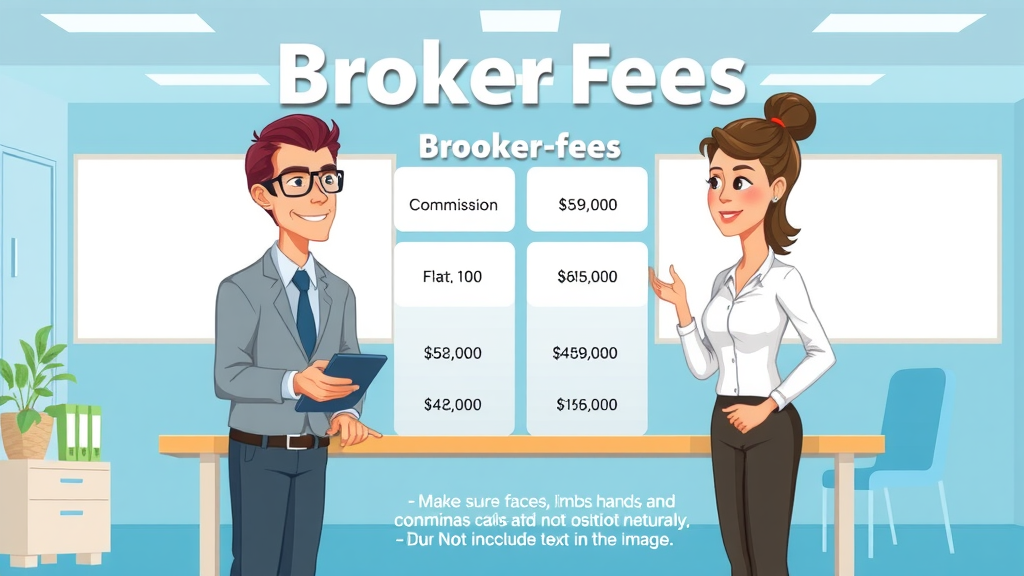
Infographic comparing commission fees, flat fees, and agent fees in property sales

How Broker Fees in Property Sales Affect Buyers and Sellers

Broker fees primarily impact sellers, but the ripple effects are felt by buyers and sellers alike. For sellers, these fees reduce net proceeds. For example, if you sell your home for $400,000 and incur a 6% total commission fee, you’ll pay $24,000 in real estate agent fees . These costs must be considered when setting your asking price and calculating your final profit from the home sale.

Buyers, while not typically paying broker commissions directly, may be affected by the structure of the deal. In competitive markets, agents might build commission expectations into negotiation strategies, which can impact a buyer's leverage or influence the ultimate sales price. Both real estate agents and estate agents play crucial roles in ensuring that all parties are aligned, transparent, and fully informed about who pays what at closing.

Fee Type When It's Charged Typical Amount Who Pays? Key Considerations
Broker Fee At closing 5%–6% of sales price Seller (usually) May be negotiable; split with buyer's agent
Estate Agent Commission At closing 4%–6% of sales price Seller Varies by location & type of agent
Realtor Fees At closing 5%–6% of sales price Seller Represents full-service agents who are members of the National Association of Realtors
Flat Fee Upfront or at closing $1,000–$5,000+ Seller May not include all services; best for confident sellers

How Are Broker Fees in Property Sales Calculated?

Broker fees in property sales are commonly calculated as a percentage of the final sales price —typically ranging from 5% to 6% for standard agent fee or commission structures. However, alternative models, such as flat fee arrangements or hybrid combinations, are gaining popularity, especially in competitive real estate markets. It’s key for sellers to understand how different commission structures influence both their expenses and the incentives their agent has to sell the home efficiently.

With percentage-based fees, the higher your home’s sale price, the more your agent earns. Flat fee arrangements, on the other hand, offer clarity and predictability, regardless of the home’s value. The right choice often depends on your confidence in managing certain parts of the real estate transaction yourself and your specific goals for the sale. Always discuss these details at the listing appointment to ensure total transparency.

Real estate broker using a calculator to determine broker fees in property sales at a modern office desk

Percentage-Based Broker Fees vs. Flat Fee Arrangements

Most traditional real estate agents prefer percentage-based commission fee structures, as these align their compensation with the home sale price and incentivize them to maximize your sale. But this model isn’t always the right fit for every seller. Enter the flat fee agent or broker: instead of a commission, you pay a predetermined amount, no matter the final sale price.

Choosing a flat fee broker arrangement can be a smart move for more experienced or budget-conscious sellers. However, these models often require sellers to take on certain responsibilities, like marketing or open houses, that are traditionally handled by a full-service agent. On the other hand, a percentage-based commission ensures the agent is fully invested in getting you the highest possible offer, as their earnings depend on it. Weigh the pros and cons of both to determine which arrangement matches your comfort level, budget, and sale strategy.

What Goes Into Real Estate Commission and Agent Commission Structures?

The factors that determine real estate commission and agent commission structures are varied. Standard commission rates reflect local market conditions, the agent’s reputation, and the level of service offered. In most cases, the total fee is split between the buyer’s agent and the listing agent, providing an incentive for both to bring about a successful sale.

Other elements—such as marketing budgets, listing fees, transaction coordination, and even agent overhead—are often baked into the final agent fee . For full-service real estate agents, the commission covers everything from professional photos, advertising, staging, showings, negotiations, and closing paperwork. Before signing any listing agreement, make sure you know exactly what services are included in your broker fee .

"Understanding broker fees in property sales helps sellers avoid unexpected closing costs and maximize profits."

Key Factors That Influence Broker Fees in Property Sales

No two broker fee structures are alike. Several critical factors influence how much you’ll pay in broker fees in property sales . The local real estate market, each agent’s experience and reputation, the complexity of your property, and unique agreements all play a role. Recognizing these factors empowers you to negotiate wisely and make informed decisions while selling a home.

Let’s explore the key components shaping estate agent commissions, agent fees, and the total cost to sell your property.

Market Trends in Real Estate and Their Impact on Broker Fees

The ebb and flow of real estate markets directly affects broker fees . In highly competitive seller’s markets—with lots of potential buyers and low inventory—agents may be willing to accept lower commission rates, as homes often sell quickly. Conversely, in slow markets, agents might secure higher fees to cover the extra time and effort needed to market and close a sale.

National and local trends, as reported by organizations like the National Association of Realtors , set the tone for what’s considered a “normal” commission fee. Staying informed about real estate trends helps you understand when it’s possible to negotiate lower commission structures or secure a flat fee agreement for your specific estate transaction.

Urban cityscape with real estate market trend charts illustrating broker fees in property sales

How Experience and Reputation of Real Estate Agents Affect Fees

Experience and reputation are key drivers of fee structures in property sales. Highly regarded real estate brokers and estate agents often command higher commissions, reflecting their track record of successful sales and client satisfaction. While it may seem tempting to pick the lowest-cost agent, remember that paying a premium can translate to better marketing, wider buyer networks, and expert negotiation—often delivering a higher sales price or a faster closing that more than covers the extra broker fee.

If you’re selling a unique or luxury property, you may also benefit from an experienced agent’s specialized skills and connections, making the extra commission an investment rather than a cost. Always check agent reviews, look for verifiable results, and ensure you’re comfortable with the balance of cost versus expected value.

Role of Location and Property Value in Estate Commission and Agent Fees

Your property’s location and its expected sales price also directly influence agent commission rates and estate commissions . High-value homes in expensive areas may attract lower commission percentages, given the higher earning potential despite a smaller rate. In contrast, agents selling lower-priced homes or properties in less desirable neighborhoods may negotiate higher commission rates to compensate for the additional time and effort required.

Additionally, local norms, state regulations, and competition among real estate agents can affect both the availability and flexibility of negotiated brokerage fees. Understanding what’s common in your area—through local real estate associations or by interviewing multiple agents—can help you secure the best deal for your situation.

"Reputable real estate brokers may charge higher commission, but their expertise often leads to a quicker, higher-value home sale."

Ways to Negotiate Broker Fees in Property Sales

Contrary to popular belief, broker fees in property sales are rarely fixed in stone. Most real estate agents expect some negotiation, especially when sellers are well-informed and prepared. Key factors like your property’s easy marketability, your willingness to share in some sales responsibilities, or your research into competitive agents in your area can all be used as bargaining chips.

Effective negotiation starts with respectful, open dialogue, and a willingness to understand both parties’ needs. Getting multiple quotes, requesting detailed fee breakdowns, and demonstrating the unique selling points of your home can all lead to a more favorable deal.

How to Approach Estate Agents and Real Estate Brokers About Lower Fees

The most effective way to negotiate broker or agent fees is through clear, compassionate communication. Instead of demanding a lower rate outright, ask for a detailed itemization of all costs: commission fee, administrative charges, marketing expenses, and any additional agent fees . Then, discuss your expectations around service quality and marketing efforts relative to the commission paid.

Point out aspects of your home sale that may make things easier for the agent, such as its location, your flexibility in showings, or existing curb appeal. These can justify a reduced commission or a partial refund of certain fees at closing—especially if you’re willing to sign a short-term exclusive agreement or offer reputable referrals in the future.

Tips for Negotiating Agent Fees Without Compromising Service Quality

Securing a fair deal on broker fees shouldn’t come at the expense of top-tier service. Focus negotiations on areas where your agent is comfortable giving ground. For example, requesting a flat fee for listing services while using an a la carte menu for extras like open houses or professional photography keeps costs lower but maintains service quality.

Always compare at least three real estate agent quotes, making sure to factor in their marketing, network reach, and skill at closing deals. Remember, the lowest fee isn’t always the best—opt for a reputable agent who combines a reasonable cost structure with a proven ability to produce stellar results.

  • Effective strategies for reducing broker fees in property sales:
  • Request a breakdown of all agent fees and commission
  • Consider a flat fee agreement
  • Shop around for multiple real estate agent quotes
  • Highlight the strengths of your home sale to negotiate lower commission

Homeowner negotiating broker fees with a real estate agent in a bright, detailed office

Alternatives to Traditional Broker Fees in Property Sales

With changing technologies and evolving consumer expectations, sellers now have more options than ever to cut broker fees in property sales without sacrificing results. Alternatives include engaging flat fee brokers , discounted commission models, or even online-only estate brokers. Each model offers distinct benefits for sellers willing to take on a more active role or who have straightforward sales.

Flat fee models are especially attractive for experienced sellers or those confident in the ease of selling their home, while online estate agents offer digital-first solutions with reduced personal interaction, often at the lowest cost.

Flat Fee Brokers vs. Percentage-Based Real Estate Agents

Choosing between a flat fee broker and a traditional percentage-based agent comes down to your risk tolerance and needs. Flat fee brokerages typically offer a menu of services at a defined upfront cost—ideal if you’re comfortable managing marketing, showings, and offers.

Percentage-based real estate agents may provide a more hands-on, consultative experience, ensuring you get the best deal through superior negotiation and broader buyer reach. Consider the complexity of your transaction and your own expertise before deciding which path suits you best.

When to Hire an Online Estate Broker for Your Home Sale

Online estate brokers have disrupted the market for property sales by offering streamlined, technology-driven services at a fraction of traditional costs. They are best for sellers who want a simple, cost-effective route, value digital convenience, and have a property that’s easy to sell without extensive hands-on marketing.

Keep in mind that while these brokers can save you thousands in fees, they may also provide less support, limited in-person service, and potential challenges in complex negotiations. Always read reviews, compare service packages, and ensure you understand what’s included in their agent fee before committing.

Model Pros Cons Best For
Flat Fee Predictable cost, lower fee, pay only for needed services May lack full-service, DIY marketing required Experienced sellers, straightforward properties
Percentage-Based Full service, incentive for higher sales price, support in negotiations Can be higher overall cost Sellers seeking expertise, specialized help
Online Broker Lowest fees, digital convenience, broad reach Less personal service, variable negotiation skills Tech-savvy sellers, easy-to-market homes

All Closing Costs Explained: Broker Fees, Agent Fees, and More

Broker fees are just one piece of the puzzle when it comes to closing costs in property sales. Sellers should budget for other expenses, including title insurance, legal fees, transfer taxes, and home warranties. It’s vital to know what’s included in your closing cost, which items are mandatory, and which are potentially negotiable.

Identifying every cost associated with a real estate transaction can prevent last-minute financial surprises, ensuring you walk away with the highest net proceeds possible after your home sale .

Common Hidden Costs in Real Estate Transactions

Beyond obvious agent commissions, there are several often-overlooked fees in a typical estate transaction . These include administrative fees, wire transfer charges, repair negotiations, and pro-rated property taxes. Because these costs can quickly add up, always request a detailed settlement statement well before closing.

Awareness of these “hidden” costs will help you set a more accurate budget and negotiate with confidence, ensuring no unwanted surprises when the sale closes.

House keys, bills, and calculator showing hidden closing costs in property sales

The Impact of Broker Fees on Final Home Sale Proceeds

Ultimately, every dollar paid in broker fees or agent commissions comes directly out of your proceeds from the sale. That’s why it’s vital to factor in all expected fees—and their negotiability—when you’re calculating how much you’ll net from selling your home. Even small reductions—say, negotiating a 4.5% commission instead of 6%—can mean thousands in savings.

Armed with this knowledge, sellers can set realistic listing prices, prioritize their remaining budget for repairs or upgrades, and choose the broker or agent who aligns best with their value expectations.

People Also Ask: Answers to the Top Broker Fees in Property Sales Questions

What is a typical broker fee?

  • A typical broker fee in property sales ranges from 5% to 6% of the home's sale price, though this can vary based on location, property value, and the agreement with your real estate agent.

What is a reasonable brokerage fee?

  • A reasonable brokerage fee is one that reflects the current real estate market, the services provided, and the agent’s expertise. Usually, this means fees between 4% and 6% are considered fair and competitive.

Is the 3% broker fee high?

  • A 3% broker fee is actually on the lower end and is often found in markets with high property values or where negotiation is common. It is not typically considered high.

What percentage do most real estate brokers charge?

  • Most real estate brokers charge about 5%–6% as their commission on property sales, split between the buyer's and seller's agents.

Expert Tips for Minimizing Broker Fees in Property Sales

Real estate advisor presenting tips for lowering broker fees in property sales to a couple in a modern office
  • Ways to minimize broker fees:
  • Seek recommendations for agents willing to negotiate
  • Understand every component of agent fees before signing
  • Use market data to your advantage
  • Consider selling a home with a limited-service estate broker

Frequently Asked Questions About Broker Fees in Property Sales

  • Can broker fees be tax deductible?
  • Who actually pays broker fees in a home sale?
  • Are broker fees regulated by law?
  • How do agent fee structures differ for buyers and sellers?

Maximizing Value: What Every Seller Should Consider About Broker Fees in Property Sales

"When you understand broker fees in property sales, you're equipped to make choices that maximize your profit and minimize unnecessary costs."

Home seller reviewing property sale documents with a professional broker in a stylish home office

Take Control of Your Home Sale: Make Smart Decisions About Broker Fees in Property Sales

Ready to maximize your home sale proceeds ? Start by comparing agent quotes, demanding clarity on broker fees in property sales , and negotiating the terms that fit your needs. Knowledge is your best bargaining chip—use it to secure the best deal and walk away from your sale with more money in your pocket.


Business Broker News Blog

163 Views

0 Comments

Write A Comment

*
*
Related Posts All Posts
01.19.2026

How a Business Broker Can Transform Your Sale Today

Did you know businesses listed with a business broker are 40% more likely to successfully sell than those listed independently? If you’re considering listing your business for sale, the decision to team up with a professional broker could be the game-changer you’ve been seeking Unlock the Power of a Business Broker: Startling Statistics and Key Insights Did you know that businesses listed with a business broker are 40% more likely to successfully sell than those listed independently? Discover why below. The difference between closing a successful business sale and watching your listing languish often comes down to expertise, network, and strategic support. Business brokers offer proven pathways to amplify the value of your business, simplify complex negotiations, and secure the perfect buyer—whether you are exiting the main street or middle market. With specialized knowledge in mergers and acquisitions, brokers streamline the selling process and empower business owners with the guidance found essential by both sellers and buyers across industries. Recent studies show that utilizing a business broker not only increases the likelihood of a successful sale but often leads to better terms for sellers and a shorter time on the market. In fact, brokers routinely deliver a blend of expert valuation, buyer screening, and marketing prowess that most owners cannot match when selling independently. This article reveals the transformative benefits and actionable steps you can take today to elevate your business sale journey. What You'll Learn About Business Brokers and Business Sales Role and impact of a business broker How business brokers accelerate business sales Benefits for business owners and buyers Key steps in the business sale process Answers to top business brokerage questions What Is a Business Broker and Why Do Business Owners Need One? A business broker acts as a professional intermediary whose primary mission is to help business owners buy or sell a business with confidence, confidentiality, and optimum results. While some business owners attempt to sell independently, many quickly realize the complexities involved—from pricing the business correctly to qualifying potential buyers and crafting a seamless transition. Brokers possess years of experience and a robust network, opening doors to vetted buyers, financial institutions, and legal resources essential for a successful business sale. Business brokers also serve as skilled negotiators, advocates for fair value, and protectors of confidentiality throughout every stage. By managing the nuances—and avoiding the pitfalls—of selling a business, they allow owners to focus on daily operations, minimizing disruptions and maximizing both price and peace of mind. Whether you're seeking an asset sale or navigating the sale of the business as a whole, a broker's expertise extends to evaluating the market landscape, coordinating strategic marketing efforts, and orchestrating deals aligned to the seller’s unique goals. Defining the Business Broker: Specialists in Business Sales At their core, business brokers are licensed specialists trained to manage every facet of business sales and acquisitions. Unlike general real estate agents, a business broker zeroes in on the unique requirements of buying and selling operational businesses—from main street stores to profitable middle market firms. Their scope covers not just the transaction, but the long-term success of the buyer and seller alike—ensuring that due diligence, deal structuring, and transition support all work in the client’s favor. Through their networks, they tap into pools of serious, qualified potential buyers, minimizing wasted time and keeping the focus on results. Their mission: help you sell a business or buy a business in a way that’s smooth, lucrative, and expertly stewarded from listing through closing. Core Responsibilities: From Listing Businesses for Sale to Closing the Deal Business brokers assume several key responsibilities to deliver a successful outcome. These begin with an accurate, confidential business valuation—critical for determining the best possible price and attracting the right pool of potential buyers. The broker then prepares compelling marketing materials, lists the business for sale on targeted platforms, and proactively reaches out to buyer contacts while preserving strict confidentiality. In the next phases, business brokers conduct interviews and screen prospects, filtering out tire-kickers and unqualified buyers to protect the integrity of the business sale process. As negotiations heat up, they advocate for the business owner’s interests, ensuring favorable deal terms and guiding both parties through due diligence and final closing. By shouldering these roles, brokers deliver end-to-end support tailored to maximize value and minimize stress. "A great business broker not only finds buyers, but maximizes your business value." — Industry Expert How a Business Broker Maximizes the Value of Your Business Sale Business Brokers: Strategic Valuation and Market Analysis The journey to a top-dollar sale begins with understanding your true business value. A seasoned business broker applies targeted financial analysis and up-to-date market data to ensure your asking price is competitive—without leaving money on the table. Accurate valuations are especially crucial for middle market and small business owners seeking to attract premium offers. Brokers draw on industry benchmarks, past transaction data, and a nuanced knowledge of market cycles to generate reports that resonate with discerning buyers and their advisors. This strategic insight enables the business owner to set expectations, identify upsides for future growth, and discover which business highlights will command maximum attention. In the end, the broker's valuation process accelerates connections with eager buyer and seller matches, paving the way for a smoother, more profitable business sales process. For business owners who want to ensure they’re not leaving money on the table, understanding the nuances of valuation and negotiation is essential. You can dive deeper into practical strategies for buyers and sellers by exploring the secrets to buying a business without overpaying, which offers actionable insights that complement the broker’s expertise. Confidentiality and Discretion in Selling Your Business For many business owners, protecting confidentiality during a business sale is non-negotiable. A sudden news leak can shake employee morale, alarm customers, and give competitors an edge. Business brokers specialize in discrete marketing, using non-disclosure agreements and carefully managed communications to ensure your business’s identity—and sensitive competitive information—remains protected until serious negotiations commence. This level of discretion also applies to vetting potential buyers, requiring them to demonstrate genuine financial capability and strategic interest. By doing so, business brokers reduce the risk of disruptions and foster reassurance that the selling process will be handled with utmost professionalism—keeping your operations running smoothly up to and beyond the sale. Negotiating the Best Outcome in Business Sales Negotiation in a business sale is about more than just the sale price. It involves deal structure, timelines, tax implications, and sometimes agreements to stay on post-acquisition. Business brokers are skilled mediators who orchestrate win-win results for both buyer and seller. Their years of experience navigating asset sales, stock transfers, and mergers and acquisitions empower them to anticipate and resolve objections early—clearing roadblocks before they jeopardize the deal. A broker’s negotiating clout often leads to higher sale prices, more flexible terms, and better outcomes than sellers “going it alone.” In many cases, seasoned business brokers have relationships with repeat buyers, PE funds, and strategic investors—bringing not just more offers, but better, faster offers than a solo seller could attract. Business Brokers Versus Selling a Business Independently Comparison of Selling with a Business Broker vs. DIY Aspect With Business Broker DIY (Independently) Business Valuation Accurate, data-driven, market benchmarked Often over/underpriced, guesswork Buyer Access Network of vetted, motivated buyers Limited reach, unqualified leads Confidentiality Strict, professional protocols High risk of information leakage Negotiation Power Expert advocacy and deal structuring Potentially lower price, missed opportunities Time to Close Typically much faster Can take months or years Legal & Compliance Guided, compliant transactions Risk of missteps, higher liability Case Study: Faster Business Sales with a Professional Business Broker Consider this: A small business owner struggling to find the right buyer had listed their company for eight months without much traction. When they partnered with an experienced business broker, everything changed. The broker provided an updated valuation, created a compelling listing for their business for sale, and leveraged a network of potential buyers—all while enforcing strict confidentiality protocols. Within four weeks, the business had multiple inquiries. In just two months, the sale of the business was closed above the original asking price. The owner attributed the success to the broker’s expertise in buyer screening, proactive marketing, and shrewd negotiation—dramatically reducing the stress and delays they had endured when acting alone. "Without a business broker, we struggled for months. With their help, our business sale closed in just 60 days." — Former Business Owner The Step-by-Step Process: How Business Brokers Handle Your Business Sale Business evaluation: A thorough review of financial records and market position to set realistic, compelling value. Preparation for business for sale: Organizing documentation, identifying unique selling points, and addressing gaps. Marketing and promotion: Targeted outreach to pre-qualified buyers with tailored messaging while maintaining discretion. Screening buyers: Rigorous interviews, financial checks, and gathering proof of funds before showings. Negotiations: Collaborative deal structuring focused on maximizing price and favorable terms. Managing the closing process: Overseeing legal, financial, and regulatory steps to ensure a smooth handoff. Each stage is handled by your business broker with professionalism and precision, allowing business owners to continue running their companies without distraction as the sale of the business progresses. Who Benefits Most from Hiring a Business Broker? Business Owners Ready to Sell a Business for Maximum Return If your priority is achieving the highest possible return and reducing risk in your business sale, a business broker can become your most valuable ally. Owners of companies—especially those with businesses for sale valued above $500k or in complex mergers and acquisitions scenarios—stand to gain the most from the strategic support only a professional broker can offer. Time and again, business owners who choose brokerage services find themselves fielding more offers, enjoying greater leverage in negotiations, and turning “for sale” listings into “sold” celebrations far sooner than their DIY counterparts. Buyers and Sellers Seeking Expert Guidance in Business Transactions First-time sellers Owners of businesses for sale above $500k Entrepreneurs seeking mergers and acquisitions expertise Buying or selling a business is rarely a simple undertaking. Business brokers provide invaluable guidance for first-time buyers and sellers—making sure no details slip through the cracks and every opportunity is maximized. Entrepreneurs on both sides of the table benefit from a broker’s deep understanding of deal structuring, compliance, and market trends. For those navigating the higher stakes of mergers and acquisitions, a broker’s experience can make or break long-term success for all parties involved. Key Services Provided by a Business Broker Business valuation Marketing businesses for sale Buyer screening Structuring deals for business sales Managing legal and regulatory compliance These services combine to create a seamless, client-focused experience that efficiently brings buyers and sellers together while protecting your business interests at every step. With a reliable business brokerage partner, both parties can trust that nothing is overlooked in their pursuit of the best possible outcome. Business Broker Success Stories: Transforming Business Sales Real-World Results for Business Owners and Buyers It’s one thing to promise results; it’s another to deliver. Across industries, business owners report not just higher selling prices, but more peace of mind and better post-sale outcomes when working with seasoned business brokers. From securing multiple offers to negotiating “must-have” deal provisions, brokers are the catalysts for successful transitions even in competitive markets. Buyers, too, find added value—enjoying access to listed businesses for sale that have undergone proper vetting, reducing the risk of hidden liabilities and wasted time. Whether you need to sell your business quickly or buy a business with confidence, a business broker’s objective is to outpace expectations at every milestone. "Our business brokerage team delivered results beyond our expectations—securing multiple offers and a record sale price." — Satisfied Client [Animated Explainer Video] [Expert Interview Video] People Also Ask: Top Business Broker Questions What does a business broker do? Comprehensive Answer: A business broker assists business owners with the sale of their business by handling valuation, marketing, buyer screening, negotiations, and closing, ensuring a smoother transaction. Is it worth using a business broker? Comprehensive Answer: Most business owners benefit from a broker’s experience in securing higher sale prices, vetting serious buyers, and protecting confidentiality, often leading to faster and more profitable business sales. How much does a business broker charge? Comprehensive Answer: A business broker typically charges a commission, usually ranging from 8% to 12% of the final sale price, aligning their interests with yours for a successful transaction. How do brokers make money? Comprehensive Answer: Business brokers are paid through commissions on business sales, earning only when a successful sale is closed. Some may charge modest upfront marketing fees. Critical Considerations When Choosing a Business Broker Track record in your industry Transparent fee structures Certifications and affiliations in business brokerage Strength of buyer network Approach to business confidentiality and marketing When vetting potential brokers, focus on demonstrable experience, a strong network, and clear communication. Ask about their years of experience, credentials, and client results in selling businesses similar to yours. Business Broker FAQs: Everything Business Owners Should Know When is the best time to sell a business? What documents do I need for a business sale? How do I know if my business is ready for sale? Can I remain anonymous during the business sales process? What happens after the sale is completed? Business brokers provide step-by-step answers to these and other critical questions, making sure every business owner is informed and prepared for a confident business sale journey. Key Takeaways: Business Broker Advantages for Your Business Sale Business brokers maximize business value and accelerate sales Expert guidance leads to higher rates of successful business sales Ensures confidentiality and smooth transactions for business owners Ready to Transform Your Business Sale with a Business Broker? Call us at 203-271-7991 or visit https://businessbrokernews.us to get started today. Conclusion: The Strategic Advantage of Using a Business Broker Partnering with a trusted business broker turns the complex process of a business sale into a streamlined, successful transition—helping business owners achieve their goals faster and with greater confidence. As you consider your next move, remember that the most successful business sales are built on a foundation of preparation and strategic insight. If you’re interested in taking your readiness to the next level, learning about concept testing for business success can help you validate your business’s strengths and identify areas for improvement before going to market. By combining expert brokerage with advanced planning techniques, you’ll be positioned to achieve not just a sale, but a truly rewarding transition to your next chapter. To further enhance your understanding of the pivotal role business brokers play in facilitating successful business sales, consider exploring the following resources: “Business broker”: This comprehensive Wikipedia article provides an in-depth overview of business brokers, detailing their responsibilities, the services they offer, and the various agency relationships they maintain with clients and customers. (en.wikipedia.org) “Definition of Business Broker - Divestopedia”: This resource offers a clear definition of a business broker, outlining the typical services provided, such as assisting clients in establishing a probable selling price, preparing marketing documents, conducting buyer searches, and coordinating negotiations. (divestopedia.com) By delving into these resources, you’ll gain a more nuanced understanding of how business brokers can significantly impact the sale of your business, ensuring a smoother transaction and potentially higher sale price.

01.18.2026

Don't Make These Costly Mistakes in Mergers and Acquisitions

Did you know that an astonishing 70% of mergers and acquisitions fail to achieve their projected synergies? When billions are at stake, even small missteps can have huge consequences Avoiding Critical Errors in Mergers and Acquisitions: Why It Matters Mergers and acquisitions (M&A) are pivotal moments for businesses seeking growth, increased market share, or new capabilities. However, these high-stakes transactions also carry substantial risks. Ignoring or underestimating common pitfalls—such as insufficient due diligence, cultural mismatches, or unrealistic synergy projections—can turn a lucrative opportunity into a financial and organizational setback. Understanding what causes most failures in mergers and acquisitions is crucial for both investors and business leaders aiming for long-term success. A slight oversight in the early stages can lead to unforeseen liabilities, employee turnover, and significant loss of value post-acquisition. For instance, many companies get swept up in the excitement of expansion and overlook detailed planning. Effective due diligence isn’t just a formality; it’s a substantial investigative process that uncovers hidden debts, asset issues, and market weaknesses in the target company. Similarly, skipping the critical work of aligning company cultures is a recipe for internal friction and decreased productivity after the merger occurs. In an environment where the majority of mergers and acquisitions fall short of expectations, learning how to identify and avoid costly mistakes is essential to safeguard your investment and your company’s future. Startling Facts on Mergers and Acquisitions Failures "An estimated 70% of mergers and acquisitions fail to achieve their projected synergies—primarily due to overlooked risks and common execution errors." What You'll Learn About Mergers and Acquisitions Understand the key phases of mergers and acquisitions Identify and avoid the costliest mistakes in due diligence Differentiate between types of mergers: horizontal merger, vertical merger, and conglomerate merger Master effective strategies for merger or acquisition success Understanding Mergers and Acquisitions: Core Concepts What is Meant by Merger and Acquisition? A merger is when two companies combine to form a single new legal entity, pooling resources, customer bases, and market share. This typically happens when companies of similar size join forces to create economies of scale, enhance their supply chain, or expand geographically. An acquisition, on the other hand, occurs when one company—the acquiring company—purchases a controlling stake in a target company, which may then continue to operate under its original name or become absorbed into the acquirer’s structure. In acquisitions (sometimes via a tender offer or purchase of assets), the acquiring company assumes ownership of the target’s assets and liabilities. Both mergers and acquisitions can deliver growth, improved competitive positioning, or access to new customer segments. However, an acquisition also often has a different power dynamic than a merger, as the acquiring company may influence the direction and management of the acquired company more heavily. Whether you’re considering a merger or acquisition, understanding these foundational concepts is vital for effective planning and execution. The Four Types of Mergers and Acquisitions Explained Horizontal Merger Vertical Merger Conglomerate Merger Reverse Takeover Types of Mergers in Mergers and Acquisitions Horizontal Merger: Combining Market Competitors A horizontal merger happens when two companies in the same industry and at similar stages of production or sales merge to consolidate their market share. This often involves direct competitors, such as two consumer product manufacturers, joining forces to enhance their economies of scale, leverage a combined customer base, or gain a competitive edge in negotiations with suppliers and distributors. Horizontal mergers are frequently seen in industries where scale and market presence are critical, such as the technology sector or consumer products. These types of mergers require meticulous due diligence, as both entities may share overlapping supply chains, intellectual property, and assets and liabilities. By uniting similar operations, companies expect to realize cost synergies and streamline their market presence. However, these deals can sometimes attract scrutiny from regulators, especially in the United States and European Union, if the combined entity’s market share becomes too dominant and threatens fair competition. Vertical Merger: Extending the Value Chain A vertical merger brings together businesses at different points in the supply chain—such as a manufacturer acquiring a logistics firm, or a retailer joining forces with a supplier. The primary goal is to gain greater control over the production and distribution process, thereby reducing costs and inefficiencies, improving coordination, and increasing entry barriers for new competitors. For example, a consumer product manufacturer may merge with a packaging supplier to ensure seamless delivery of goods. This integration can lead to cost savings by eliminating duplicate processes and creating a more tightly aligned operation. Vertical mergers also provide more transparency across the value chain, making it easier to manage inventory, quality, and delivery timelines. However, they demand careful assessment of how different company cultures and operational strategies will mesh, a key factor often underestimated during the process. Conglomerate Merger: Diversifying with Non-Compatible Firms A conglomerate merger occurs when two companies from completely unrelated industries join forces. Unlike a horizontal or vertical merger, where operational overlap or supply chain integration is a goal, a conglomerate merger often pursues diversification of assets, revenue streams, and risk. For instance, a technology company may merge with a consumer product manufacturer, creating a more resilient business less vulnerable to changes in individual market segments. One of the biggest advantages of conglomerate mergers is the opportunity to enter new markets without building from scratch, leveraging the established brand and customer base of each firm. However, this approach can bring challenges, including difficulty realizing cost or revenue synergies due to the lack of operational overlap. For business leaders, a thorough review of assets and liabilities, as well as clear communication, is critical to avoid integration missteps and maximize value. Reverse Takeover: Leveraging Market Entry A reverse takeover (sometimes called a reverse merger) enables a private company to become publicly listed by acquiring an existing publicly listed company. This strategy sidesteps the lengthy and often expensive process of a formal initial public offering (IPO). In a reverse takeover, the private company’s leadership assumes management of the new legal entity and typically infuses the combined enterprise with fresh assets while leveraging the stock exchange listing of the acquired public entity. Reverse takeovers can be a powerful tool for accessing public capital and new investor bases. Yet, these deals are complex, requiring careful scrutiny of both companies’ balance sheets, assets and liabilities, and ongoing regulatory compliance. For private businesses eyeing rapid expansion or capital raise, mastering the reverse takeover process is a crucial competitive advantage. To further strengthen your approach and avoid the most frequent pitfalls, it’s helpful to explore actionable methods that have proven effective in real-world deals. For a deeper dive into practical steps and strategies that drive successful outcomes, consider reviewing business acquisition strategies that actually work to complement your M&A planning. Key Stages in Mergers and Acquisitions Due Diligence in Mergers and Acquisitions Due diligence is the investigative cornerstone of any merger or acquisition. This step involves the exhaustive review of a target company’s financial statements, intellectual property, assets and liabilities, contracts, employee agreements, and compliance with industry regulations. The purpose is to uncover hidden debts, pending lawsuits, tax liabilities, or structural challenges that could undermine the expected value of the deal. For example, discovering that the target company’s customer base is overrepresented in a declining market could prompt renegotiation or even withdrawal from the deal. Quality due diligence also extends to non-financial concerns—like company culture, human resources, and operational compatibility. Businesses that shortcut this phase often face costly surprises after the acquisition occurs, from technology integration hurdles to regulatory fines, or even a hostile takeover if unforeseen factors strain ownership dynamics. By prioritizing comprehensive due diligence, companies can spot red flags early, maintain transparency, and safeguard their investment. The Letter of Intent: Setting Terms and Expectations A letter of intent (LOI) is a formal document outlining the proposed terms, conditions, and timeline for a potential merger or acquisition. Serving as a roadmap for negotiation, the LOI clarifies transaction structures—whether it’s a purchase of assets, stock acquisition, or a tender offer. It also spells out due diligence rights, exclusivity periods, and expectations regarding regulatory review, confidentiality, and post-closing employment for key personnel. Although a letter of intent is generally non-binding (except for confidentiality or no-shop clauses), it signals serious commitment and sets the tone for constructive negotiations between the acquiring company and the target company. Both sides rely on the LOI to prevent misunderstandings and ensure alignment on deal terms before drafting the definitive purchase agreement, which will legally solidify the transaction. Table: Common Mistakes in Mergers and Acquisitions and Their Impact Mistake Impact Insufficient due diligence Undiscovered liabilities Cultural misalignment Decreased productivity Poor integration planning Synergy loss Inadequate communication Employee attrition Major Mistakes to Avoid in Mergers and Acquisitions Overlooking Due Diligence Failing to perform comprehensive due diligence is the fastest way to impair a merger or acquisition. Without in-depth investigation into the target company’s operations, legal entity structure, liabilities, and potential deal breakers, organizations risk acquiring unforeseen problems that could decimate the anticipated benefits. The due diligence phase should cover everything from financial statements and intellectual property ownership to the real value of supply chain assets and customer contracts. Companies must also verify that all regulatory requirements are met in every operating region, especially during cross-border transactions. Executives often underestimate the complexity of due diligence or rely too heavily on surface-level reviews. As a result, acquisition occurs only for hidden losses or legal implications to surface after the deal is complete—often too late to mitigate. Instead, treat the due diligence process as a critical investment, leveraging both internal audit teams and external experts to examine every facet of the target company. Neglecting Cultural Integration Overlooking the importance of culture is a major factor behind failed mergers and acquisitions. A well-matched legal entity alone won’t ensure success if employee engagement, management styles, or organizational values don’t align across both companies. Cultural misalignment typically manifests as decreased productivity, confusion, or even employee attrition—key talent leaves, and new hires struggle to assimilate. Leaders should dedicate as much effort to integrating communication styles, management expectations, and team dynamics as they do to combining financial assets and supply chain operations. Early and honest communication about changes, as well as mapping out practical steps for cultural integration, can smooth transitions and reduce resistance. Employees at all levels must feel informed, included, and valued to ensure post-merger productivity stays high. Failing to Define Synergy Realistically A common mistake in the merger or acquisition process is the overestimation of cost synergies and revenue synergies without a clear, actionable plan for how they’ll be achieved. Overly optimistic projections about combined market share, customer base expansion, or economies of scale can inflate valuations and set up unrealistic post-merger expectations. It’s essential to develop quantifiable synergy goals and assign accountability for their realization. Regular progress assessments, adaptable integration plans, and honest evaluation of roadblocks are necessary for tracking whether the anticipated benefits actually materialize. Companies that skip these steps often find their balance sheet reflecting shortfalls within months of deal completion. Inadequate Post-Merger Planning The work does not end when the purchase agreement is signed. Inadequate post-merger planning is a recurrent pitfall, resulting in operational chaos, duplicated roles, failed system integrations, and ultimately, synergy loss. To avoid these issues, businesses should create a detailed roadmap for post-merger integration—one that includes technology adoption, HR coordination, customer communication, and ongoing measurement of targets. Teams responsible for integration must receive clear direction, resources, and support from leadership. Whether merging systems or unifying brand messaging, each aspect should be executed with discipline and transparency. Continuous communication helps mitigate employee uncertainty and ensures the merged entity delivers on its promised value. People Also Ask: Critical Questions on Mergers and Acquisitions Does M&A pay well? Yes, careers in mergers and acquisitions often pay well compared to industry averages. M&A professionals—ranging from analysts to deal managers—in the United States and globally typically earn high salaries due to the complex nature of these deals, significant responsibility involved, and long working hours. Bonuses and performance incentives are common, especially when a merger or acquisition successfully closes and delivers value to the acquiring company’s balance sheet. What are the 4 types of M&A? The four main types of mergers and acquisitions are: Horizontal mergers (merging with competitors), vertical mergers (joining with supply chain or distribution partners), conglomerate mergers (combining unrelated businesses), and reverse takeovers (private company acquires a publicly listed company for market entry). Each type of M&A has distinct strategic advantages and risks based on the target company’s profile and the acquiring company’s objectives. What is meant by merger and acquisition? A merger means two companies unite to form a new legal entity, typically for shared goals like expanding market share or resource pooling. An acquisition occurs when one company takes control of another—by purchasing assets or acquiring a controlling interest—often integrating operations, customer bases, and intellectual property for strategic growth. Who gets laid off first in a merger? In most mergers and acquisitions, redundancies are evaluated as both companies combine teams and operations. Employees in duplicated roles—often in support functions like HR, finance, or IT—are usually first at risk for layoffs after the merger occurs. Seniority, performance, and contract terms also play roles in these decisions, though companies strive for fair, transparent processes to minimize disruption. Watch this animated explainer video on how a merger or acquisition deal flows from start to finish—highlighting due diligence, integration, communication, and workforce alignment. FAQs on Mergers and Acquisitions What documentation is required for mergers and acquisitions? At minimum, you’ll need a letter of intent, financial statements, asset and liability lists, customer and supplier contracts, intellectual property documentation, regulatory compliance reports, and a definitive purchase agreement. Detailed documentation streamlines due diligence and reduces legal risks for both the acquiring company and target company. How long does a typical merger or acquisition process take? The average timeline for a merger or acquisition ranges from several months to over a year, depending on deal complexity, regulatory review, due diligence findings, and integration planning. Publicly listed deals and cross-border transactions often take longer due to stricter scrutiny. What are the legal considerations for cross-border mergers and acquisitions? Cross-border deals require careful evaluation of each jurisdiction’s tax laws, regulatory approvals, reporting requirements, currency controls, and employment laws. Engaging international legal counsel ensures compliance and helps avoid fines or deal delays. Expert Insights: Achieving Success in Mergers and Acquisitions "The most successful mergers and acquisitions are built on meticulous planning and transparent communication—cutting corners at any stage can be disastrous." Key Takeaways: Mergers and Acquisitions Success Strategies Prioritize comprehensive due diligence Align company cultures early in the process Set realistic goals for synergy and integration Maintain open communication before, during, and after the deal For Trusted Guidance on Mergers and Acquisitions Considering a merger or acquisition? Call us at 203-271-7991 or visit businessbrokernews If you’re ready to elevate your understanding of the M&A landscape and gain a competitive edge, there’s even more to discover. Explore comprehensive expert tips and advanced strategies in Mergers and Acquisitions: Master The Game With Expert Tips for a broader perspective on navigating today’s complex market. This resource delves into high-level insights, emerging trends, and proven frameworks that can help you anticipate challenges and seize new opportunities. Take the next step toward mastering mergers and acquisitions by expanding your knowledge with guidance from seasoned professionals. Conclusion: Avoiding costly mistakes in mergers and acquisitions takes diligence, clear communication, and a commitment to realistic integration—key ingredients for lasting business success. To deepen your understanding of mergers and acquisitions, consider exploring the following authoritative resources: The U.S. Small Business Administration’s guide on Merge and Acquire Businesses offers practical steps and considerations for businesses looking to expand through mergers or acquisitions. Britannica Money’s article on Mergers & Acquisitions (M&A) Definition, Process, and Examples provides a comprehensive overview of M&A strategies, processes, and notable examples. These resources will provide you with valuable insights and practical guidance to navigate the complexities of mergers and acquisitions effectively.

01.17.2026

Is Your Business Exit Strategy Ready to Secure Your Future?

Did you know that up to 80% of small businesses never sell because they lack a solid exit strategy? For most business owners, a lifetime of hard work is on the line, yet exit planning is often left until it’s too late A Startling Look: Why a Business Exit Strategy Is Essential Every business owner dreams of building a successful, profitable business. Yet, many overlook the most critical phase in any business plan—how to leave the company behind. Without a clearly defined business exit strategy, even the most lucrative business can face serious challenges when it's time to transition or sell. An exit plan isn't just about maximizing profits; it's about ensuring your business goals, personal ambitions, and company culture survive long after your departure. For small business owners, neglecting exit planning can lead to less cash earned, disputes among family members, and even dissolution of the business. With private equity firms and competitors always seeking opportunities, having a plan in place ensures you're not caught off guard by unexpected events or market shifts. Consider this: the Exit Planning Institute cites that a staggering number of small business exits end in disappointment for the owner due to inadequate preparation. Selling your business or passing it on requires strategic forethought. Without an effective exit strategy, your business might fetch far less than its true value, or succession plans may fail, jeopardizing both your family legacy and employee jobs. A strong exit plan can also mean a better retirement plan, more substantial financial returns, and a smooth transition for all stakeholders. Take steps now to prevent these pitfalls and ensure your hard-earned business stands as a testament to your vision and values into the future. The Cost of No Exit Strategy for Business Owners The absence of a well-defined business exit strategy can be disastrous. Without clear guidance, business owners often struggle with valuation, attracting buyers, and achieving an optimal financial return. In many cases, businesses are liquidated under distress, or assets are undersold simply because there was no exit plan or succession plan in place. A poorly executed exit impacts cash earned, potentially burdens family members with unsolicited responsibilities, and disrupts company culture. Moreover, common life events—the 5 D’s (Death, Disability, Disagreement, Divorce, and Distress)—can derail the best-laid business plans if not anticipated in your exit planning. When business owners fail to consider exit strategies early on, they risk losing years of effort, market reputation, and the ability to control how and to whom the business is sold. Worse still, without alignment on an exit plan with heirs, employees, or partners, disagreements may arise that affect personal and business finances, erode trust, and threaten the company's future. Ultimately, an exit plan is not just about the end—it ensures every decision from today onward contributes to a successful tomorrow for your business and yourself. "Up to 80% of small businesses fail to sell because of inadequate exit strategies. Preparation isn't optional—it’s essential to safeguard your life’s work." What You'll Learn About Business Exit Strategies Understand business exit strategy fundamentals Identify key types of exit strategies Steps for effective business exit planning Expert tips for small business owners Common exit plan pitfalls and how to avoid them Actionable resources for starting your exit plan Defining a Business Exit Strategy: Key Concepts Explained What Is an Exit Strategy and Why Every Business Owner Needs One? An exit strategy answers the big "how and when" questions, while a succession plan focuses on the "who"—who will take over when you leave? Comparison of business exit, exit plan, and succession plan Why exit planning benefits small business owners Smart exit planning leverages all three approaches, providing business owners with options aligned to their business goals and personal circumstances. Whether your priority is to maximize profits, protect family members, or maintain company culture, proactive business exit planning will help ensure you reach those goals without unnecessary stress or conflict. Preparing an exit strategy early empowers small business owners to control the outcome and legacy of their life's work. "An exit strategy is your final business plan—crafted to maximize your return and minimize risks as you move on to the next stage." While developing your exit plan, it's also valuable to reflect on the core values and habits that drive loyalty and trust within your team and stakeholders. Exploring the key habits that indicate lifelong loyalty can offer unique insights into building a resilient company culture that supports a successful transition. Core Types of Business Exit Strategy for Every Small Business Owner The Three Main Exit Strategies Sale of business to a third party Pass down via succession plan Management buyout/employee ownership Business owners have several options when considering how to exit. The three primary strategies dominate most exit planning discussions: selling your business to another company or investor (third party sale), passing ownership through a succession plan (often to a family member or trusted staff), and executing a management buyout or employee stock ownership plan (ESOP). Selling to an outside buyer provides liquidity and often the highest immediate financial return, along with opportunities for scaling if the buyer has resources and expertise. Passing the business down through a succession plan can help preserve a company legacy and maintain company culture, especially for family-run businesses. Management buyouts or ESOPs often appeal when retaining familiar employees is paramount, providing incentives that align staff motivation with business success during the transition. Choosing between these exit strategies depends heavily on your business goals, market conditions, and personal ambitions. Early exit planning lets small business owners compare each path’s pros and cons, ensuring a smooth transition that delivers strong outcomes for everyone involved. The Four Basic Exit Strategy Possibilities Merger and acquisition Liquidation Family succession Sale to employees (ESOPs) Beyond the top three, there are four foundational exit strategies every business owner should consider. Mergers and acquisitions often offer substantial financial returns and might expose your business to new markets or technology when integrating with a larger firm. Liquidation, though a last resort, can be the only option if the business isn’t viable for sale, providing immediate cash earned from assets but typically with lower returns and negative implications for stakeholders. Family succession allows continuity of ownership and familiar with the business leadership, while sales to employees through ESOPs typically support company culture and long-term stability. Each exit plan possibility must be matched to your personal and business goals for the best outcome. "Each exit strategy answers a unique set of owner goals, legacy wishes, and market conditions." Explainer: Choosing the Right Business Exit Strategy Top Considerations When Planning Your Business Exit Strategy Understanding the 5 D's of Exit Planning Death Disability Disagreement Divorce Distress Every small business owner must plan for the unexpected. The 5 D’s of exit planning—Death, Disability, Disagreement, Divorce, and Distress—are situations that can force a sudden change in business leadership or ownership. Proactive exit planning is essential to mitigate these risks and ensure a smooth transition, no matter the personal or market circumstances. For example, the passing of a business owner without a clear succession plan may lead to family disputes or legal battles. Disability can leave a business in operational limbo if no interim leadership is appointed. Disagreements among partners, divorce settlements impacting company ownership, and economic or industry distress can all trigger abrupt and unplanned exits. A strong business exit strategy prepares for these contingencies, securing the business and protecting both financial returns and the welfare of employees, customers, and family members. Valuing Your Business for a Successful Exit Understanding your business's true value is a cornerstone of any exit strategy. Accurate business valuation gives you the tools to negotiate confidently with buyers, secure the best financial return, and make informed decisions when considering gifts, inheritance, or ESOPs. This process involves assessing not only the bottom line but also factors such as company culture, growth potential, intellectual property, and balance sheet health. Many small business owners over- or underestimate their company’s worth, leading to missed opportunities or undervalued sales. Professional advisors use a mix of metrics, including discounted cash flows, comparable sales, and asset-based methods, to provide a precise estimate. Regular valuation updates should be a part of your ongoing business plan and critical to exit planning. This approach ensures you're ready for planned or unexpected transitions and can maximize profits when it matters most. Aligning Your Exit Plan With Personal and Financial Goals The best exit strategy isn’t just about money—it’s about aligning your business exit plan with personal ambitions, family priorities, and desired legacy. For some business owners, maintaining continuity and supporting staff is paramount. For others, the focus may be on maximizing their financial return for retirement or new ventures. The most effective exit strategies put family, future plans, and financial health at the center of every decision. These plans also account for tax implications, ensuring the structure of the sale or succession maximizes after-tax profits. Begin by mapping out your short- and long-term goals, both personal and business-related, and consult professional advisors who can help harmonize these ambitions with your exit plan, protecting your life's work and guaranteeing a smooth transition no matter what comes your way. "Smart business exit planning puts family, legacy, and financial health at the center of every decision." Crafting a Business Exit Plan: The Step-by-Step Process Assess business value and readiness Set exit objectives and timeline Choose the right exit strategies Prepare financial and legal documents Communicate with stakeholders and successors Effective exit planning is a process—one that begins long before you're ready to walk away. First, assess your business’s value and readiness to exit by reviewing financial statements, balance sheets, growth metrics, and operational strengths. Next, set exit objectives: identify your ideal timeline, target buyers or successors, and outline your post-exit plans. Choosing the right strategy means balancing your priorities, whether financial return, family succession, or company legacy. Preparing all required financial and legal documents—such as contracts, power of attorney papers, and succession plans—makes the process faster and avoids costly mistakes. Finally, communicate your plans early and transparently with family members, staff, and outside stakeholders. This fosters trust, reduces uncertainties, and ensures a smooth transition when the time comes for your business exit. "A well-designed business exit plan begins years before your intended sale or transition date." Business Exit Strategy Best Practices for Small Business Owners Start early to maximize options Consult financial and legal advisors Document clear succession plans The most successful business exits are the result of early and meticulous planning. Starting the exit planning process years in advance expands your options and increases leverage in negotiations. Bringing in outside advisors—like accountants, lawyers, and succession planning professionals—ensures every detail is addressed, from tax minimization to legal compliance. Create a written succession plan naming successors or key stakeholders to avoid confusion if unexpected events occur. Maintaining organized, up-to-date financial records, and codifying your business operations in a comprehensive business plan, allows new owners or successors to hit the ground running and helps maintain your company culture during transition. For small business owners, these practices are crucial to ensure business continuity, protect the interests of family members and employees, and maximize the company’s ultimate value. Common Mistakes to Avoid in Exit Strategies Ignoring business valuation Failing to communicate with heirs or staff Neglecting tax implications Even the best business exit strategy can be undermined by common mistakes. Failing to obtain a proper business valuation often results in underselling (or overpricing) your business, deterring serious buyers and jeopardizing your financial returns. Poor communication with heirs, partners, or employees can breed suspicion, trigger disputes, and complicate succession plans—sometimes resulting in lost key staff or customers if transitions are poorly managed. Neglecting tax implications can significantly erode your take-home profits; every transaction triggers different tax liabilities, so consult with tax experts early during exit planning. Avoid these pitfalls by staying informed, documenting clear processes, and making your exit plan a living, evolving part of your business strategy. The sooner you begin, the more options you’ll have—and the smoother your transition will be. "The sooner you begin thinking about your business exit strategy, the more successful—and less stressful—the process will be." Comparing the Most Effective Exit Strategies: Which Works Best? Exit Strategy Option Best For Primary Benefit Drawbacks Owner Control Sale to Third Party Owners seeking maximum financial return, ready to sell Immediate liquidity, often highest price Loss of legacy, less control post-sale Medium Succession Plan (Family) Family businesses aiming for legacy preservation Maintains company culture and legacy Potential family conflict, slower transition High Management Buyout/ESOP Owners prioritizing employee retention and company culture Smooth transition, motivates employees Financing may be complex High Merger & Acquisition Firms seeking scale or new markets Synergies, potentially high valuation Less control, cultural integration issues Low to Medium Liquidation Unprofitable businesses, last resort Quick exit, cash from assets Usually low return, staff/job loss High Expert Perspectives: What Is the Best Exit Strategy? Experts agree there is no single "best" business exit strategy; the right choice depends on your goals, business value, and future vision. Exit planning should consider personal and business needs, family wishes, market conditions, and your desired role post-exit. Some owners want to retain control and maximize profits, while others seek a smooth transition for employees or to establish a legacy for future family members. The ultimate measure of a successful business exit is how closely the outcome matches your original vision and objectives. "No single exit strategy fits every business owner. The 'best' exit plan is the one aligned with your objectives and business value." Business Owner Interviews: Lessons Learned from Real Exit Planning People Also Ask: Your Questions About Business Exit Strategy What are the 5 D's of exit planning? The 5 D's—Death, Disability, Disagreement, Divorce, and Distress—are unpredictable life events that can force a sudden ownership transition. Strategic exit planning prepares for these risks, ensuring your business and financial interests are protected, no matter what life throws your way. What are the three main exit strategies? The three primary business exit strategies are: selling your business to a third party, passing it down through a succession plan (often within the family), or transferring ownership via management buyout or employee stock ownership plan (ESOP). Each has unique advantages depending on your goals. What are the four basic exit strategy possibilities? The four basic business exit strategy possibilities are merger/acquisition, liquidation, family succession, and sale to employees (ESOPs). Your choice will depend on your business’s profitability, your exit timeline, and your legacy objectives. What is the best exit strategy? The best exit strategy is one that aligns with your business goals, personal aspirations, and financial objectives. There is no one-size-fits-all answer—identify your priorities early and develop a custom exit plan that achieves them. Frequently Asked Questions About Business Exit Strategy When should business exit planning begin? Answer: Ideally, exit planning should start at least 3–5 years before you expect to exit your business. Early planning maximizes options and helps ensure a smooth transition. What documents are needed for an effective exit plan? Answer: Key documents include financial statements, business valuation reports, legal contracts, succession plans, tax and estate plans, and a comprehensive exit plan document. How can a business owner tell if they're ready to exit? Answer: Readiness comes when your business is attractive to buyers (well-valued, with clean records) and when your personal, family, and financial goals are aligned for life after exit. Are there tax benefits to early exit planning? Answer: Yes, planning early allows you to structure deals to minimize tax liabilities, enhance cash earned, and maximize after-tax returns. Key Takeaways for Business Owners Creating a Business Exit Strategy Early exit planning increases business value Multiple exit strategies exist—choose based on your priorities Communication is crucial for a smooth transition A business exit plan protects your business and family Take Action: Secure Your Future With a Business Exit Strategy Don’t wait to take control of your future. Create your business exit plan today—reach out for professional advice and ensure your business legacy is protected. Call us at 203-271-7991 or visit https://businessbrokernews.us for a personalized consultation. Conclusion: Ensuring a Successful Business Exit Strategy Proactive exit planning is the greatest gift you can give yourself, your family, and your business; act now to safeguard your legacy and future. As you continue to refine your business exit strategy, remember that the journey doesn't end with a well-crafted plan. Exploring broader perspectives on leadership, loyalty, and long-term relationship building can further strengthen your approach to succession and legacy. For a deeper dive into the habits that foster enduring trust and commitment—qualities that are just as vital in business as in personal relationships—consider reading about the seven key habits that indicate lifelong loyalty. Gaining insight into these foundational traits can help you cultivate a culture of reliability and resilience, ensuring your business thrives well beyond your exit. Take the next step in your journey by expanding your understanding of what truly sustains success over the long term. com) “What Is a Business Exit Strategy? Definition, Types and Uses” provides a detailed overview of various exit strategies, including liquidation, mergers and acquisitions, and succession planning, helping you understand the different options available

Terms of Service

Privacy Policy

Core Modal Title

Sorry, no results found

You Might Find These Articles Interesting

T
Please Check Your Email
We Will Be Following Up Shortly
*
*
*